100-yen shops are extremely popular in Japan, and many people overseas have heard of them, too. They sell all kinds of things, from everyday household items and stationery to food. That’s pretty convenient, isn’t it?
But here’s a question: Can you really buy everything for just 100 yen? And are these shops always the best place to find a bargain?
Let’s take a closer look.
Characters
Mike: A 12-year-old American boy who is interested in Japan.
John: Mike’s father. He sometimes travels to Japan on business.
Kelly: Mike’s mother. She is good at cooking.
Nobu: A Japanese exchange student.
Prologue
Mike was browsing the internet for information about Japan when he came across something called a “100-yen shop.”
One hundred yen was less than one US dollar. That sounded like a fantastic deal! He imagined buying mountains of things without spending much money at all.
But when he asked Nobu, a Japanese exchange student, about these shops, he discovered that things might not be quite as simple as he had imagined.
So, what was the catch?
What Can You Find at a 100-Yen Shop?
Mike: “Let’s see… These are Japanese anime characters, and over here are Japanese stationery items. Cool! If I had stationery featuring my favorite anime characters, I could show it off to my friends at school. But I bet anime merchandise like this is really expensive.”
John: “That’s probably true. Japanese anime characters are famous all over the world. Lots of young people probably want merchandise featuring them, so I imagine it can cost quite a bit.”
Mike: “Yeah, but I’d still love to have some. Wait a minute… What’s this?”
John: “What’s up, Mike? Did you find something interesting?”
Mike: “I found a store that sounds incredibly cheap! Apparently, there’s a shop where everything costs 100 yen. Some of the stores are even as big as supermarkets! They sell a huge variety of things at really low prices.”
John: “What? One hundred yen? That’s less than a dollar! It’s even cheaper than the coffee I usually buy at fast-food restaurants!”
Mike: “I don’t drink much coffee, but wow, that’s cheap! I was really surprised.”
John: “Tell me more about what they sell.”
Mike: “Let’s see… Stationery, toiletries, dishes, kitchen utensils, tools, DIY materials, cosmetics… They seem to have just about everything!”
John: “And all of that costs 100 yen? What on earth is going on with prices in Japan?”
What Could You Cook with Ingredients from a 100-Yen Shop?
John: “Hey, Kelly! I found something interesting about shopping in Japan. It’s an amazing kind of store!”
Kelly: “Oh, really? You know, John, every time you’ve told me something was cheap, it turned out to be nothing special. Why should I believe you now?”
John: “Just hear me out. This is in Japan, of course, but apparently, there are stores called 100-yen shops. They sell all kinds of things for 100 yen. That’s even cheaper than a cup of coffee! Isn’t that amazing?”
Kelly: “I bet they don’t sell anything particularly useful.”
John: “Well, it seems they do. They have things you use in the kitchen, for example. And they even sell food!”
Kelly: “Oh, you’re right! It looks like they really do. Japan is amazing!”
John: “So, what kind of meal do you think you could make using things from a 100-yen shop?”
Kelly: “Let’s see. They seem to sell pasta and quite a few seasonings, too. They don’t appear to have much fresh food, but I think I could still make quite a few dishes with what’s available.”
Can You Really Buy Everything for 100 Yen?
Nobu: “Hello!”
John: “Ah, Nobu! You’re just the person I wanted to see. Can you tell us something about shopping in Japan?”
Nobu: “What would you like to know about Japanese shops?”
John: “100-yen shops!”
Nobu: “Oh, you mean hyakkin! There are lots of 100-yen shops in Japan. If you visit an ordinary town, you might find one without much trouble.”
John: “They’re that common? Japanese business is incredible! I’m really impressed. Mike has even been saying that he could live cheaply if he studied in Japan. He’s thinking about studying economics now!”
Nobu: “Ah, I see. Well, Japan’s retail industry could certainly be an interesting subject for economics. In fact, there might be an important lesson here.”
Mike: “Dad, I’ve made up my mind! I’m going to Japan. It looks like there are even programs that let students study abroad while they’re still in high school. I’ll apply for one!”
John: “That’s the spirit! Study hard!”
Mike: “I will!”
Nobu: “Um… There’s just one little problem I should tell you about.”
Mike: “What’s wrong? Did you lose your wallet? Or did your girlfriend dump you?”
Nobu: “No, nothing like that… Although, yes, getting dumped would be pretty sad. But that’s not the problem.”
John: “Then what is it?”
Nobu: “Well, things at Japanese 100-yen shops actually cost 108 yen or 110 yen in many cases. You can’t always buy them for just 100 yen.”
John: “What? So they raise the price by about ten percent? Sure, it’s still cheaper than coffee, but isn’t that a bit excessive?”
Mike: “Exactly! What’s that extra eight or ten yen for?”
Nobu: “Tax.”
Everyone looked at one another and sighed.
The End
About Japan’s 100-Yen Shops
As you can see, Japan has plenty of 100-yen shops. As the story explained, however, the actual price is often 108 yen or 110 yen, depending on the consumption tax rate and how the price is displayed.
Nobu isn’t the only person who has to deal with this. Japanese shoppers have to pay consumption tax, too!
Even so, 100-yen shops can be very convenient and offer good value for money. One reason is their enormous variety of products. You can find everything from food and kitchen utensils to tools and DIY supplies under one roof.
You can also find plenty of children shopping there. In addition to stationery, many stores sell simple toys and other small items that children can buy with their pocket money.
That might make life a little easier for parents, too. They don’t necessarily have to spend a fortune to keep their children happy.
…Of course, every family is different, so perhaps I shouldn’t say that too loudly!
Are 100-Yen Shops the Ultimate Bargain?
Despite all these advantages, some shoppers would argue that 100-yen shops aren’t the best places to buy everything.
They use these shops themselves, of course. But they don’t necessarily consider them the number-one choice for every purchase.
So, does Japan have 50-yen shops?
Perhaps there are some somewhere, but at least I don’t know of any major chain that operates that way.
Let’s get back to the point. Why aren’t 100-yen shops always the best choice?
The answer is simple: drugstores and online shopping can sometimes offer lower prices.
Some drugstores sell items for less than 100 yen. Even when an item costs around the same amount as it would at a 100-yen shop, loyalty points may make the drugstore a better deal overall.
Online shopping has also become increasingly common. At first glance, an online item might look more expensive. However, if you buy in bulk with friends or take advantage of a group purchase, the cost per item could fall below 100 yen.
That’s another reason why 100-yen shops aren’t always the cheapest option.
If you’re thinking about living in Japan, like Mike, it’s worth comparing prices before you buy things. It also helps to understand how loyalty points work.
For example, suppose you earn one percent back in points. If you spend 50,000 yen, you’ll receive 500 yen worth of points.
That’s a useful benefit, isn’t it?
There’s just one disappointing thing about those 500 yen worth of points: you still can’t buy five items at a 100-yen shop with them if you have to pay consumption tax on top.
Hmm… Taxes can be annoying, can’t they?
Let’s Compare the Price of Furikake
I visited the food section of a 100-yen shop to check the prices of furikake, a popular Japanese seasoning sprinkled over rice.
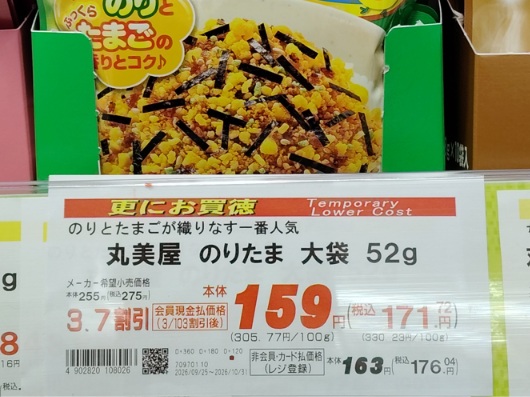
One familiar brand caught my eye: Noritama, a mixture of egg and seaweed flavors made by Marumiya.
At the 100-yen shop, one packet contained 25 grams and cost 100 yen before tax.
That works out to 4 yen per gram.
Next, I visited a nearby regular supermarket and found the same product in a 52-gram packet for 219 yen before tax.
That works out to approximately 4.2 yen per gram.
So, in this comparison, the 100-yen shop was slightly cheaper.
But then I visited another supermarket, a discount store.
There, the same 52-gram packet cost just 159 yen before tax.
The price dropped to approximately 3.1 yen per gram. That’s a pretty big difference!
However, the discount supermarket didn’t sell the smaller 25-gram packet.
So, if you want a small package, the 100-yen shop might be a convenient choice. If your priority is getting the lowest price per gram, the discount supermarket is worth considering.
The cheapest option depends on what you need.
Photo 1: Noritama at a 100-yen shop. One packet contains 25 grams and costs 100 yen before tax.
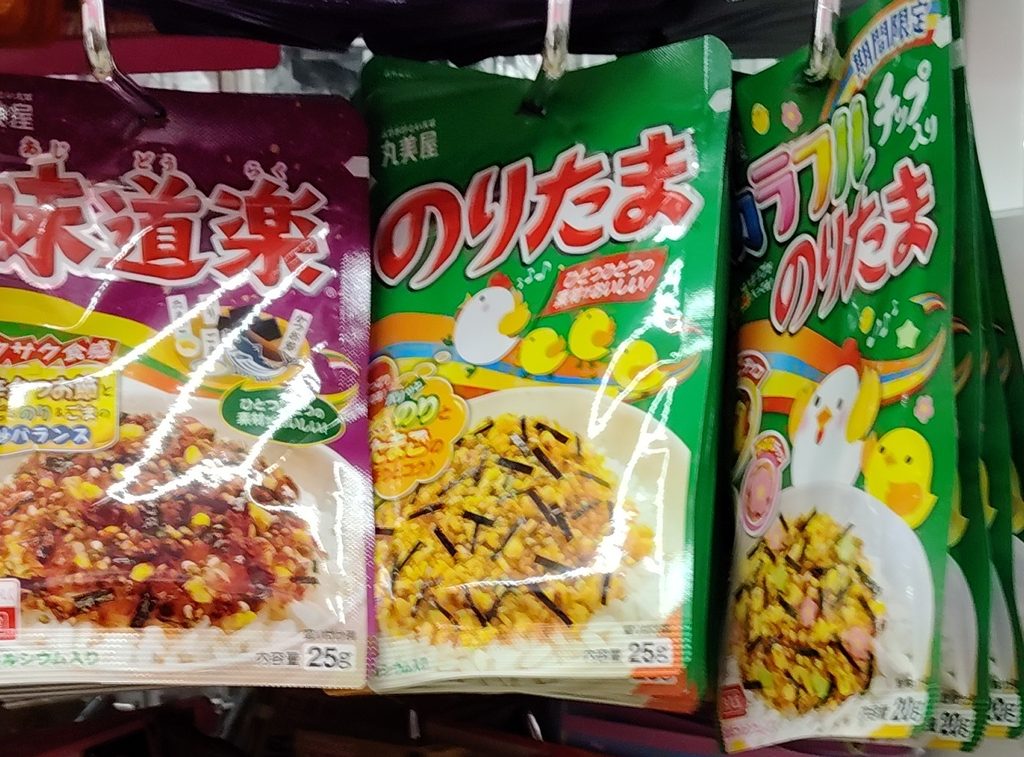
Photo 2: Noritama at a regular supermarket. One packet contains 52 grams and costs 219 yen before tax.
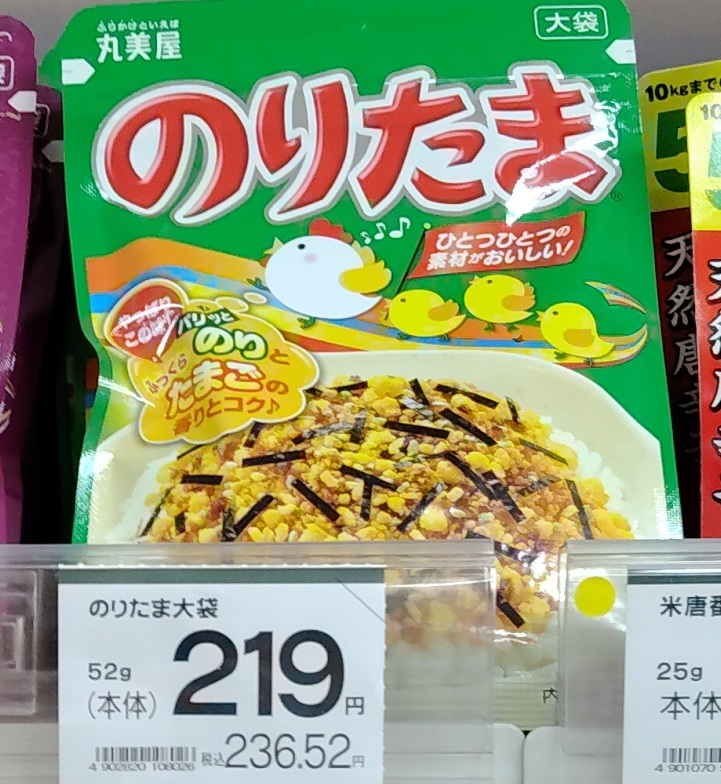
Photo 3: Noritama at a discount supermarket. One packet contains 52 grams and costs 159 yen before tax.
What You Can and Cannot Buy at 100-Yen Shops
By the way, some people hear that you can buy almost anything at a 100-yen shop and visit one, only to find that it is not quite what they expected. One common reason for this disappointment seems to be a lack of understanding of what these shops do and do not sell.
So, let me introduce some of the things you can and cannot buy at a 100-yen shop. Please note that this list is based on a typical 100-yen shop. The selection may vary depending on the size of the store and other circumstances, so use this as a general guide.
By the way, 100-yen shops also offer smartphone apps. Some of them let you check product availability, which can be very convenient.
What You Can Buy
First, let’s look at some of the things you can buy.
- Stationery and office supplies
- Kitchen supplies
- Small interior decorations and accessories
- Food
- Bath products
- Laundry supplies
- Small electrical accessories
- Tools
- Gardening supplie
- Cosmetics
- Toys
What You Cannot BuyWhat You Cannot Buy
Next, let’s look at some of the things you generally cannot buy. Fresh food and medicines are among the main examples. Even when it comes to food, large packages are generally not available.
It is best to think of these shops as places that sell items for around 100 yen, rather than places where absolutely everything is available.
However, some larger or more expensive items are sold for 300 or 500 yen. The selection varies from store to store, so checking the store’s app is a good idea.
Conclusion
100-yen shops sell an incredible variety of products, and the quality can be surprisingly good for the price. In a way, they can be addictive places to shop. You go in to buy one thing and end up discovering ten other things you want!
However, some products can turn out to be more expensive than they first appear, especially when they come in smaller packages. Comparing the price per gram or per item can reveal a different story.
That’s why it’s worth comparing prices at supermarkets, drugstores, and other retailers before deciding where to shop.
On the other hand, some people simply prefer smaller packages, even if they cost a little more. Smaller quantities can be convenient if you don’t need much or want to avoid buying more than you can use.
In the end, the smartest way to shop is to find the option that works best for your needs.
And remember: when you see a product advertised for 100 yen in Japan, don’t forget to check the tax!