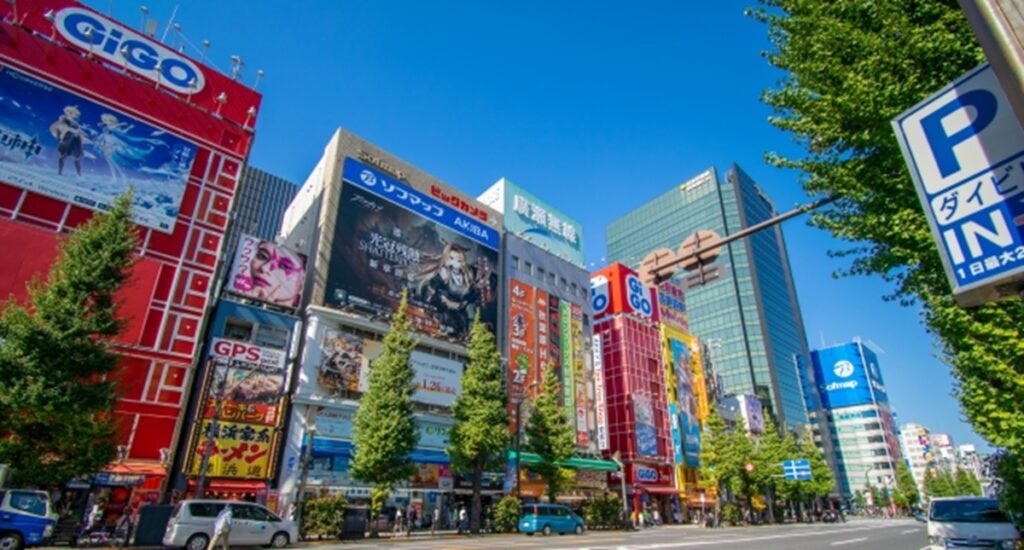
Japanese summers are not only hot but also very humid, making them extremely uncomfortable.
In particular, the recent rise in temperatures has been severe, and quite a few people suffer health problems because of the heat.
That is why an air conditioner is essential.
However, people who have only recently arrived in Japan may wonder how they should choose and buy an air conditioner.
So, in this article, based on my own experience, I will introduce some points you should be careful about when buying an air conditioner, in the form of a story.
By the way, please understand that Nobu’s comments in the story should be taken as personal advice based on the author’s own experience.
Characters
Mike: A 12-year-old American boy who is interested in Japan.
John: Mike’s father. He sometimes travels to Japan on business.
Kelly: Mike’s mother. She is good at cooking.
Nobu: A Japanese exchange student.
Prologue
John is an American businessman, and one of his colleagues is about to be transferred to Japan.
His new home will be a rental apartment in the Tokyo metropolitan area.
Naturally, things are different from those in the United States.
Just as his colleague was preparing to come to Japan, John heard about how severe Japanese summers can be.
So, his colleague asked John, who had experience visiting Japan, for some advice.
However, although John had visited Japan before, he had never stayed there for a long period of time.
Therefore, he decided to ask Nobu for advice.
Characteristics of Air Conditioners in Japan
John: “I hear that Japanese summers are really tough. Could you tell me how to choose an air conditioner and what I should be careful about?”
Nobu: “Of course. I’d be happy to. First of all, I think it is important to understand the characteristics of air conditioners in Japan.”
John: “I see. That makes sense.”
Basically, Air Conditioners Are Installed for Each Room
Nobu: “Air conditioning can either be provided for an entire building at once or separately for each room. In Japanese homes, however, air conditioning is basically provided on a room-by-room basis.
So, for example, if you have a four-bedroom property with a living room, dining room, kitchen and four rooms, you may need four or five air conditioners depending on the layout.”
John: “I see. So I have to think about each room separately?”
Nobu: “That’s right. You should think about it on a room-by-room basis.
For example, when you look at the capacity of an air conditioner at an electronics store, you will see descriptions such as ‘for 6 tatami mats’ or ‘for 8 tatami mats.’
These descriptions indicate the size of the room the air conditioner is designed for.
If you buy a model for 6 tatami mats for a large room, it will use more energy than necessary. On the other hand, if you buy a model for 8 tatami mats for a small room, it will be more powerful than necessary.
Therefore, you should check the size of each room and choose and install an appropriate model.”
John: “So whole-house air conditioning doesn’t exist at all?”
Nobu: “It does exist, but it is mainly found in detached houses.”
Basically, They Are Wall-Mounted
Nobu: “Also, air conditioners in Japan are basically wall-mounted.
If you go to an air conditioner section of an electronics store, you’ll see rows and rows of units mounted on walls.”
John: “When you say wall-mounted, doesn’t that make installation difficult?”
Nobu: “Installation work can certainly be difficult. But an electrical contractor does the work, so you don’t have to worry about it.”
John: “Can’t I install it myself?”
Nobu: “Air conditioner installation may involve changing indoor electrical wiring. Therefore, it has to be done by a qualified person.
No matter how confident you are about electrical work, doing it yourself may violate the law, so it’s better to leave the work to a professional.”
There Are 200-Volt and 100-Volt Models
Nobu: “Also, air conditioners come in models using either 200 volts or 100 volts.
The 200-volt models are more powerful. If you are installing one in a large room, you will probably need a 200-volt model.”
John: “I see. Having more power sounds reassuring.”
Nobu: “However, it is essential to check the electrical outlet before buying one.
Even if you buy the air conditioner, you will have a problem if its power requirements don’t match the outlet.”
John: “That’s true.”
They Are Operated by Remote Control
Nobu: “Also, Japanese air conditioners are operated using a remote control.”
John: “Well, that’s pretty normal, isn’t it?”
Nobu: “But unlike a television, there are cases where the air conditioner can only be operated using the remote control.
So you need to be very careful not to lose or damage the remote control.”
John: “If I unplug the air conditioner, it should stop anyway, so wouldn’t it be okay?”
Nobu: “But even if you plug it back in, you may not be able to turn it on again.
In any case, you need to take good care of the remote control.”
How to Choose an Air Conditioner
Nobu: “Next, let me explain how to choose an air conditioner.”
Air Conditioner Capacity — Room Size
Nobu: “The first thing to consider is the capacity of the air conditioner, or the room size it is designed for.
The output capacity of Japanese air conditioners varies according to the size of the room.
A high-output model is installed in a large room, while a model with less capacity is used for a smaller room.”
John: “The size of the room? Isn’t that a little difficult?”
Nobu: “Basically, the size of a Japanese room is often expressed by the number of tatami mats, so there should be no problem if you check the floor area.
However, for Western-style rooms with wooden or laminate flooring, you can’t simply calculate the size by the number of tatami mats, so you will probably need to convert the area into square meters.”
John: “What should I do in that case?”
Nobu: “Measure the approximate dimensions of the room, calculate the area, and ask the salesperson at the store.
They will be able to recommend an air conditioner with an appropriate capacity.”
John: “I see.”
Features
Nobu: “Next are the features of the air conditioner.
Since features are related to the price, it is better to think about what features you actually need.”
John: “What kind of features?”
Nobu: “In general, things like cooling and heating, dehumidification, air purification, and automatic cleaning.
Higher-end models have more features. Lower-end models are cheaper, but some features are removed.”
John: “Which one is better?”
Nobu: “This is based only on my personal experience, but I recommend a higher-end model with more features.
For example, during the pollen season, I found that air purification became necessary.
Also, I wasn’t able to clean my air conditioner very often, and its performance decreased.
I regretted not having an automatic cleaning function.
In other words, you may later discover that a feature that initially seems unnecessary or excessive is actually something you can’t do without.”
John: “I see. So a higher-spec model is better.”
Nobu: “It really depends on the situation, though.”
Energy Efficiency
Nobu: “You also need to consider energy efficiency.
The reason is that electricity prices have risen dramatically recently.”
John: “Electricity costs directly affect the household budget.”
Nobu: “Exactly.
So, before buying one, it is also a good idea to check how much electricity it uses.
By the way, some electronics stores display an estimated annual electricity cost for each model.
That can be useful when choosing a model.”
Check Several Electronics Stores
Nobu: “Next, when buying an air conditioner, the basic rule is to check several electronics stores.”
John: “Why is that?”
Nobu: “Because the types of air conditioners they have in stock may be different.”
John: “I see. So if I check several stores, I can compare more models.”
Nobu: “That’s one reason, but you can also compare prices.
What’s more, some electronics stores may offer a discount if another store is selling the same product for less.
If you are also considering getting a discount, you should definitely check several stores.”
John: “I see.”
Nobu: “Also, installation costs may be charged separately, so sometimes you need to calculate the total cost.
You shouldn’t compare only the price of the product itself. You also need to consider the total cost.
That’s another reason why you should check several stores.”
John: “I see.”
Cost
Nobu: “You also need to check the cost.
Basically, I would like to recommend a high-spec product, but there are also people who want to prioritize keeping the cost down.”
John: “That’s true. Price is important.”
Nobu: “That’s exactly why I think you need to compare several products.
However, in that case, I think you should also include electricity costs in your calculation.”
John: “If the electricity bill is high, that certainly makes sense.”
Manufacturers
Nobu: “Then there are the manufacturers.
Several companies make air conditioners in Japan, so you also need to compare different manufacturers.”
John: “I see. So which manufacturer is the best?”
Nobu: “That’s a very difficult question.
The reason is that each manufacturer has different characteristics.
There are manufacturers that focus on specifications and others that focus on cost. There are many different approaches.”
John: “But you’ve chosen an air conditioner before, haven’t you?”
Nobu: “Yes. I chose a mid-range model from a company that offered good value for money.”
Other Things to Consider
John: “Is there anything else?”
Nobu: “Let’s see…”
If You Are Renting, Talk to the Landlord
Nobu: “If you are renting a property, you need to talk to the landlord.”
John: “Do you really have to ask for permission every time?”
Nobu: “Legally, when you rent a property, you generally have to return it to its original condition when you leave.
Basically, the owner is responsible for restoring deterioration caused by normal use, but damage caused by the tenant’s negligence can be the tenant’s responsibility.
When installing an air conditioner, you may have to make a hole in the wall. That can potentially become a source of disagreement.
So, you should discuss it with the landlord in order to avoid trouble.”
John: “I see. Returning it to its original condition.”
Measures Against Noise and Vibration
Nobu: “You also need to take measures against noise and vibration.”
John: “Noise and vibration? That’s a headache.”
Nobu: “Exactly. Surprisingly, this can become a source of conflict.”
John: “What did you do in your case?”
Nobu: “I modified the stand where I placed the outdoor unit.
I put a sheet of foam rubber underneath the stand.
That helped reduce the transmission of vibration.”
John: “Rubber. That might be effective.”
Don’t Lose the Remote Control
Nobu: “Also, it is important not to lose the remote control.”
John: “Do people really lose remote controls?”
Nobu: “Surprisingly, yes.
The remote control for an air conditioner is shared by everyone in the family, so if someone leaves it somewhere, it may be difficult to find.”
John: “I see.”
Nobu: “Another bad habit is when someone changes the temperature to their preferred setting and then hides the remote control.
People who don’t want anyone else to change the temperature sometimes do this.”
John: “I see. That’s pretty nasty.”
Nobu: “By the way, electronics stores also sell spare remote controls.
If you lose or break yours, you can use a spare one.”
Installing and Removing an Air Conditioner
Nobu: “Let’s talk about installing and removing air conditioners in Japan. Japanese air conditioners typically consist of two separate units: an indoor unit and an outdoor unit. This means that installation work is required in two locations.
The indoor and outdoor units are connected to each other, and the system also needs an electrical power supply. So, you can’t simply attach the indoor unit to a wall with a few screws and call it a day. There are several things to check before buying one.
By the way, the air conditioners displayed in electronics stores usually show only the indoor units. The outdoor units are not normally displayed alongside them, so make sure you check exactly what is included when you make your purchase.
Now, let’s talk about the installation work.”
Who Can Install an Air Conditioner?
John: “Air conditioner installation, huh? It doesn’t look all that complicated. I wonder if I could do it myself.”
Nobu: “In some cases, perhaps. But there are also situations where DIY installation isn’t practical or where the work must be done by a qualified professional.”
John: “So, when is DIY installation possible?”
Nobu: “One example is a type of air conditioner that can be mounted in a window without requiring electrical wiring work. In Japan, electrical work that requires a qualification must be performed by a properly qualified electrician.
The indoor and outdoor units of a typical split-type air conditioner are also connected by cables, and certain electrical work involved in that installation requires the appropriate qualifications.
As a result, there are many cases where you can’t legally do all the installation work yourself.”
Do You Have to Pay Extra for Installation?
John: “I see. But doesn’t that mean I have to pay an installation contractor separately?”
Nobu: “That’s right. Installation costs vary depending on the circumstances, so you need to be careful. You might see the price displayed in a store and think, ‘Great, I can afford that!’ only to discover that you also need to pay for installation.”
John: “Are some installations more expensive than others?”
Nobu: “Absolutely. For example, if the electrical outlet needs to be relocated, additional work on the wall may be necessary, increasing the installation cost.
On the other hand, if the existing electrical supply and installation conditions are suitable and no additional electrical work is needed, the cost may be lower.”
Can You Install an Air Conditioner in a Rental Property?
Kelly: “By the way, installing an air conditioner usually involves making a hole in the wall for the pipes, doesn’t it? Can you install one in a rental property? And could the landlord charge you for the damage when you move out?”
Nobu: “That depends on the circumstances, too. In Japan, rental properties are subject to rules concerning the restoration of the property when a tenant moves out.
Generally speaking, landlords are responsible for ordinary wear and tear resulting from normal use, while tenants may have to pay for damage caused by their negligence or misuse.
However, you can’t assume that every situation will be treated the same way. For example, making a large hole in a wall to accommodate air conditioner drainage or piping could raise additional issues, depending on the property and the applicable rules.
That’s why I recommend explaining the planned installation work to your landlord and obtaining permission before proceeding. It’s better to confirm what work is allowed in advance than to face an unexpected bill when you move out.”
Kelly: “That sounds complicated!”
The End
Why Are Japanese Air Conditioners So Quiet?
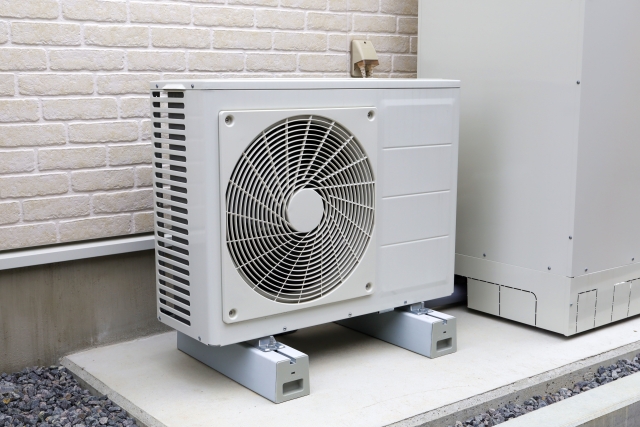
In another part of this article, I explained a simple way to reduce vibrations from an outdoor air conditioning unit. It is a surprisingly effective method, and I recommend giving it a try.
But here, I want to go one step further and ask a different question: Why are the outdoor units of Japanese air conditioners so quiet in the first place?
Let’s explore the answer from a slightly technical perspective.
There are four main technologies used to reduce noise and vibration in Japanese air conditioner outdoor units:
- Reducing compressor vibration
- Designing quieter fans
- Using inverter technology
- Controlling vibration in the outer casing
Let’s take a closer look at each one.
Reducing Compressor Vibration
The compressor is one of the major sources of vibration in an air conditioner outdoor unit. That is why controlling vibration in this component is so important.
Manufacturers use various methods to reduce vibration, including rubber vibration isolators and carefully designed weight distribution. These measures help keep vibrations from spreading through the unit.
Designing Quieter Fans
Fans can be surprisingly noisy, too. They can produce not only mechanical vibrations but also aerodynamic noise, often heard as the sound of air rushing past the blades.
To reduce this noise, engineers must carefully consider how the fan interacts with the surrounding air.
Two important solutions are optimized blade designs and sophisticated rotational speed control.
Incidentally, understanding how air flows around a fan requires research in fluid dynamics. This is a good example of how quiet operation can be achieved through years of painstaking scientific and engineering work.
Using Inverter Technology
Another important technology is the inverter.
An inverter controls the frequency of the electrical power supplied to a motor. This makes it possible to adjust the rotational speed of an AC motor.
How does this help reduce noise?
By controlling the fan’s rotational speed, the system can adjust airflow to meet the cooling or heating demand. This can help reduce the aerodynamic noise produced by the fan blades, particularly when the unit does not need to operate at full speed.
In other words, inverter technology helps the air conditioner operate more quietly by allowing the fan to run at an appropriate speed for the conditions.
Controlling Vibration in the Outer Casing
The outer casing of an air conditioner also plays an important role in noise reduction. One particularly challenging issue is resonance.
Resonance occurs when a force acts at or near an object’s natural frequency of vibration, causing the vibration to become much larger. This can produce a noticeable buzzing or rattling sound, and it can be difficult to eliminate once it occurs.
Japanese air conditioner manufacturers pay attention to more than just the thickness of the materials used in the casing. The design and placement of the screws that hold the casing together can also affect its vibration characteristics.
This illustrates the level of engineering that can go into something as seemingly simple as an outdoor air conditioner unit.
Why Did These Technologies Develop in Japan?
The evolution of Japanese air conditioners began decades ago. One important factor behind this development was Japan’s housing environment.
Consider apartment buildings and large residential complexes. In many of these homes, the balcony is the only practical outdoor space available for an air conditioner unit. As a result, the outdoor unit often has to be installed on the balcony.
Now imagine what happens if that unit produces loud noise and vibrations. The neighbors may complain, especially if the noise disturbs their sleep or daily life.
In Japan, noise disputes between neighbors can sometimes escalate into legal disputes. Manufacturers therefore had good reason to treat noise reduction as an important engineering challenge.
The technologies used to make Japanese air conditioner outdoor units quieter developed partly in response to these living conditions. The goal was to allow people to enjoy a peaceful home environment, even in densely populated apartment buildings.
Interestingly, a similar approach can be seen in washing machines.
Compared with older models, modern washing machines can produce dramatically less noise and vibration, thanks to improvements in motor control, mechanical design, and vibration isolation.
Perhaps these quiet appliances are also the result of engineers’ dedication to one simple goal: making everyday life a little more peaceful.
Conclusion
I have introduced some points about how to choose and buy an air conditioner in Japan.
There may have been some things you didn’t know.
The hot summer is coming, and an air conditioner is an essential item in Japan.
That is exactly why it is important to buy one wisely.
Please pay attention to how you choose and purchase your air conditioner, and choose the best model for your own needs.
Related Article
● Looking to save money when buying home appliances in Japan?
Timing is everything! In this article, we’ll show you the best times to shop for home appliances and how to take advantage of seasonal sales and special discounts.Read
the article →
● This article introduces Japan’s year-end sales, a great opportunity to find bargains and enjoy shopping at lower prices.
If you’re looking to save money while shopping in Japan, this article is well worth reading.
the article →
● Buying a used air conditioner can help you save money.
However, are there any risks involved in purchasing a secondhand unit?
In the next article, we take a closer look at the risks of buying a used air conditioner.
Read the article →