Japan has a food culture that includes eating seaweed. Nori is one example, and many people overseas are probably familiar with it because it is used in sushi rolls and onigiri rice balls.
But how much do people know about the deeper cultural background of nori?
In this article, I will introduce Japan’s nori culture through a story and conversations between several characters.
Characters
Mike: A 12-year-old American boy who is interested in Japan.
John: Mike’s father. He sometimes travels to Japan on business.
Kelly: Mike’s mother. She is good at cooking.
Nobu: A Japanese exchange student.
Prologue
John and Mike were talking about nori in Japan. Both of them were fascinated by the idea of a food culture that included eating seaweed. However, they found it difficult to picture what this culture was really like.
Just then, Nobu joined them.
How would he explain the world of nori to them?
The Culture of Nori
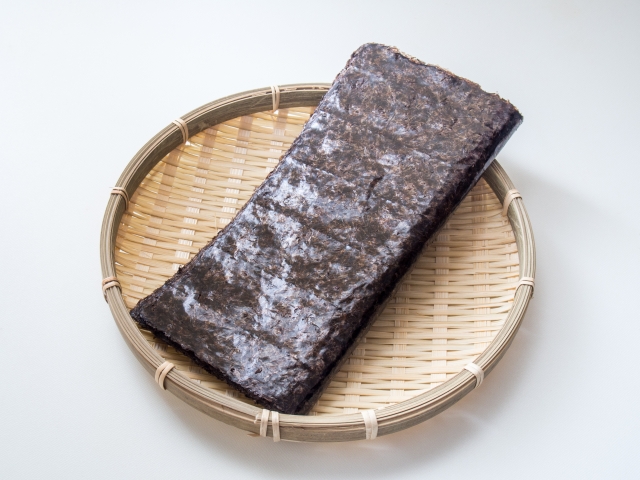
John: “To be honest, I never really thought about eating seaweed in the past. I’ve eaten sushi rolls and other foods containing nori, but I never really thought about the fact that nori was seaweed.”
Mike: “It’s not something you would necessarily notice in your everyday diet.”
John: “That’s exactly what makes it interesting. It really shows how deep Japanese food culture is.”
Nobu: “That’s true. Nori has a long history, and there are secrets behind how it’s made. There are also different types and many ways to eat it. There’s a lot more to nori than you might think.”
John: “Then could you explain it to us one thing at a time?”
Nobu: “Let’s start with its history.”
The History of Nori
John: “The history of nori? That sounds interesting.”
Nobu: “Let me explain.
Japanese people have been eating nori since ancient times. In fact, it is said to have been eaten for more than 2,000 years. That gives you an idea of how deeply it has become part of everyday life in Japan.”
John: “More than 2,000 years? That’s impressive!”
Nobu: “However, nori did not become the kind of food we eat today until around the Edo period (1603–1868). It is said that the technique for making thin, flat sheets of nori was developed during that time.
Interestingly, the method used to make these sheets may have been influenced by the traditional production of washi, Japanese paper.
Washi is made by extracting fibers from plants and spreading them evenly in water to form thin sheets. This technique makes it possible to create sheets with a relatively uniform thickness and an attractive appearance. It also helps produce a consistent texture.
John: “I see! So Japanese paper-making techniques helped make nori into neat, flat sheets.”
Nobu: “That’s the idea. Nori has continued to be passed down through the generations. Today, we have many nori products, including seasoned nori, and the range of dishes that use it has expanded.
You could say that this is another sign of how deeply nori is rooted in Japanese life.”
How Is Nori Made?
Kelly: “By the way, how exactly is nori made?”
Nobu: “Let’s start with the raw materials.”
The Raw Materials for Nori
Nobu: “First, let’s look at the seaweed itself. Nori is made by processing certain types of red algae, including Pyropia yezoensis and Pyropia tenera, which are commonly known in Japan as susabi-nori and asakusa-nori, respectively.
Susabi-nori is widely cultivated in Japan, including in the Kyushu region in the south.
Asakusa-nori, on the other hand, was traditionally produced in the Kanto region, around Tokyo. However, its production has declined considerably.
So, much of the nori you find on Japanese dining tables today is likely to be made from susabi-nori.”
John: “I see. So one type has become much less common. That’s a shame.”
The Nori-Making Process
Nobu: “Next, let me explain how nori is made.”
Kelly: “That’s what I wanted to know!”
Nobu: “The basic process is surprisingly simple. The seaweed is harvested, washed to remove unwanted material, and chopped into small pieces. The mixture is then spread into thin sheets in much the same way as traditional Japanese paper and dried.”
Kelly: “That sounds simpler than I expected.”
Nobu: “However, there is a lot of know-how involved in the details.
For example, the thickness of a sheet of nori needs to be reasonably uniform. This requires careful control of the amount of raw material used. The spreading process also needs to be controlled so that the seaweed is distributed evenly without creating thin or thick patches.”
Kelly: “So the real technology is hidden in those little details.”
Different Types of Nori
Nobu: “Next, let’s look at the different types of nori.
Some common types include dried nori, roasted nori, and seasoned nori.”
Dried Nori
Nobu: “First, there is dried nori. It is made by spreading chopped seaweed into thin sheets and drying them.
One of its distinctive features is its aroma. It has a subtle scent that might remind you of the sea.”
Kelly: “A seaside aroma. I see what you mean.”
Nobu: “Compared with roasted nori, some dried nori products retain more moisture, giving them a slightly softer texture. Depending on the product, they can be suitable for making sushi rolls.”
Roasted Nori
Nobu: “Next is roasted nori. Much of the nori sold today is roasted after being dried.
One of its attractions is its toasted aroma. It also has a crisp texture that many people enjoy.
Its aroma goes particularly well with plain white rice. In fact, it can make rice so delicious that you may find yourself eating more than you intended.”
Kelly: “Eating too much rice can make you gain weight. That makes nori a little dangerous in its own way!”
Seasoned Nori
Nobu: “Next is seasoned nori. This is usually made by adding a seasoning sauce, often containing ingredients such as soy sauce and sugar, to roasted nori.
You can enjoy both its crisp texture and the savory flavor of the seasoning.”
Kelly: “That sounds delicious!”
Nobu: “It is. Seasoned nori is also popular with children. It might even help encourage children who are reluctant to eat their rice.”
Nori Also Comes in Different Shapes
Nobu: “There are also differences in the way nori is cut. A good example is momi-nori.”
Kelly: “Momi-nori? What is that?”
Nobu: “It is nori that has been cut into thin strips or small pieces. You can use it much like a garnish.
For example, it is often placed on top of zaru soba, cold buckwheat noodles served on a tray. It is also used as a topping for Japanese-style pasta, which has become popular in Japan.”
Nori Is Also a Nutritious Food
Nobu: “By the way, did you know that nori is also a nutritious food?”
John: “Nori is healthy? But it’s just seaweed, isn’t it?”
Nobu: “Exactly. It’s seaweed, but don’t underestimate it.
Nori contains various nutrients, including dietary fiber and vitamins. It also provides minerals such as iron. Some people even call it the ‘green and yellow vegetable of the sea.'”
John: “I see. Dietary fiber is important, and it’s something people might not get enough of.”
Nobu: “Yes. Nori is often introduced as a nutritious food, and its nutrients can contribute to a balanced diet. However, we shouldn’t assume that eating nori alone will automatically improve our health.”
How to Enjoy Nori
Nobu: “Next, let’s talk about how to enjoy nori.”
Mike: “I’m looking forward to this!”
Nobu: “Actually, the texture of nori can change considerably depending on how it is prepared. One important factor is how much moisture it absorbs.
When nori contains little moisture, it stays crisp and crunchy. When it absorbs moisture, that crispness disappears and the nori becomes soft.”
Kelly: “That must make a difference in how you use it in cooking.”
Enjoying Crisp Nori
Nobu: “Let’s start with crisp nori. A good example is the onigiri rice balls sold at convenience stores in Japan.
The nori is wrapped around the rice just before eating, so you can enjoy its crisp texture.”
Mike: “Wait a minute. Aren’t rice balls wrapped in nori from the beginning?”
Nobu: “Some are. If the nori is wrapped around the rice in advance, it absorbs moisture and becomes soft.
However, many convenience-store onigiri are packaged so that the nori and rice are kept separate until you open the package. This prevents moisture from the rice from reaching the nori.
You wrap the nori around the rice just before eating, which helps preserve its crispness.”
Mike: “Now I understand! So that’s why some of the packages have that special wrapping.”
Enjoying Soft Nori
Nobu: “Next, let’s look at soft nori. In this case, the nori has absorbed moisture and become soft.
A good example is a sushi roll.”
John: “I thought sushi rolls and onigiri were pretty similar in that respect.”
Nobu: “The difference is when the nori is wrapped around the rice. For a sushi roll, the nori is wrapped around the rice during preparation. It then absorbs moisture from the rice and becomes soft.
That’s why sushi rolls often have a different texture from convenience-store onigiri with crisp nori.”
John: “I see.”
Nobu: “Of course, some convenience-store onigiri are wrapped in nori from the beginning, without separating the rice and nori. In those cases, the nori naturally becomes soft as well.”
What If Nori Absorbs Too Much Moisture?
Kelly: “By the way, indoor humidity can get quite high depending on the season and weather. Food sometimes becomes damp. What happens to nori?”
Nobu: “Nori can become damp, too. However, if plain roasted nori loses its crispness, you can sometimes restore it by briefly warming it over a gas stove.”
Kelly: “I see. Just a little heat.”
Nobu: “Yes, but be careful. Nori is very thin and can burn easily. Use low heat, keep it moving, and watch it closely. You should also avoid doing this near an open flame if the nori could catch fire.”
Be Careful When Adding Soy Sauce to Nori
Nobu: “There is one more thing worth mentioning: how you season nori.”
John: “What do you mean by seasoning it?”
Nobu: “For example, many people eat sheets of nori with rice and add flavor with soy sauce. However, there is a better way to do this if you want to enjoy the original texture and aroma of the nori.”
John: “What is it?”
Nobu: “Some people dip the entire sheet of nori into soy sauce. There’s nothing wrong with doing that if you like it, but the nori quickly absorbs moisture and loses its crispness.
You may also lose some of the pleasure of enjoying its distinctive aroma and texture.”
Kelly: “So all you really notice is the salty flavor of the soy sauce.”
Nobu: “Exactly!”
Examples of Japanese Dishes That Use Nori
Nobu: “Now, let’s look at some examples of Japanese dishes that use nori.”
Sushi Rolls
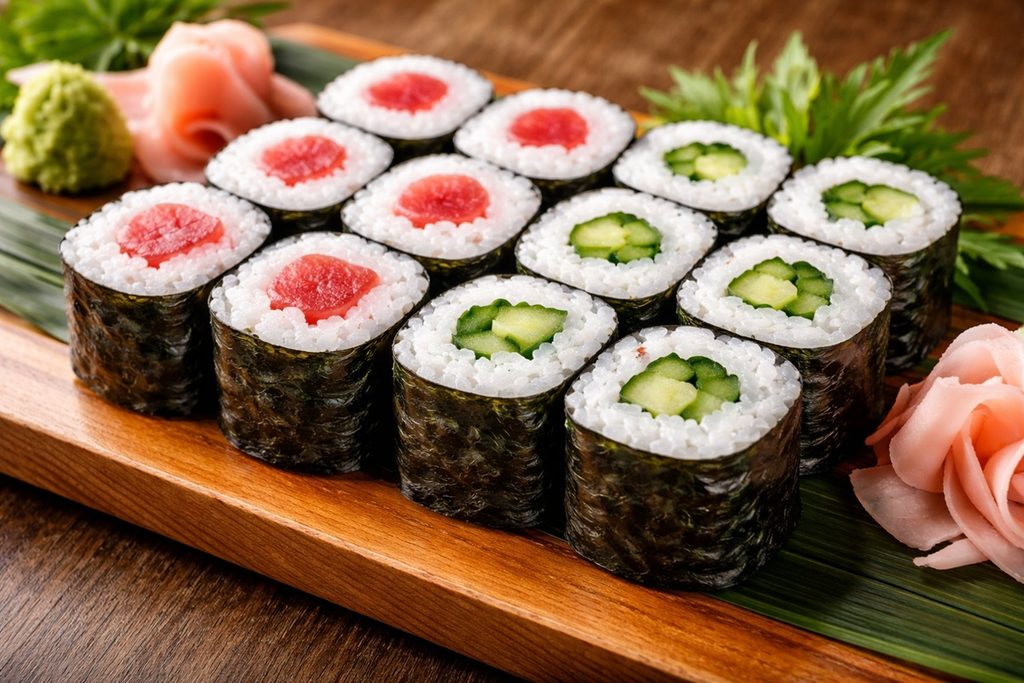
Nobu: “First, there are sushi rolls. These are a type of sushi made by wrapping rice and various fillings in nori.
Nori gives the rolls an attractive appearance and makes them easier to hold. It is also a convenient way to eat rice together with other ingredients.”
Kelly: “That’s true. Nigiri sushi is another example of sushi, but eating rice with your hands can sometimes make them sticky. Wrapping rice and fillings in nori makes the food easier to handle, and it adds flavor, too.”
Nobu: “By the way, there is also temaki sushi, or hand-rolled sushi. You choose your own fillings and wrap them in nori yourself, which is part of the fun.
With ordinary sushi rolls, the nori has usually had time to absorb moisture from the rice and become soft. With temaki sushi, the nori is often wrapped around the rice just before eating, so it can remain crisp.”
Onigiri Rice Balls
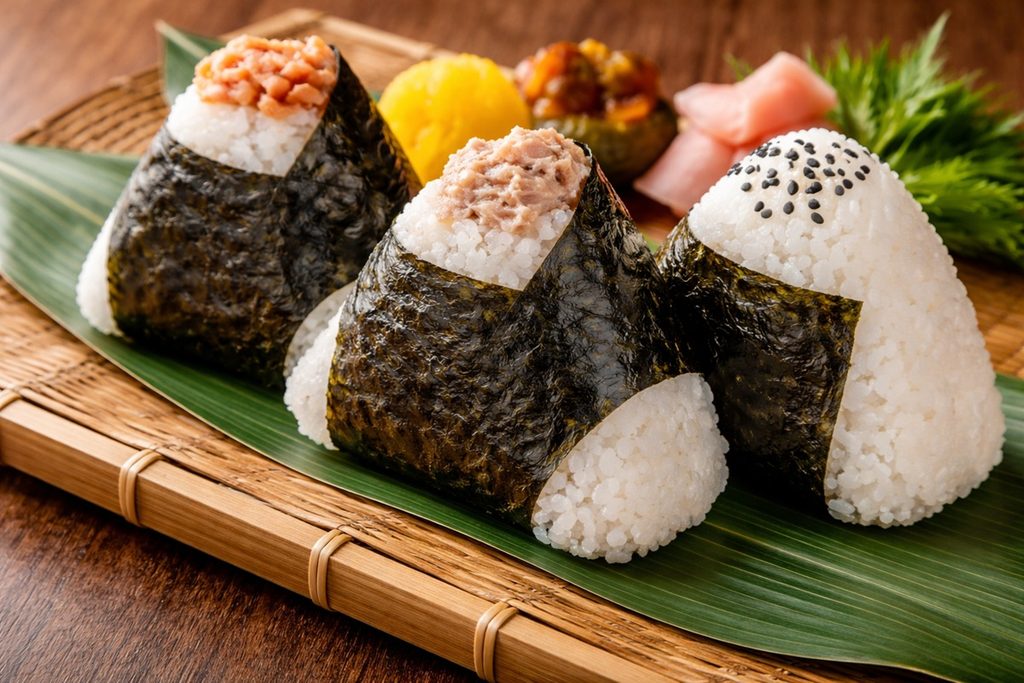
Nobu: “Next, there is onigiri. Traditionally, rice is shaped into a ball or triangle, and nori is wrapped around it.
When the nori is wrapped around the rice in advance, it absorbs moisture and becomes soft.”
Mike: “But convenience-store onigiri can keep the nori and rice separate until you open the package, so you can enjoy the crisp texture.”
Nobu: “Exactly!”
Furikake Rice Seasoning
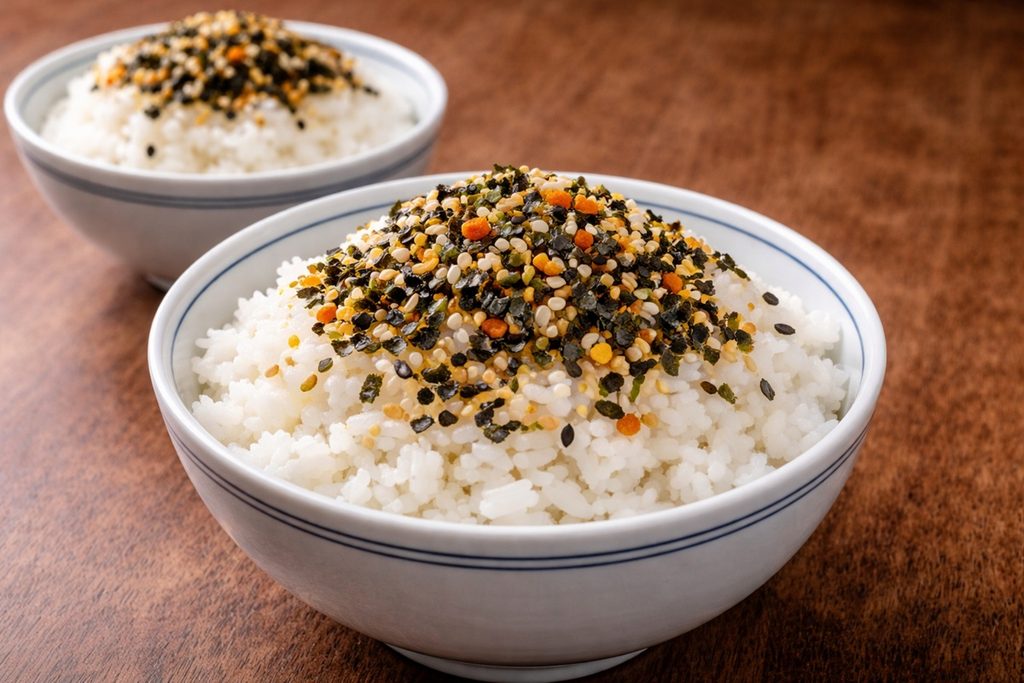
Nobu: “Furikake is a seasoning made from various ingredients, often dried and finely chopped or processed into small pieces. It is sprinkled over rice.
There are many varieties, including those made with fish such as salmon, as well as egg and other ingredients. Some unusual varieties even use natto, or fermented soybeans.
Personally, I think nori is one of the ingredients you’ll find quite often in furikake.”
Kelly: “I see. Adding nori gives the seasoning a nice aroma.”
Ochazuke
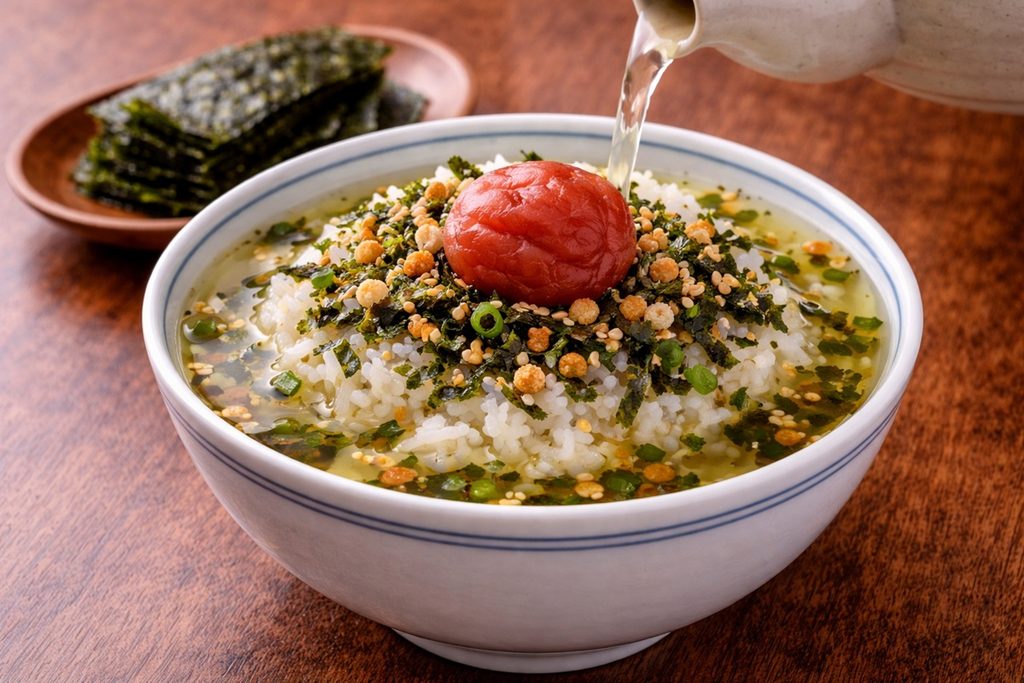
Nobu: “Ochazuke is a dish made by pouring tea over a bowl of rice, often with toppings added. Shredded or finely cut nori is commonly sprinkled over the top.”
Kelly: “Finely cut nori. It must add a nice aroma and make the dish look more attractive.”
Nobu: “Yes. Some versions of ochazuke also use fish, such as sea bream, as a topping. Nori goes well with fish, so adding it can make the dish even more enjoyable.”
Nori Tsukudani
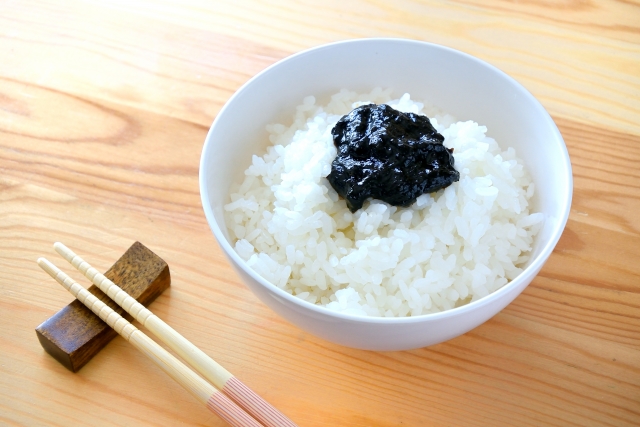
Nobu: “Another example is nori tsukudani. This is made by simmering nori with seasonings until it becomes a thick, paste-like food. It is often eaten with rice.”
Kelly: “I’m sure it adds a nice aroma to the rice.”
Nobu: “And that’s not all. It also adds a rich, savory flavor that makes the rice even more enjoyable.”
Ramen
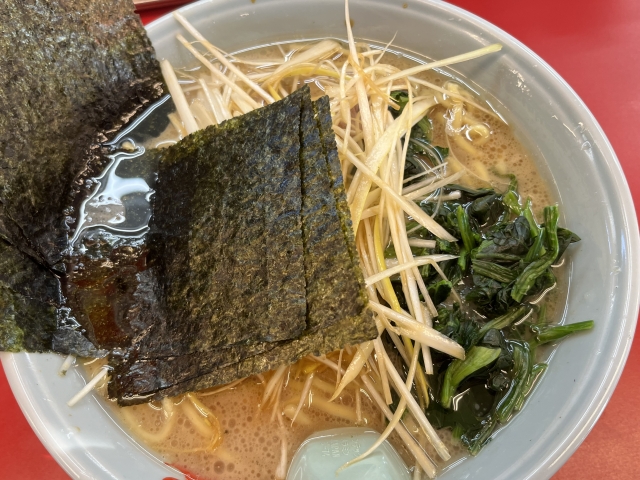
Nobu: “Nori is also used as a topping for ramen.
It is often placed near the edge of the bowl, where it can retain some of its crispness for a while before absorbing moisture from the soup.”
Kelly: “So you can enjoy not only its aroma but also its crisp texture.”
Senbei Rice Crackers
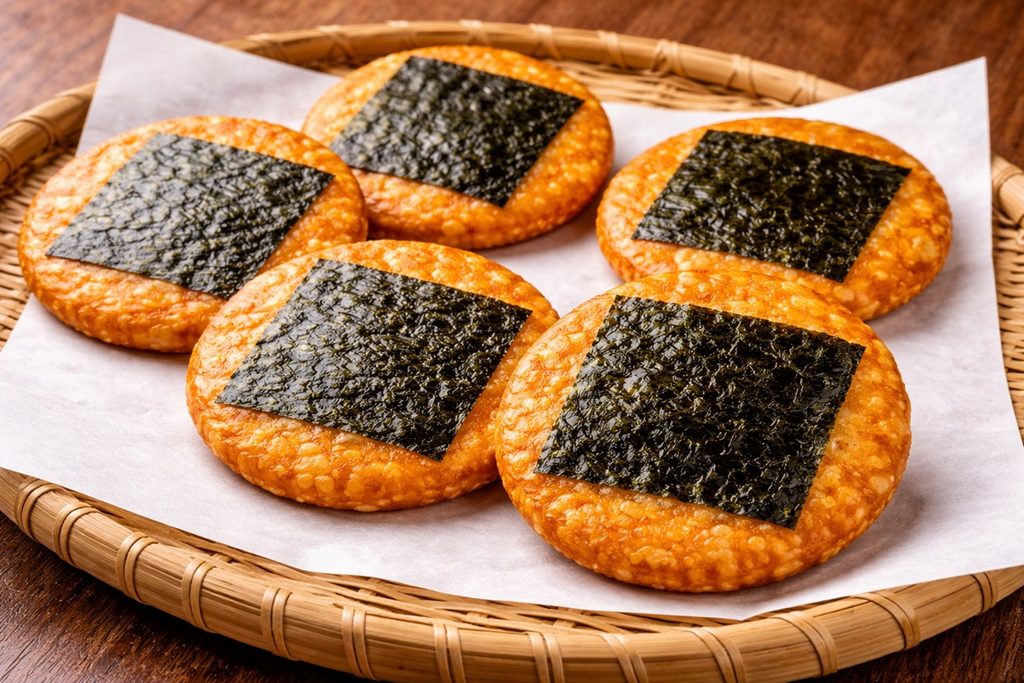
Nobu: “Nori is also used in senbei, traditional Japanese rice crackers. Some varieties are wrapped in nori.”
Kelly: “So nori can even be used for snacks. That really shows how versatile it is.”
Nobu: “I think so, too. Nori-wrapped senbei have a pleasant aroma, and the crisp texture of the seaweed adds to the enjoyment of eating them.”
Mochi
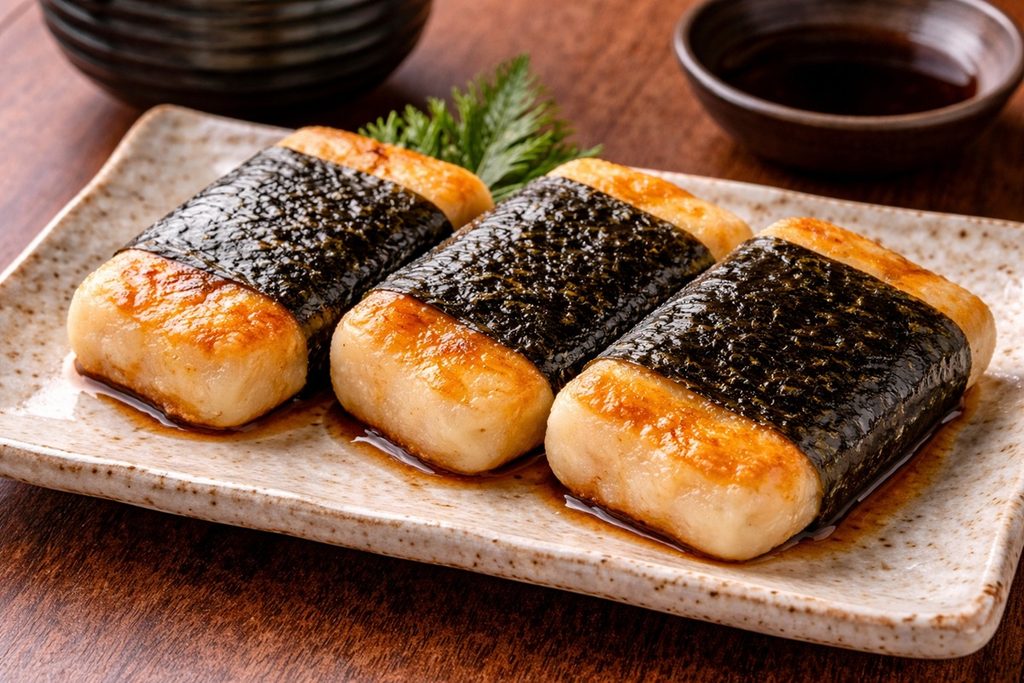
Nobu: “Nori is also used when eating mochi, a traditional Japanese rice cake.
One popular way to eat mochi is to grill it, season it with soy sauce, and wrap it in nori. The aroma of the nori and its crisp texture go very well with the soft, chewy mochi.”
Kelly: “Mochi? The combination of something chewy and something crisp sounds interesting.”
Nobu: “It really is. When mochi is grilled, its surface becomes lightly toasted. If you season it with soy sauce, the savory aroma is very appetizing. Add the aroma of nori, and you may find it hard to stop eating!”
Nori on Top of a Bento
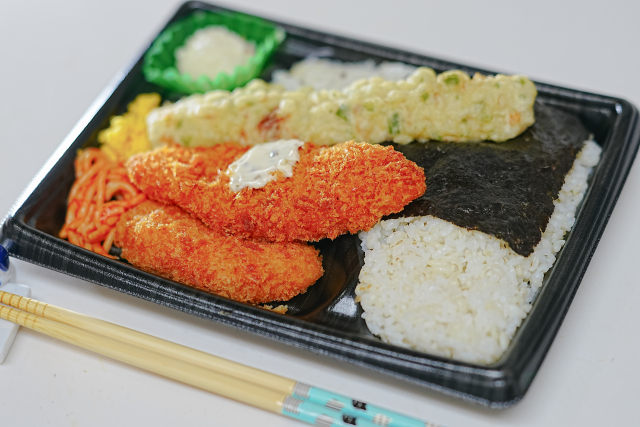
Nobu: “Nori is also sometimes placed over the rice in a bento, or Japanese packed lunch. A popular example is called noriben, which literally means ‘nori bento.’
It’s a standard item sold at many neighborhood bento shops.”
Kelly: “If you put nori directly on top of rice, it will become soft from the moisture.”
Nobu: “That’s right. Even so, noriben remains popular.”
Pasta and Other Western-Style Dishes
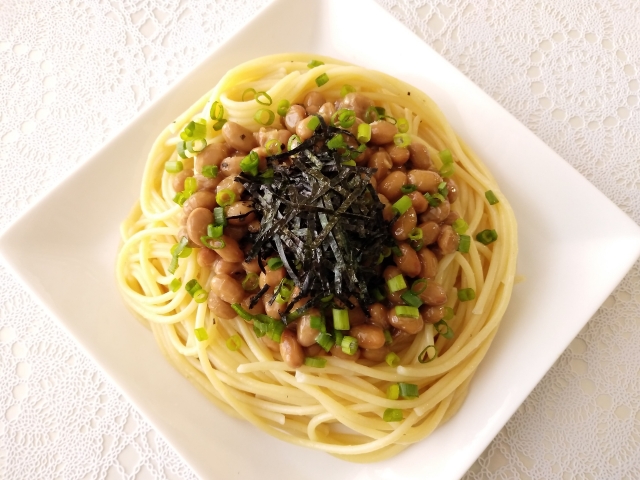
Nobu: “As I mentioned earlier, nori isn’t limited to Japanese cuisine. It is also used in dishes influenced by Western cooking.
A good example is Japanese-style pasta.”
Kelly: “What exactly is Japanese-style pasta?”
Nobu: “It’s pasta prepared to suit Japanese tastes. For example, the sauce may be based on soy sauce, and finely cut nori is sprinkled over the dish before serving.”
Kelly: “It’s surprising to see nori used in a dish that originated in Western cuisine.”
Nobu: “That’s one of the interesting things about Japanese food culture. Ingredients can be adapted to many different types of dishes.”
The End
The Selection of Nori at a Japanese Supermarket
To see how deeply nori has become part of everyday Japanese life, I visited a supermarket and looked at its selection of nori products. I deliberately chose a relatively small supermarket so that I could get an idea of what an ordinary local store offers.
What did I find?
Even this small supermarket stocked several types of nori, including whole sheets, seasoned nori, and finely cut nori.
Some varieties were even sold under the supermarket’s own private label.
Private-label products are often developed for items that customers buy regularly. Their presence suggests that nori is not simply a specialty food but a familiar part of everyday life in Japan.
My Personal Experiences with Nori
Next, I’d like to share a few personal experiences related to nori.
How the Way We Eat Nori Has Changed
One thing I’ve noticed is how much the way we use nori has changed over the years.
When I was growing up, my family usually ate rice for breakfast. Bread was rarely part of our morning meal.
Breakfast typically consisted of rice, miso soup, and a few simple side dishes. Nori was often included, too.
Sometimes, fish roe was served as well. I would wrap the fish roe and rice in nori and eat them together.
I still remember how well the distinctive aroma of the seaweed went with the rice.
Foods That Go Well with Nori
Of course, this depends on personal taste, so I’m only talking about what I personally enjoy.
For me, plain white rice is probably the best match for nori.
I suspect that my childhood environment has a lot to do with this. When I think of nori and white rice, I remember the breakfasts I ate every morning. Just thinking about those meals seems to bring back the taste and enjoyment I experienced at the time.
Making Nori Tsukudani at Home
This is something I heard from my family.
In the past, when nori became old, people in my family would make nori tsukudani at home.
Bottled nori tsukudani may already have been commercially available at the time, but my family still made their own.
One advantage of making it at home is that you can experiment with the flavor. Store-bought nori tsukudani has the familiar taste you expect, which is nice. However, homemade versions allow you to enjoy different flavors depending on how you season them.
I’d certainly like to try making it at home myself.
A Nori Tsukudani Product Called “Dad, Keep Up the Good Work!(おとうさんがんばって!)”
Several food manufacturers sell nori tsukudani, but in the past, there was a product with a name that could be translated as “Dad, Keep Up the Good Work!(おとうさんがんばって!)”
The product was intended to encourage fathers who worked hard every day. Naturally, the message was meant kindly.
Now, let me tell you a story about my own family.
At one point, I think it was around my father’s birthday, the subject of birthday presents came up unexpectedly. My father said that there was one present he definitely didn’t want: that particular nori tsukudani.
Apparently, the name made him feel as if he were being told, “You’re already working hard, but now you have to work even harder!”
He decided that the product wasn’t for him.
Now that I’m an adult myself and my children have grown older, I can imagine how I might feel if my own children gave me that product as a present.
I’d probably smile on the outside while crying on the inside.
After all, even hardworking fathers deserve a little rest, don’t they?
Conclusion
In this article, I’ve introduced nori and its place in Japanese food culture.
Looking at its long history and how deeply it has become rooted in everyday Japanese life, I hope you’ve gained a greater appreciation for this familiar food.
Perhaps some of you are even thinking about trying Japanese-style pasta with nori.
Whatever the case, I believe nori is an interesting part of Japanese food culture that I can confidently recommend to people overseas.
If you have the opportunity, why not give it a try?
Related Article
This article explains nori (dried seaweed), a familiar ingredient in Japanese cuisine.
Although nori is harvested from the sea, it cannot be produced just anywhere.
So, where are the main nori-producing regions in Japan?
This article explains where nori is produced and the conditions it needs to grow.
Read the article →