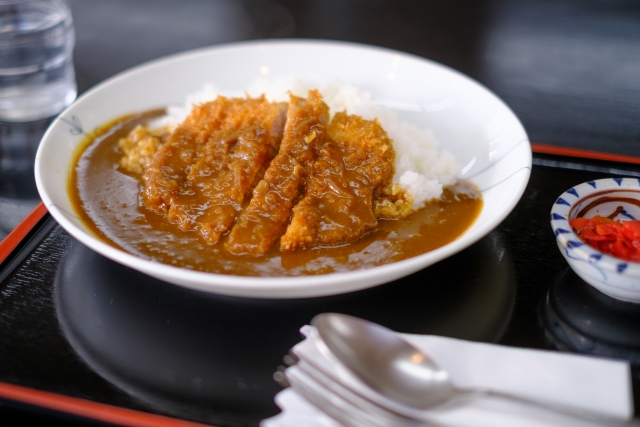
Tonkatsu has become one of the better-known Japanese dishes around the world. However, surprisingly, many people may not know the special meaning tonkatsu has for Japanese people, the different types of katsu, or the various dishes that use tonkatsu.
In this article, I will introduce Japanese tonkatsu and some of the culture surrounding it in a story-based format.
The Characters
Mike: A 12-year-old American boy who is interested in Japan.
John: Mike’s father. He sometimes travels to Japan on business.
Kelly: Mike’s mother. She is good at cooking.
Nobu: A Japanese exchange student.
Prologue
One day, John was reading a book about the Japanese language. The book discussed the relationship between food culture and everyday customs.
One section used tonkatsu as an example. It went even further, explaining how food can be connected with the meanings of Japanese words.
Through this article, John was about to rediscover just how interesting the Japanese language can be.
What Does the “Katsu” in Tonkatsu Mean?
John: “I was surprised to learn that Japanese people actually care quite a lot about good luck. I didn’t realize that they could even be sensitive to the meanings of words and let those meanings affect their feelings.”
Mike: “What do you mean by caring about good luck? Can you give me an example?”
John: “Apparently, tonkatsu is one example.”
Nobu: “Hello.”
John: “Hey, hello. We were just talking about Japanese people’s habit of looking for good luck, and tonkatsu.”
Nobu: “I see. Tonkatsu. That may be less common today, but in the past, people sometimes ate tonkatsu as a way of bringing themselves good luck.”
John: “How so?”
Nobu: “The word ‘katsu’ in tonkatsu sounds exactly like the Japanese word ‘katsu,’ which means ‘to win’ or ‘victory.’ So there were many stories of people eating tonkatsu before entrance exams or sports competitions.”
John: “I see. ‘Victory.’ That makes sense.”
Nobu:”By the way, “ton” in “tonkatsu” means “pork.” So, it’s basically a pork cutlet!”
The Main Types of Katsu in Japan
Kelly: “By the way, I heard that there are different types of katsu in Japan. How many kinds are there?”
Nobu: “There are probably a huge number. Different regions and individual restaurants often put their own ideas into katsu dishes.”
Kelly: “I see. Then there must be quite a lot.”
Nobu: “But I can introduce some of the main types.”
Kelly: “Please do.”
Rosu-katsu
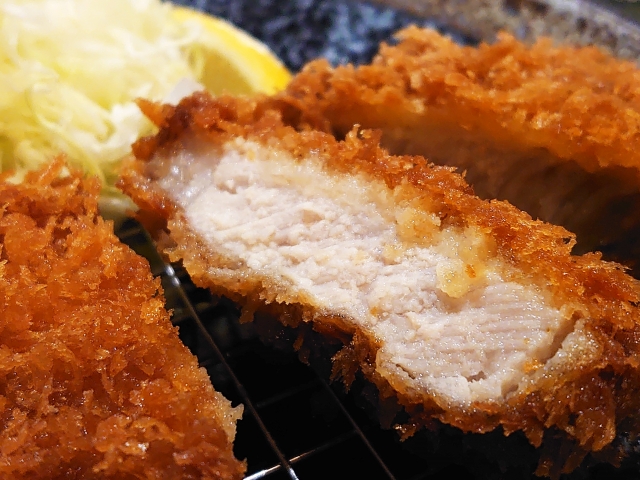
Nobu: “First, there is rosu-katsu. When you think of tonkatsu, this is probably the standard type. It is made by taking a relatively thick slice of pork loin, coating it with bread crumbs, and deep-frying it.”
Kelly: “So the coating is crispy, while the meat is juicy?”
Nobu: “Exactly. I think the combination of the crispy coating and the flavor of the meat is one of the secrets behind its deliciousness.
Interestingly, some tonkatsu restaurants control not only the quality of the meat but even things such as the length of the bread crumbs they use.”
Kelly: “Even the length of the bread crumbs…? Are they trying to make sure the crispiness is consistent?”
Nobu: “I think so.”
Hire-katsu
Nobu: “Next is hire-katsu. This is tonkatsu made with pork tenderloin. It is still pork, of course, but it is distinguished from rosu-katsu.
“It tends to be lighter and less fatty than rosu-katsu.”
Kelly: “I see. That sounds good for people who don’t like greasy food.”
Nobu: “Exactly. Younger people who need plenty of energy might prefer rosu-katsu, while people who want to avoid fatty food, including older people, might prefer hire-katsu.”
Chicken Katsu
Nobu: “Next is chicken katsu. As the name suggests, it is katsu made with chicken.”
Mike: “Isn’t that basically fried chicken?”
Nobu: “Not at all. They are quite different dishes. First, the coating is different, and the meat is different, too. Fried chicken can even be made with bone-in pieces, while chicken katsu is generally made with boneless chicken.”
Kelly: “It also sounds lighter than rosu-katsu. Maybe it would be good for women.”
Nobu: “Yes, it can be a good choice.”
Beef-katsu
Nobu: “Next is beef katsu. It is katsu made with beef. It is particularly common in western Japan.”
John: “Why is it associated with western Japan?”
Nobu: “The culture of eating meat is somewhat different between eastern and western Japan. In eastern Japan, people eat all kinds of meat, including pork, chicken, and beef. Western Japan has a particularly strong beef-eating culture.
In some parts of western Japan, when people simply say ‘meat,’ they may even imagine beef rather than pork.”
John: “I see. So even meat-eating culture differs between regions.”
Menchi-katsu
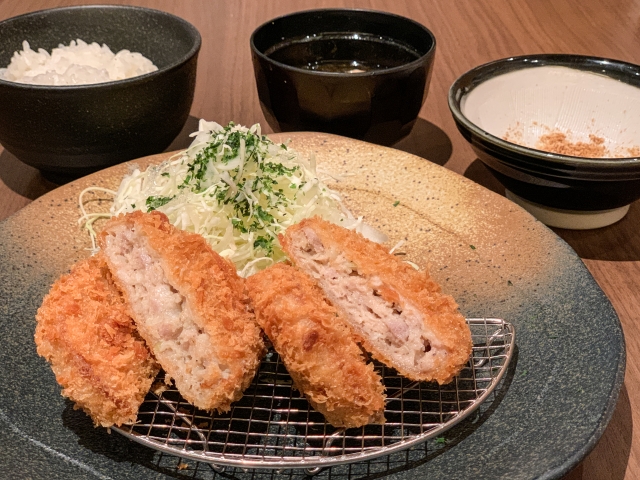
Nobu: “Next is menchi-katsu. This is katsu made from ground meat. You could imagine it as a hamburger patty that has been coated and deep-fried like katsu.”
Kelly: “Why not just eat it as a hamburger?”
Nobu: “I think one major advantage is that it tastes good even after it has cooled down.
For example, when you put food into a bento lunch box, you generally have to assume that it will be eaten after it has cooled. Menchi-katsu may have become popular partly because it still tastes good when it is cold.”
Kelly: “I see. So it works well in a bento.”
Nobu: “Exactly. Many Japanese people are quite particular about their bento lunches.”
Mille-Feuille Katsu
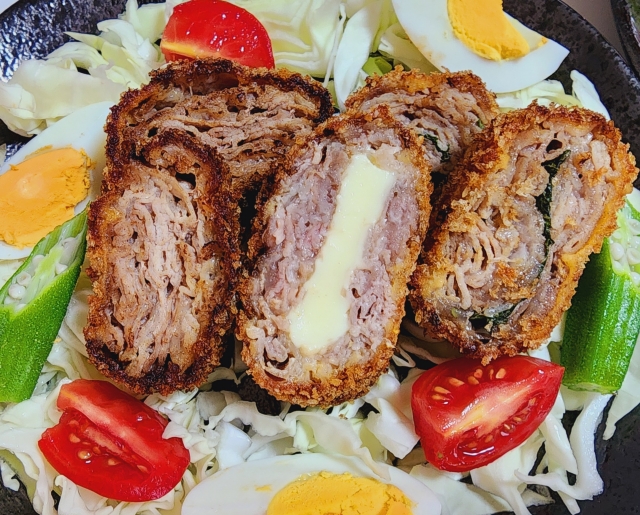
Nobu: “Mille-feuille katsu is made by layering thin slices of meat and deep-frying them as katsu.
Because the meat is made from thin slices layered together, it can be easier to chew, even for people who have difficulty chewing tougher meat. The idea is similar to the layers of a mille-feuille pastry.”
John: “That sounds great for people who have difficulty chewing.”
Nobu: “Yes. Japan has an aging population, which has become an important social issue. It is possible that this kind of social background helped create the demand for mille-feuille katsu.”
Examples of Dishes That Use Tonkatsu
Nobu: “By the way, tonkatsu isn’t something you only eat by itself. It is also used in a variety of other dishes.”
Katsudon
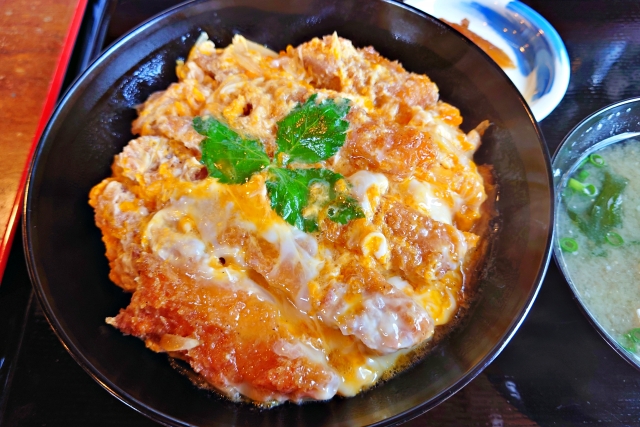
Nobu: “First, there is katsudon. Katsudon is a dish where tonkatsu is simmered with egg and then placed on top of rice in a bowl. It is probably becoming popular around the world as well.”
Mike: “I’ve seen it in anime sometimes.”
Nobu: “Yes. By the way, there is a story that a university student invented katsudon.”
Mike: “Really? What happened?”
Nobu: “According to the story, a soba restaurant had some leftover tonkatsu and didn’t know what to do with it.
A university student suggested simmering the tonkatsu with egg. People around him liked the idea, and the dish quickly became popular.
Of course, it may just be a legend.”
Mike: “I see. That’s interesting.”
Katsu Curry
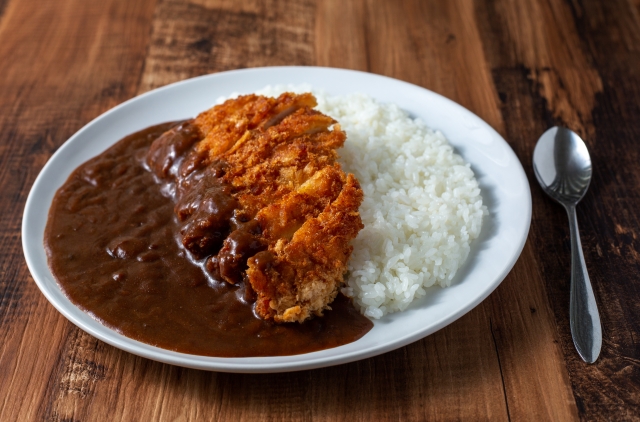
Nobu: “Next is katsu curry. You place tonkatsu on top of rice and pour Japanese curry over it. It’s a very filling dish and is particularly popular with younger people.”
John: “Tonkatsu and curry together? That certainly sounds filling.”
Nobu: “There is also an interesting story about katsu curry. There is a theory that it was created by a sports athlete.
The idea was to put tonkatsu, associated with ‘victory,’ on top of curry because the athlete wanted to bring himself good luck.”
John: “I see. A sports athlete would certainly want ‘victory’ more than anything.”
Related Article
Where can you find the best katsu curry in Japan? In this article, the author compares katsu curry served at curry restaurants, tonkatsu restaurants, Chinese restaurants, and more
Read the article →
Katsu Sandwich
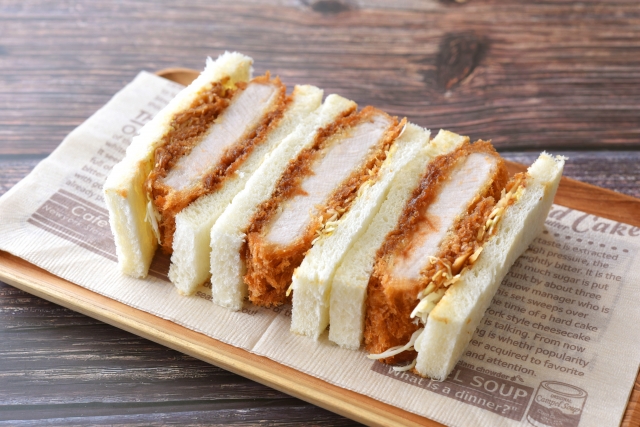
Nobu: “Next is the katsu sandwich. Basically, it is a sandwich made with tonkatsu.”
Kelly: “I see. That sounds perfect for a bento lunch.”
Nobu: “I think so. It might also be a good choice for an outing, such as hanami, when people go outside to enjoy the cherry blossoms.”
Kelly: “I see. There is quite a lot to the culture surrounding tonkatsu.”
Nobu: “Yes.”
The End
Detective Dramas and Katsudon
I have introduced a little of the culture surrounding Japanese tonkatsu. Now, let’s connect it with something from Japanese television culture.
Japanese detective dramas are an important part of Japanese TV culture, and there are two foods that were often associated with them.
One was anpan eaten during stakeouts, and the other was katsudon served during police interrogations.
In Japanese detective dramas, scenes involving police stakeouts appeared frequently. Detectives would sit in a car watching a location, and there were often scenes of a junior detective buying anpan for a senior detective, or the detectives eating anpan while keeping watch.
This was especially common in older detective dramas.
Then there was katsudon.
Katsudon was often associated with interrogation scenes. The typical image was something like this: a suspect is being questioned by two detectives, and the junior detective is aggressively demanding a confession.
Then the senior detective says something like, “All right, all right. Why don’t we have some dinner?” and brings out a bowl of katsudon.
Of course, this did not happen in every detective drama. But over time, it became a familiar image in Japanese popular culture.
It’s a rather amusing piece of television history.
From My Own Experience
I used to go to tonkatsu restaurants quite often.
There was a tonkatsu chain restaurant along my commute, and I could enjoy inexpensive but delicious tonkatsu there.
One thing about the restaurant surprised me.
The staff working there didn’t look like highly trained chefs. They looked like ordinary part-time workers in the food-service industry. If you asked me to judge them simply by appearances, I would never have expected them to produce such high-quality food.
And yet, the tonkatsu that came out was genuinely good. The coating was crispy, and the meat was full of juice.
Then I noticed an announcement playing over the restaurant’s background music. It said something along the lines of:
“We use chilled pork that is carefully temperature-controlled, and even the length of the bread crumbs is standardized…”
In other words, the quality of the ingredients and the cooking procedures were carefully controlled.
I remember thinking, “With this kind of system, you don’t necessarily have to be a professional chef to produce high-quality food.”
However, I have fewer opportunities to visit that restaurant these days.
The reason is simple: since the COVID-19 pandemic, the price of tonkatsu has gone up, making it harder for me to justify going there.
I don’t know whether prices will come down in the future, but I hope to visit again when I have a little more room in my wallet.
Conclusion
Today, we have taken a look at tonkatsu.
I hope you now have a better understanding of the meaning behind the word “katsu,” the different types of katsu, and the many dishes that use tonkatsu.
Some people who enjoy cooking may even be thinking about trying one of these tonkatsu-based dishes themselves.
In any case, tonkatsu is a Japanese dish I would highly recommend to people from other countries.
If you visit Japan, be sure to give it a try!
Related Article
● Tonkatsu and tonkotsu may sound similar, but they are two completely different things. Do you know what the difference is?
In this article, we’ll explain the difference between tonkatsu and tonkotsu.
Read the article →
● In this article, we explained what the name “tonkatsu” means. Some of you may now be curious about its origins.
In the next article, we take a closer look at the history of tonkatsu and how it came to be a popular Japanese dish.
Read the article →