Curry is a dish enjoyed in many parts of the world. India is widely known as the birthplace of curry, and many people associate Indian curry with dishes served with naan bread. When you visit an Indian restaurant, the aroma of spices can make your appetite grow.
Japan also has its own curry culture. In fact, Japanese curry is extremely popular as an everyday home-cooked meal.
But did you know that Japanese curry can often be made in about 30 minutes? Can you imagine children preparing it themselves during an outdoor cooking activity, such as a Boy Scout camp?
In this article, we will explore why Japanese curry is so easy to make, through a story about a family learning how it works.
Characters
Mike: A 12-year-old American boy who is interested in Japan.
John: Mike’s father. He sometimes travels to Japan on business.
Kelly: Mike’s mother. She is good at cooking.
Nobu: A Japanese exchange student.
Prologue
Japanese curry could be called one of Japan’s national comfort foods. One of its biggest attractions is how easy it is to prepare.
However, curry is made using a variety of spices, so you might imagine that it takes considerable time and skill to cook. If you want to choose individual spices and carefully adjust their proportions, making curry can certainly be a complicated process.
But curry is a common home-cooked meal in Japan. You can make it easily with ordinary kitchen equipment. In fact, it is sometimes prepared by children in school cooking classes, and it is also a popular dish for outdoor cooking at camps.
So, what ingredients do Japanese people use, and how do they make their curry?
Is It Really Possible to Make Japanese Curry in About 30 Minutes?
Kelly: Japanese cuisine can be incredibly sophisticated. I imagine that preparing it takes a lot of time and effort.
Mike: That’s true. Just think about sushi. Skilled chefs shape each piece by hand. That must take a lot of work.
Kelly: But there’s something I don’t understand. I know that some Japanese dishes require a lot of effort, but Japanese people have busy lives, too. Not everyone has plenty of time to cook.
Mike: That’s right. Many people have jobs, and both parents may be working.
Kelly: Exactly. So how do busy Japanese families manage to prepare their everyday meals?
Mike: That’s a good question. You can’t spend hours preparing every meal.
Nobu: Hello!
Kelly: Oh, you’re just the person I wanted to see. I’d like to ask you something about everyday cooking in Japan.
Nobu: Sure. What is it?
Kelly: Japanese cuisine seems to offer so many different dishes. I’m curious about how people prepare them without spending too much time in the kitchen.
Nobu: I don’t think Japanese cooking is always very different from cooking elsewhere. For example, grilling pork or fish doesn’t necessarily take much longer in Japan.
Kelly: Then what about curry? I’ve heard that Indian cooks mix different spices to make curry. That sounds like a lot of work, yet curry is practically a national dish in Japan. How do people manage that?
Nobu: Ah, curry! You’re right that making curry from individual spices can take some effort. But most Japanese people don’t go to that much trouble when making everyday curry.
Kelly: What do you mean?
Nobu: They use something called curry roux. With that, you can make curry quite easily. It often takes about 30 minutes, depending on the ingredients and how you cook it.
What Is Japanese Curry Roux?
Kelly: Isn’t roux something you make by mixing curry powder with flour and oil? I imagine cooking the flour and oil together before adding the spices.
Nobu: You can certainly make curry that way. People who enjoy experimenting with flavors might use curry powder or individual spices. You can buy spices in shops and adjust the taste to suit your preferences.
Mike: That sounds interesting. It would be fun to experiment with different flavors.
Nobu: It would! But not everyone has time to make curry from scratch. People who work long hours or have busy family lives may prefer a quicker method.
Kelly: That makes sense.
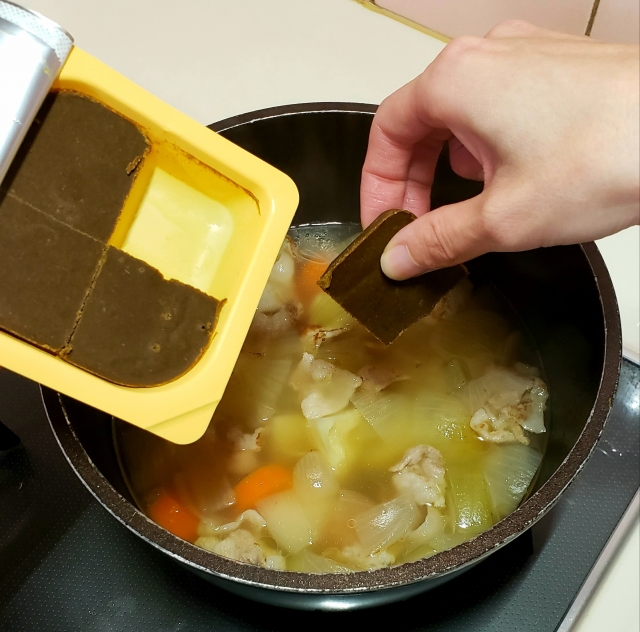
Nobu: That’s where solid curry roux comes in. It usually comes in a block that looks a little like a large piece of chocolate. You add it to the cooked ingredients and let it simmer, and you can make curry without measuring out a variety of spices.
Mike: Wow! That sounds easy.
Nobu: It really is. First, cut the ingredients into pieces and cook them in a pot. Add water and simmer until the ingredients are cooked. Then break the curry roux into pieces, add it to the pot, and stir until it dissolves. Let everything simmer for a little longer. Someone who is familiar with the process may be able to finish the dish in about 30 minutes.
Mike: That’s amazing! Do you think even I could make it?
Nobu: I think you could give it a try. Japanese curry is a popular dish for outdoor cooking at camps, including activities organized by groups such as the Boy Scouts. It is also sometimes made in elementary school cooking classes.
Kelly: Wait a minute. School cooking classes have limited time. They can’t spend all day preparing one dish, can they?
Nobu: Exactly. That’s one reason Japanese curry is such a convenient dish. The roux makes the process much simpler.
Kelly: By the way, what’s actually inside the roux?
Nobu: Curry roux contains a blend of spices and other ingredients that give the curry its flavor. In many products, the seasoning is combined with fats and other ingredients to form a solid block. Most people are familiar with the block type, but powdered products are also available.
Kelly: So you can make curry at home without having to prepare all the spices yourself.
Nobu: That’s right!
Other Japanese Home-Cooked Dishes Made with Roux
Kelly: Being able to prepare a tasty meal quickly is a big advantage. And the fact that children can learn to make it is wonderful.
Mike: If I can make it myself, I’d really like to try!
Nobu: You should! And curry isn’t the only dish you can make with this kind of roux.
Kelly: Really? What else can you make?
Nobu: Some common examples are cream stew, beef stew, and hayashi rice.
Kelly: Tell me a little more about them.
Cream Stew
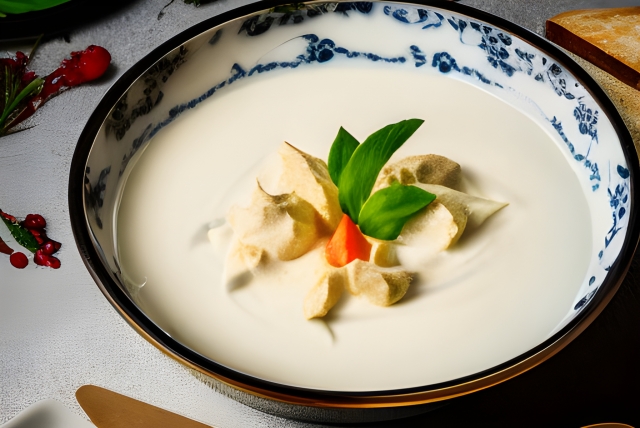
Nobu: Let’s start with cream stew. The basic idea is similar to curry. You cut the ingredients into pieces and cook them together in a pot. The roux provides much of the seasoning and helps create the creamy sauce, so preparation is relatively simple.
Mike: So it’s basically the same idea as curry.
Nobu: That’s right. And changing the ingredients can give the dish a completely different character. For example, you could try adding seafood.
Kelly: Seafood? That sounds delicious!
Beef Stew
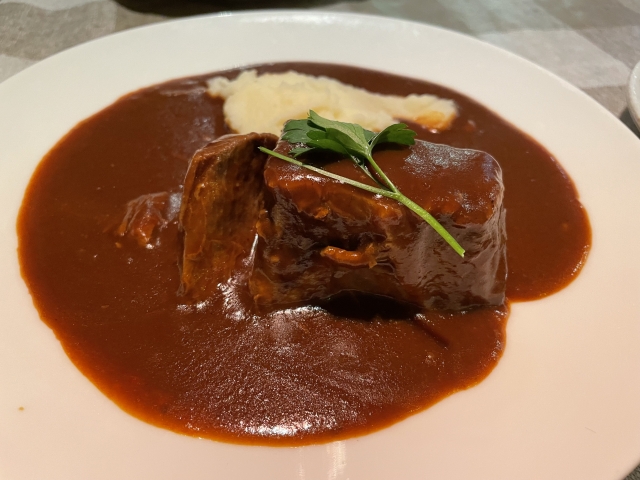
Nobu: Beef stew is another example. In Japan, you can buy roux specifically designed for making beef stew.
Kelly: I usually associate beef stew with long cooking times. Is the Japanese version really that easy to make?
Nobu: If you use large chunks of beef, you may still need to cook them for a long time to make them tender. But if you use thinly sliced beef, the cooking time can be much shorter.
Kelly: I see. Using thinly sliced meat makes a difference.
Hayashi Rice
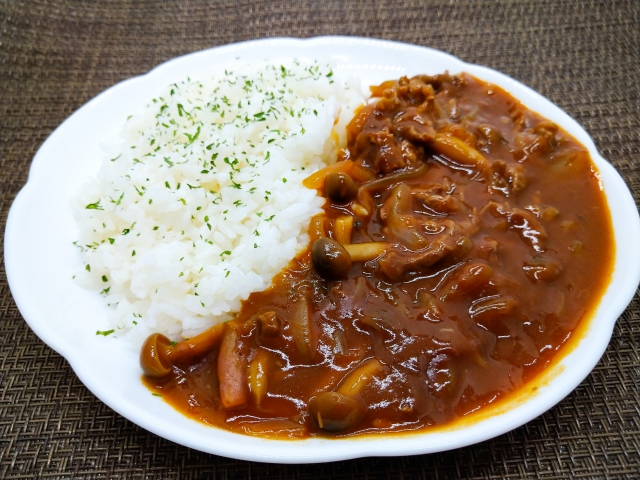
Nobu: Hayashi rice is another dish commonly made with roux. It is a Japanese dish served with rice, usually featuring a rich brown sauce with a tomato-based flavor. It may look a little like curry, but it generally has a different flavor and is not characterized by the same blend of curry spices.
Kelly: I’ve heard of it. It has a strong tomato flavor, doesn’t it? It looks a little like curry, but it doesn’t have that same spicy taste.
Nobu: Exactly. From curry to hayashi rice, Japan has quite a few dishes that can be prepared using roux.
Changing the Menu by Changing the Roux
Nobu: Now, there’s something else worth noticing. Imagine making curry and cream stew using the same basic ingredients.
Kelly: Do you mean that you can change the menu just by changing the roux?
Nobu: Exactly! Even if you use the same meat and vegetables, changing the roux gives you a completely different dish. For example, you could make curry one day and use the remaining ingredients to make cream stew another day.
Kelly: Wait a minute. Those are certainly different dishes, but wouldn’t people notice that you’re using the same ingredients?
Nobu: Of course they might! Still, this can be useful for students and others who need to keep food costs down. You can buy meat and vegetables in larger quantities, then use different kinds of roux to prepare different meals. It can help you save money and avoid wasting ingredients.
Kelly: That sounds economical, at least. But I imagine you might get tired of eating the same ingredients over and over.
Nobu: That’s true. Even convenient methods have their drawbacks!
Japanese Curry Roux Goes Overseas
John: By the way, if curry roux is that convenient, why not export it to other countries?
Nobu: Japanese curry roux is sold in some overseas markets. I’ve heard that it is available in places such as China, too.
John: Really? China is a huge market. If people there take to it, the potential demand could be substantial.
Nobu: That makes sense. Introducing curry to children may also be one way to encourage them to enjoy it. Food companies have used school settings to introduce products and see how children respond, although the details depend on the company and the occasion.
John: I can see why a food like that would appeal to families. If a child says, “I want curry for dinner tonight,” that might be enough to decide what’s for dinner. If it’s tasty and easy to prepare, parents would appreciate that, too.
Nobu: Absolutely. Children can have quite a lot of influence over what their families eat.
There’s another interesting thing people sometimes say about curry.
John: What’s that?
Nobu: Curry is contagious!
Mike: What do you mean?
Nobu: When someone cooks curry, its delicious aroma can drift outside through the kitchen ventilation or into the neighborhood. Someone walking past might smell it and suddenly want curry for dinner, too. Then they might go home and make curry themselves!
John: I see! In that sense, curry really can be contagious.
The End
When Should You Use Curry Powder Instead of Curry Roux?
Curry roux is a very convenient way to make Japanese-style curry, but it isn’t suitable for every situation. Sometimes curry powder is the better choice.
For example, if you want to mix curry flavor into hamburger patties before cooking them, curry powder is usually more practical than solid curry roux. Powder is easier to distribute throughout the meat mixture.
The important thing is to choose ingredients that suit the dish you want to make. By combining convenient ingredients in different ways, you can expand your cooking options and discover new flavors.
My Own Experience Making Curry
I’ve described Japanese curry as a dish that even children can make. I’d like to share a couple of experiences that explain why I think so.
My first experience was making curry as a child. Curry was a familiar dish in elementary school cooking classes and at camps. The process was straightforward: cut the ingredients, cook them in a pot, add water, and simmer everything with the curry roux. Even as a child, I found it easy to prepare.
At camp, we didn’t always use gas stoves. We split firewood and built a fire to cook our meals. Adults were there to supervise us, but we children could take turns watching the fire and helping prepare the curry. The simplicity of the dish made this possible.
Later, I worked at a campsite, where I was responsible for having children prepare curry themselves. Once again, the simplicity of the dish was a major advantage.
If we had chosen a complicated recipe, it would have been much harder for the children to prepare it. Curry, on the other hand, was relatively forgiving, and the roux helped make the cooking process easier.
These experiences showed me that the convenience of curry roux is useful not only in busy households but also in situations where children are learning to cook.
Conclusion
In this article, we’ve explored Japanese curry through the idea of roux. You can now see why Japanese curry can often be prepared in about 30 minutes and why it is a dish that children can learn to make. We’ve also looked at other dishes that use similar roux products, including cream stew, beef stew, and hayashi rice.
Roux makes dishes that might otherwise require more preparation much easier to cook. It is a convenient ingredient that can help beginners gain confidence in the kitchen.
If you have children, why not try making Japanese curry together on a weekend? With adult supervision and a little preparation, it can be a fun way to enjoy cooking as a family.