Japan has a wide variety of rice bowl dishes, including Katsudon (pork cutlet rice bowl), Oyakodon (chicken and egg rice bowl), Tendon (tempura rice bowl), Kaisen-don (seafood rice bowl), and Unadon (grilled eel rice bowl).
These dishes share one simple feature: ingredients are served on top of a bowl of rice. They are convenient to eat and offer a delicious way to enjoy Japanese rice.
When people discuss rice bowl dishes, they often focus on what ingredients should go on top. However, I believe that a good rice bowl should be enjoyed as a complete dish, not simply as a combination of toppings.
That means the rice underneath deserves just as much attention.
So, what kind of rice is best for Japanese rice bowl dishes?
Characters
Mike: A 12-year-old American boy who is interested in Japan.
John: Mike’s father. He sometimes travels to Japan on business.
Kelly: Mike’s mother. She is good at cooking.
Nobu: A Japanese exchange student.
Prologue
John is a businessman who frequently visits Japan. He knows quite a bit about Japanese food and has developed a taste for many Japanese dishes. Among his favorites are rice bowl dishes such as Katsudon and Oyakodon.
Kelly, meanwhile, is studying Japanese cuisine. She has recently been researching Japanese rice bowls and has even tried making some herself using recipes she found.
Unfortunately, her attempts have not gone as planned. She wants to ask John for advice, but he is not much help. His only comment is always, “It tastes good!”
Just then, Nobu arrives.
Nobu: “Hello!”
Kelly: “Oh, hello! Could I ask you something about Japanese food?”
Nobu: “Of course.”
Kelly: “I’ve been researching Japanese rice bowl dishes and trying to make them myself, but I can’t seem to get the results I want.”
Nobu: “What’s going wrong?”
Kelly: “The whole thing becomes rather soggy. It’s almost as if the rice has lost its texture.”
Nobu: “Which part becomes soggy? The toppings?”
Kelly: “The whole dish, but I don’t think the toppings are the problem. Now that I think about it, it’s probably the rice.”
Nobu: “I see. I think I understand what might be happening.”
Why the Texture of Rice Matters in Japanese Rice Bowls
Nobu: “As you probably know, Japanese rice bowl dishes are made by placing various ingredients on top of cooked rice. In Katsudon and Oyakodon, the toppings are usually covered with egg. Kaisen-don, on the other hand, is topped with seafood.”
John: “That’s right. The rice goes underneath.”
Nobu: “Exactly. But there’s something else to consider. Do you simply place the toppings on the rice and eat them as they are?”
Mike: “Some dishes also have sauce poured over the top, don’t they?”
Nobu: “That’s the important point. In many rice bowl dishes, the sauce or liquid from the toppings eventually reaches the rice. The rice absorbs some of that moisture. If the rice is already too soft, the entire dish can easily become soggy.”
Kelly: “Soggy? That sounds exactly like what happened to mine!”
Nobu: “By the way, how did you cook the rice?”
Kelly: “Just the usual way.”
Nobu: “That’s probably the problem! One important trick is to cook the rice slightly firmer than usual when making certain Japanese rice bowl dishes.”
Kelly: “Firmer?”
Nobu: “Yes. If the rice is cooked a little firmer, it can absorb some sauce or liquid from the toppings without becoming too soft and mushy.”
Kelly: “I see. I hadn’t thought about that.”
Nobu: “It’s understandable. Even in Japan, this isn’t something everyone pays attention to.”
Mike: “Does this apply to every kind of rice bowl?”
Nobu: “Not necessarily every single one, but it’s a useful approach for many popular varieties.”
Kelly: “Then could you explain how it applies to some of the main rice bowl dishes?”
Nobu: “Certainly.”
Looking at Different Types of Japanese Rice Bowls
Nobu: “Let’s look at some popular rice bowl dishes and consider the role of the rice in each one.”
Katsudon (Pork Cutlet Rice Bowl)
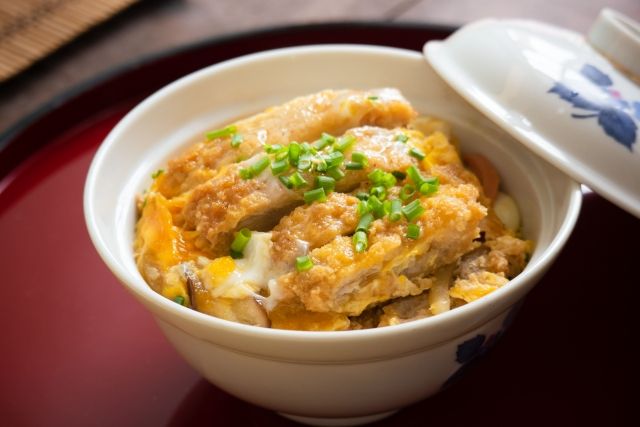
Nobu: “Let’s start with Katsudon. This dish consists of a breaded and deep-fried pork cutlet, usually simmered with onions and egg in a savory sauce, then placed on top of rice.
“Although sauce isn’t usually poured directly over the finished dish, the liquid from the egg and other ingredients flows down into the rice. Some of it eventually collects at the bottom of the bowl.”
John: “So the liquid reaches the bottom of the bowl, too. That makes sense.”
Nobu: “Exactly. As a result, the rice can end up absorbing moisture throughout the bowl. If the rice is too soft to begin with, it can become even soggier.
“However, if you cook the rice slightly firmer, it will retain more of its texture even after absorbing some of the liquid.”
Kelly: “Now I understand why the firmness of the rice matters!”
Oyakodon (Chicken and Egg Rice Bowl)
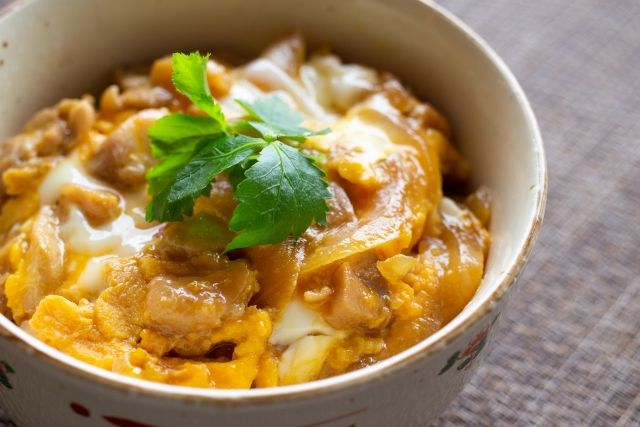
Nobu: “Oyakodon works in much the same way. Chicken and onions are simmered in a savory sauce, covered with egg, and served over rice.
“The sauce and moisture from the ingredients seep into the rice. If the rice is too soft, it can easily become mushy.”
Mike: “That makes sense. The liquid eventually reaches the bottom of the bowl, so the rice there gets wet, too.”
Tendon (Tempura Rice Bowl)
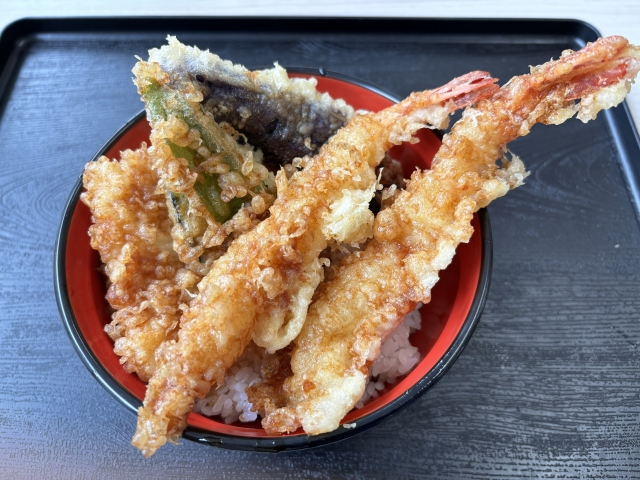
Nobu: “Next is Tendon. This dish is a little different from Katsudon and Oyakodon. It consists of tempura placed on top of rice, with a special savory-sweet sauce poured over it.”
Kelly: “That sounds simple enough. Does the firmness of the rice really matter that much?”
Nobu: “Yes. The sauce poured over the tempura may look like a small detail, but it can affect the texture of the rice. If the rice is too soft, the sauce can make it soggy.”
Kelly: “I see. So slightly firmer rice is better here, too.”
Kaisen-don (Seafood Rice Bowl)
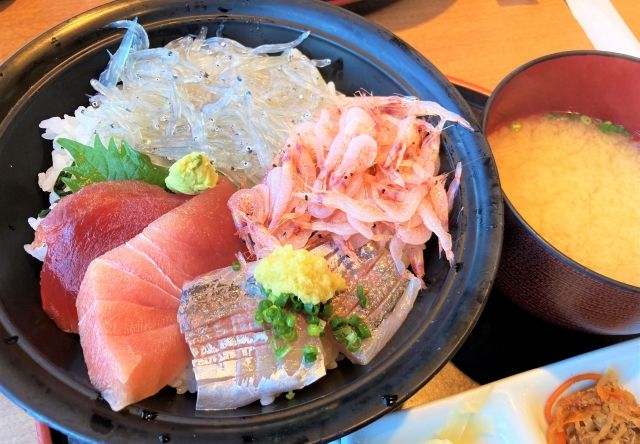
Nobu: “Next is Kaisen-don. This dish consists of raw seafood served over rice. Depending on the style, it may be served with either plain rice or sushi rice seasoned with vinegar. In either case, slightly firmer rice is usually the better choice.”
John: “But raw fish doesn’t release much liquid, does it?”
Nobu: “Not necessarily. However, people usually pour soy sauce over it before eating. Since the soy sauce adds moisture, slightly firmer rice is generally the safer option.”
Kelly: “I see. That makes sense.”
Unadon (Grilled Eel Rice Bowl)
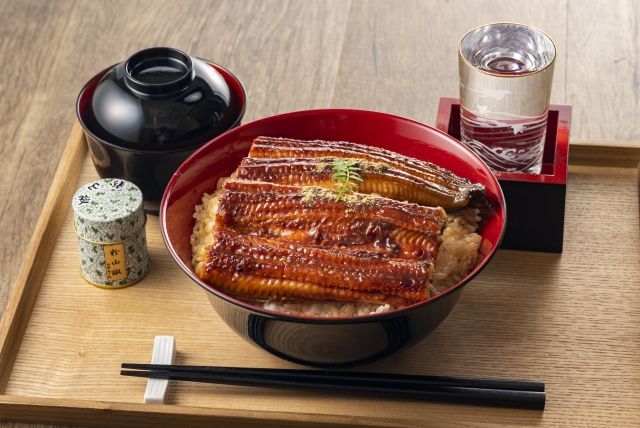
Nobu: “Finally, let’s look at Unadon. This dish features grilled eel served over rice, usually coated with a sweet and savory sauce.
“When eating Unadon, you enjoy the rice together with the sauce from the eel. The rice needs to retain enough texture so that its presence isn’t overwhelmed by the sauce.”
Kelly: “So firmer rice is better here, too?”
Nobu: “That’s right. The sauce used for grilled eel has a particularly strong flavor, so maintaining a good balance between the rice and the sauce is important. That’s another reason why I recommend cooking the rice slightly firmer.”
How to Cook Rice a Little Firmer
Mike: “So, how can we actually cook rice so that it comes out firmer?”
Nobu: “I think we should consider two things: how we cook the rice and how we handle it after cooking.”
Mike: “Let’s start with cooking.”
Nobu: “The easiest method is to use slightly less water than usual when cooking the rice. You don’t need to make a dramatic change. A small adjustment can make a difference.
“Also, once the rice has finished cooking, fluff it gently with a rice paddle. This helps release excess steam, distribute moisture more evenly, and prevent the grains from sticking together.”
Kelly: “So there are a few basic things to keep in mind.”
Nobu: “Exactly. Getting the basics right is important.”
John: “What about storing the rice after it’s cooked?”
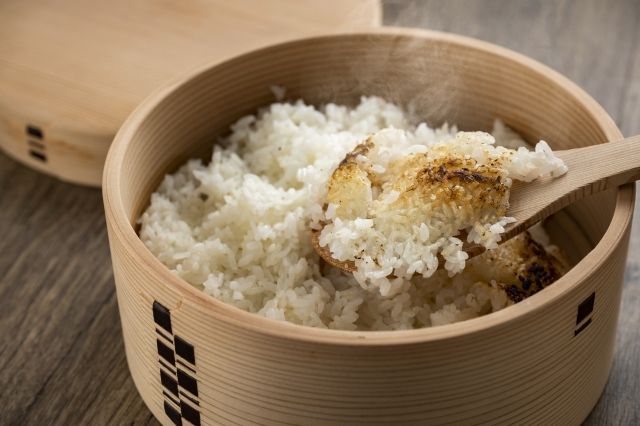
Nobu: “There are several ways to handle it. For example, you can use a container that allows some airflow or place a clean cloth over the rice to absorb condensation. However, I think a traditional Japanese ohitsu is one of the best tools for this purpose.”
John: “An ohitsu? What’s that?”
Nobu: “An ohitsu is a special container for cooked rice, traditionally made from wood. It helps absorb excess moisture released by the rice.
“Wood also has a natural moisture-regulating property. When there is too much moisture, the wood absorbs some of it. When the surrounding environment becomes drier, it can release some of that stored moisture.
“This helps maintain a more balanced moisture level and keeps the rice in good condition.”
John: “So there’s more to preparing rice than simply putting it in an electric rice cooker. You have to think about everything from cooking to storage!”
Kelly: “That’s right!”
The End
Conclusion
We’ve looked at the rice used in Japanese rice bowl dishes such as Katsudon, Oyakodon, Tendon, Kaisen-don, and Unadon.
When people think about these dishes, they naturally tend to focus on the ingredients placed on top. However, as we’ve seen, the rice underneath is just as important.
You may also be surprised to learn that the way rice is cooked and stored can make a difference to the final result.
To fully enjoy Japanese rice bowl dishes, it’s worth paying attention not only to the toppings but also to the rice itself.
Take a little extra care when preparing your rice, and enjoy the wonderful world of Japanese food!

