Supermarkets are an essential part of everyday life. They sell everything from fresh food to household goods, making it possible to find most of the things we need in one place.
However, Japan also has supermarkets that specialize in meat. Some of these stores originally started as butcher shops and later developed into supermarkets.
They can be very convenient places to buy meat, but many people may not know exactly what makes them different from ordinary supermarkets.
In this article, we will introduce these meat-focused supermarkets and explain their advantages and disadvantages.
Characters
Mike: A 12-year-old American boy who is interested in Japan.
John: Mike’s father. He sometimes travels to Japan on business.
Kelly: Mike’s mother. She is good at cooking.
Nobu: A Japanese exchange student.
Prologue
John has a colleague who recently moved to Japan. Since this colleague has only just started living in the country, he often runs into problems and asks John for advice.
Recently, he asked John a question:
“Where can I buy good-quality meat at a reasonable price?”
John was having trouble coming up with a good answer when Nobu arrived.
Nobu: Hello!
John: Hi! You’re just in time. A colleague of mine who recently moved to Japan asked me where he should go to buy good-quality meat at a reasonable price. What should I tell him?
Nobu: Well, I know just the kind of store he should visit.
Some Japanese Supermarkets Originally Started as Butcher Shops
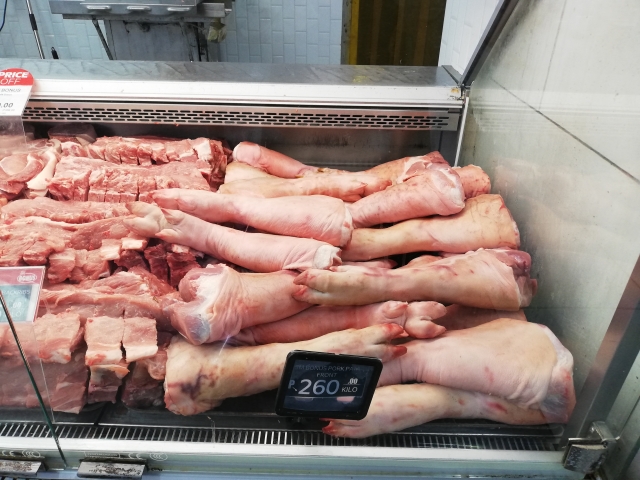
Nobu: There are many supermarkets in Japan, but some of them originally started as butcher shops. These stores have developed into supermarkets while maintaining their strength in handling meat. If you want to buy meat, they are definitely worth considering.
Kelly: Meat comes in so many different cuts. Having a wider selection must be very convenient for people who enjoy cooking.
Mike: That’s true. These days, we can search for recipes on our smartphones while shopping. If a store has a wide variety of meat, it’s easier to find the ingredients needed for a particular dish.
Nobu: Exactly. Supermarkets that specialize in meat can be very convenient. Let me explain some of their specific advantages.
Meat Is Often Available at Lower Prices
Nobu: One advantage is that meat is often available at relatively low prices.
Ordinary supermarkets also keep prices down by purchasing products in large quantities. However, meat-focused supermarkets can benefit from bulk purchasing as well.
They also use other methods to offer better value.
Kelly: What do you mean?
Nobu: They often sell meat in larger packages.
For example, ordinary supermarkets frequently sell meat in packages of around 200 grams. This is probably because they have in mind the amount a typical household might need for one meal.
Meat-focused supermarkets, on the other hand, often offer larger packages. Buying meat this way can be more economical because the price per unit may be lower.
Kelly: I see. That makes sense. It would be especially useful for people who cook large meals or buy meat in bulk.
Good Quality and a Wide Selection
Nobu: Another advantage is the quality of the meat. However, I would describe this as a general tendency rather than a rule.
Some ordinary supermarkets have their own facilities for preparing and processing meat. In such cases, they may offer the same level of quality as meat-focused supermarkets.
Kelly: That makes sense.
Nobu: However, meat-focused supermarkets often have a wider selection of meat and cuts.
For example, pork bones are rarely available at many ordinary supermarkets. At some meat-focused supermarkets, however, you may be able to buy them.
Pork bones are useful for making ramen broth, among other things. Having access to ingredients like these can expand the range of dishes you can prepare at home.
Kelly: Pork bones can be difficult to find, so a store like that would certainly be useful.
Nobu: Another advantage is that some stores can accommodate individual requests.
Depending on the dish you want to make, you might need a particular cut of meat that is not commonly sold.
For example, if you want to make beef tail soup, finding beef tails at an ordinary supermarket may be difficult.
Some meat-focused supermarkets may be able to help you find or prepare such cuts. This is one of the advantages of stores that grew out of traditional butcher shops.
Prepared Foods and Lunch Boxes Can Also Be Inexpensive
Nobu: Another interesting point is that prepared foods can sometimes be inexpensive at meat-focused supermarkets.
A good example is Japanese fried chicken, called karaage (唐揚げ). It is often available at a lower price than at ordinary supermarkets.
Mike: Is that another advantage of having a butcher-shop background?
Nobu: I think so. Some stores also specialize in lunch boxes, known as bento (弁当).
For example, you might find large portions of fried chicken lunch boxes. These are the kinds of products that take advantage of a butcher shop’s expertise in meat.
Mike: If they offer good meat, prepared foods, and lunch boxes, it might be worth buying other ingredients there at the same time.
They May Have a Limited Selection of Products Other Than Meat
Nobu: However, meat-focused supermarkets are, above all, supermarkets whose strength lies in meat. This means they may not be as strong in other product categories.
Fresh fish is a good example.
Ordinary supermarkets often sell a wide range of seafood products, including sashimi (刺身), which is sliced raw fish, and sushi (寿司).
Meat-focused supermarkets, on the other hand, often have a more limited selection of seafood.
Therefore, if you need both meat and fish, an ordinary supermarket may be a more convenient choice.
John: I see. Fish is traditionally the specialty of fishmongers, after all. I suppose it’s natural that a meat-focused store might have a weaker selection.
The End
My Personal Experience
Let me share my own experience.
There are several supermarkets that originally started as butcher shops in my neighborhood. Their names include the words “Meat” or “Meat Shop,” so it is easy to recognize their background.
As a result, my family often visits these meat-focused supermarkets when we want to buy meat.
However, ordinary supermarkets have their own advantages. They carry a wider range of household goods and other everyday products, and they may offer a better selection of items such as fresh fish.
For these reasons, we sometimes choose ordinary supermarkets instead.
Both types of stores have their own advantages and disadvantages. The best approach is probably to choose the store that suits what you need to buy.
Conclusion
In this article, we introduced supermarkets in Japan that specialize in meat and explained their main characteristics.
You may now have a better understanding of why these stores can be convenient, especially for people who enjoy cooking with meat.
In general, supermarkets that grew out of butcher shops are particularly strong when it comes to fresh meat and a variety of cuts.
If you are looking for meat while living in or visiting Japan, why not make a trip to one of these stores?
Related Article
As you have seen throughout this article, Japan has supermarkets that specialize in selling meat.
By the way, thinly sliced meat is the most common type of meat sold in Japan.
In the next article, we will take a closer look at this popular style of meat.
Read the article →