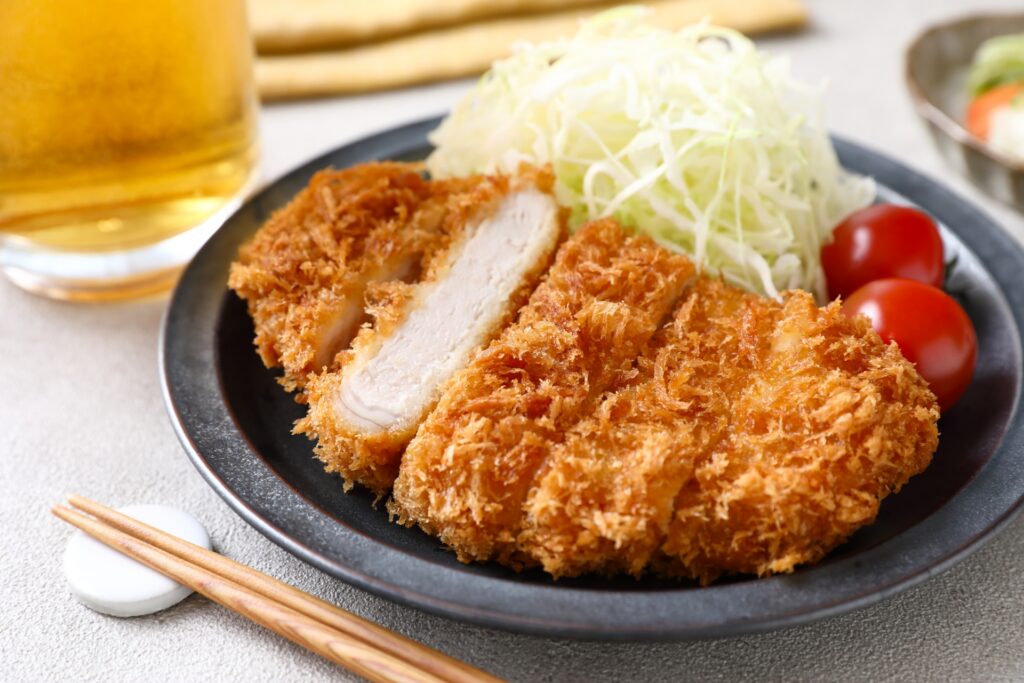
Katsudon and oyakodon are among Japan’s popular traditional dishes. They are probably familiar to many people outside Japan as well. In fact, you can often find these dishes in Japanese recipes written by Japanese people.
However, people sometimes have questions about the Japanese words used in food names. Words that Japanese people use every day without thinking about them can be puzzling to people from other countries.
The Japanese word “don” (丼), which appears in dishes such as katsudon, is one example.
So, what exactly does “don” mean? Let’s take a closer look.
Characters
Mike: A 12-year-old American boy who is interested in Japan.
John: Mike’s father. He sometimes travels to Japan on business.
Kelly: Mike’s mother. She is good at cooking.
Nobu: A Japanese exchange student.
Prologue
Kelly is interested in Japanese food, but she sometimes encounters difficulties when studying Japanese recipes. She can usually understand what a dish looks like from its ingredients and photographs, but she does not always understand how its Japanese name is formed.
One day, she comes across the word “don” in “katsudon.”
She already has an idea of what the dish looks like because she has seen similar dishes, such as oyakodon. However, she still does not understand what “don” means.
Just then, Nobu appears.
Nobu: Hello!
Kelly: Oh, you’re just the person I wanted to see! I’ve been having trouble understanding some Japanese words related to Japanese food.
Nobu: What kind of words?
Kelly: The word “don” in dishes like katsudon. When I look at the dish, I see a bowl of rice with a pork cutlet on top. I understand why it’s called “katsu,” because the main ingredient is a pork cutlet. But what does “don” mean?
Nobu: I see. That probably needs a little explanation.
What Does “Don” Mean?
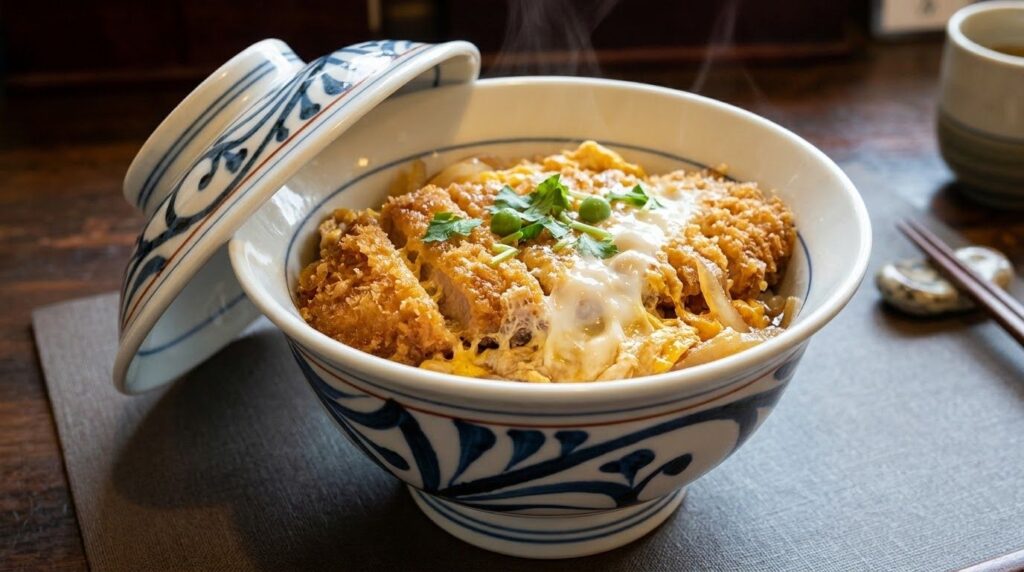
John: I’ve wondered about that, too. If you put a pork cutlet on a regular plate, it seems to become a different dish.
Mike: And if you put it between two slices of bread, it’s called a katsu sandwich, right? I can understand that name because it combines katsu and sandwich. But “don” is different, isn’t it?
Nobu: That’s right. There is a small but important difference. Let me explain.
Originally, “Don” Refers to a Bowl
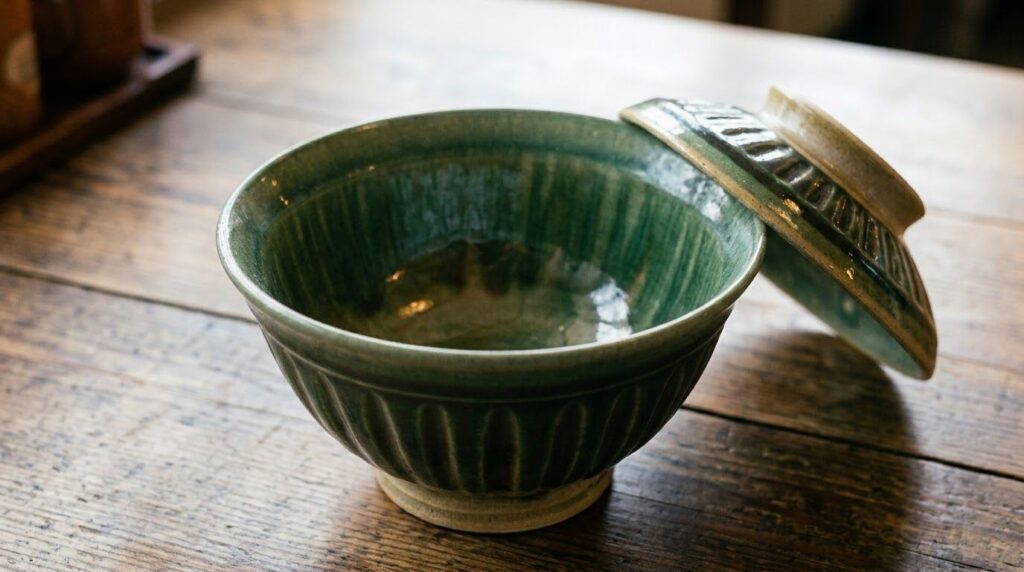
Nobu: The word “don” comes from “donburi” (丼), which is the Japanese word for a large bowl. It is bigger than an ordinary rice bowl.
Donburi bowls used for dishes such as katsudon sometimes come with lids.
Mike: I see! So it’s a large bowl, sometimes with a lid.
Nobu: Exactly. However, bowls used for noodle dishes such as ramen are also called donburi. These usually do not have lids, and their size and shape can be different from the bowls used for katsudon.
John: So bowls for soba and udon are also called donburi? How are they different from ramen bowls?
Nobu: In many cases, the differences are mainly in their design and shape. Different types of donburi are used depending on the dish.
Rice Topped with Other Ingredients
Kelly: Now I understand what the bowl is. But how is it related to the name of the dish?
Nobu: A donburi dish is generally made by putting rice into a large bowl and placing other ingredients on top. Depending on the dish, sauce or other seasonings may also be added.
In many Japanese meals, rice and side dishes are served separately. However, with donburi dishes, the rice and toppings are served together in the same bowl.
John: So, with katsudon, the sauce used for the pork cutlet is also poured over the rice?
Nobu: That’s right. You eat the rice, pork cutlet, egg, and sauce together.
Mike: That sounds convenient. You can enjoy everything in one bowl, so it must be quick to eat.
Nobu: Exactly. That’s one of the advantages. By the way, donburi dishes are also collectively called “donburi-mono” (丼もの).
Katsudon, oyakodon, and other dishes of this type are all examples of donburi-mono.
There Is Another Type of Dish Called “Ju”
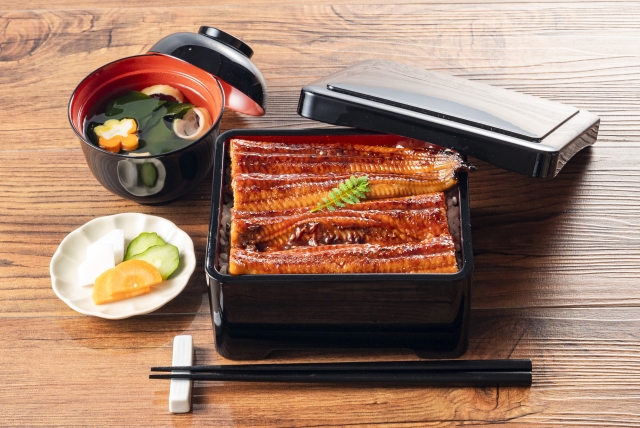
Nobu: There is another good example of a Japanese dish whose name comes from the container it is served in. It’s called “ju” (重).
Mike: What is that?
Nobu: Japan has a special type of box called a “jubako” (重箱). It is different from an ordinary bowl and is often used for serving food on special occasions.
One famous example is osechi ryori, the traditional food eaten during the Japanese New Year. It is commonly arranged in jubako boxes.
Mike: Jubako? That sounds like an important word.
Nobu: It is! The word “ju” in some dish names comes from this type of box.
Kelly: So, what kind of dish names use that word?
Nobu: The idea is similar to katsudon. For example, a pork cutlet served in a jubako can be called “katsuju” (カツ重).
Kelly: Is that like a more luxurious version of katsudon?
Nobu: It can give that impression. A familiar example is eel served over rice.
When eel is served in an ordinary donburi bowl, the dish is called “unadon” (うな丼). When it is served in a jubako box, it is called “unaju” (うな重).
Unaju is often considered a more luxurious option, although the actual price and portion size depend on the restaurant.
Mike: So, unaju is eel served in a special box. I’d love to try it!
The End
A Personal Story
I remember hearing an interesting story on a television program about a Japanese student in the past who struggled to understand the meaning of the word “hamburger.”
Unlike today, people back then did not have convenient tools such as the internet. They had to rely on a limited number of books and dictionaries when trying to understand foreign words.
According to the story, the student focused on the “er” at the end of “hamburger.” Since words ending in “er” can sometimes refer to a person who does something, the student wondered whether a hamburger might refer to a person.
Perhaps, the student thought, it meant someone from Hamburg, a city in Germany!
Of course, the student had no idea that a hamburger was a dish made with a patty served in bread.
People from other countries may encounter similar difficulties when learning Japanese. When they see the word “don,” they may understand that it refers to a type of bowl. As a result, they might even imagine that katsudon is a special bowl designed specifically for serving pork cutlets!
Of course, misunderstandings like this can be confusing. Sometimes, the only way to overcome them is to become familiar with the language through experience.
I don’t know whether the student who struggled with the word “hamburger” eventually learned that it was the name of a dish by traveling abroad or after McDonald’s came to Japan.
However, if getting familiar with unfamiliar words is important, actually trying the food is probably one of the best ways to do it.
There are many kinds of donburi dishes in Japan, including katsudon and oyakodon. If you are interested in learning Japanese, why not try some of them as part of your language-learning experience?
Conclusion
In this article, we looked at the meaning of “don” and the term “donburi-mono.”
You may have been surprised to learn that the name of a type of dish originally came from the name of the bowl used to serve it.
You may also be interested in discovering what other kinds of donburi dishes are available in Japan.
Either way, “don” is one of the useful keywords for understanding Japanese food culture.
Besides katsudon and oyakodon, Japan has many other delicious donburi dishes. Why not explore them during your next visit to Japan?