If you are asked, “Where is Japanese food prepared?”, I think many people would answer, “In the kitchen.”
However, this answer is only half correct.
Japanese home cooking is also prepared in places other than the kitchen.
So, where is it prepared?
Good examples are hot pot dishes and okonomiyaki, but do you know how they are made?
I think the culture of making hot pot and okonomiyaki at the table is quite unique to Japan.
Here, I would like to introduce this culture of cooking hot pot and okonomiyaki in the form of a story.
Characters
Mike: A 12-year-old American boy who is interested in Japan.
John: Mike’s father. He sometimes travels to Japan on business.
Kelly: Mike’s mother. She is good at cooking.
Nobu: A Japanese exchange student.
Prologue
When we think about food around the world, most dishes are probably prepared in a kitchen and then carried to the dining table.
Whether it is steak or soup, it is usually prepared and served from the kitchen.
By the way, can you imagine eating while cooking the food at the table?
Looking at the world as a whole, I don’t think this is very common.
However, Japan is different.
There is a culture in Japan where cooking equipment is placed on the dining table, and people eat the food while cooking it.
The hot pot dishes and okonomiyaki mentioned above are good examples.
So, can you imagine what kind of cooking equipment is used to make these dishes?
The characters in this story also seem to be interested in this “cook-while-you-eat” culture and how people actually eat these foods.
Teppanyaki and Hot Pot — Cooking and Eating Together as a Family
John: “Apparently, there is a style of Japanese party food where you eat while cooking.”
Nobu: “Yes, there is. I think hot pot dishes and teppanyaki dishes are some of the most representative examples.”
John: “How do you eat them?”
Nobu: “You put a pot or a hot plate on the table and eat while heating the food. Since you can eat it right after it is heated, you can enjoy it while it is still delicious. Another attraction is that you can cook it the way you like.”
Kelly: “What do you mean by cooking it the way you like?”
Nobu: “For example, how long you boil the ingredients. Depending on the ingredient, the taste can change depending on how long it is heated. Some ingredients can also be eaten without being completely cooked. So you can change how well they are cooked according to your preference.”
Kelly: “That sounds a little like choosing how well you want your steak cooked.”
Nobu: “It might be similar. For example, if you put fish that is suitable for eating as sashimi into a hot pot, you can eat it even when only the surface has been cooked.”
Kelly: “What about teppanyaki?”
Nobu: “It’s probably the same with teppanyaki. For example, when making yakisoba, you can cook it a little longer and eat it when it becomes crispy. Many people like it that way.”
Kelly: “Can you change the taste, too?”
Nobu: “Yes. You put sauce on it just before eating, but you can change the taste by changing the sauce.”
John: “I see. That sounds suitable for a party.”
Okonomiyaki — Eating While Cooking It on a Hot Plate
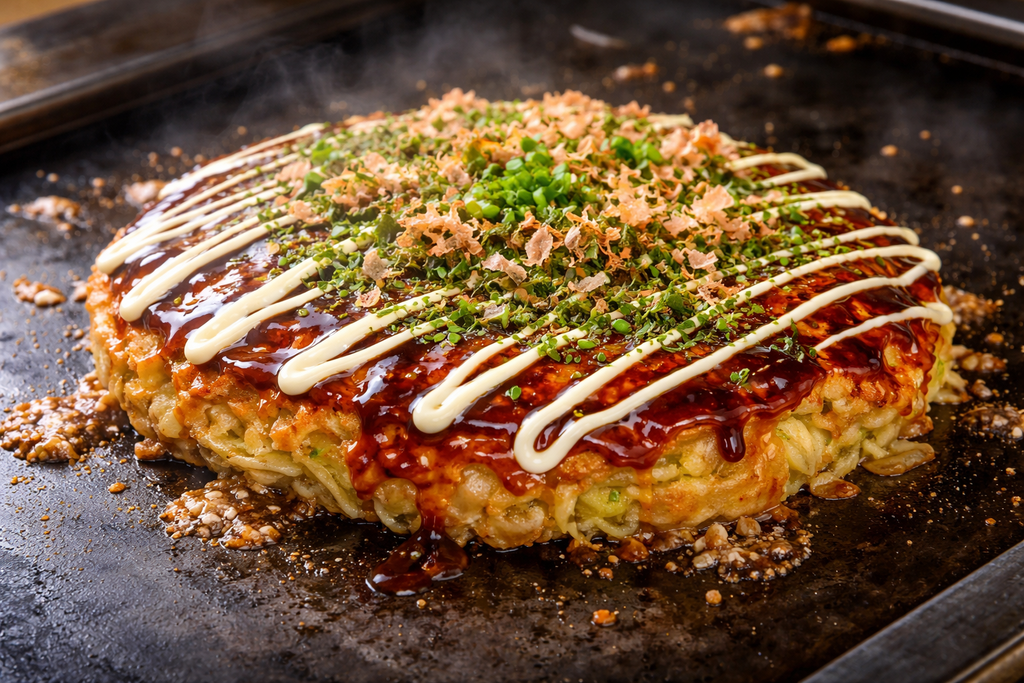
Kelly: “By the way, I was a little surprised. Apparently, when you eat okonomiyaki at a restaurant, sometimes it is prepared for you and served, while other times you eat it while cooking it.”
Mike: “What does ‘eating while cooking it’ mean? Do you eat it while cutting it with a kitchen knife?”
Kelly: “No. Imagine that the dish is prepared up to a certain point and then served. When you make okonomiyaki while eating, it seems that the ingredients are placed on top of the mixed flour batter and then served.”
Mike: “Even when you eat it at a restaurant?”
Kelly: “When you eat it at a restaurant, apparently sometimes the restaurant staff cooks it, and sometimes you cook it yourself. Some restaurants have a cooking hot plate in the center of the table.”
Nobu: “That’s right. When you go to an okonomiyaki restaurant, there are tables with a hot plate built into them. You cook the okonomiyaki on that hot plate while eating it. The same goes for yakisoba and other teppanyaki dishes.”
Mike: “But there must be times when you can’t cook it yourself.”
Nobu: “That’s true. Foreign tourists might have trouble with it. But in that case, the restaurant staff will cook it for you, so there is no need to worry.”
Kelly: “Are there any things we should be careful about?”
Nobu: “The heat level might be difficult to control. With a hot plate, the restaurant staff will often turn it on for you at the beginning, but they may not adjust the heat for you. In many cases, the customer has to adjust the heat, so you need to be careful.”
Kelly: “It’s more difficult than I expected.”
Nobu: “It might be. For some dishes, how well they are cooked is an important part of the dish.”
Hot Pot — Eating While Cooking the Ingredients
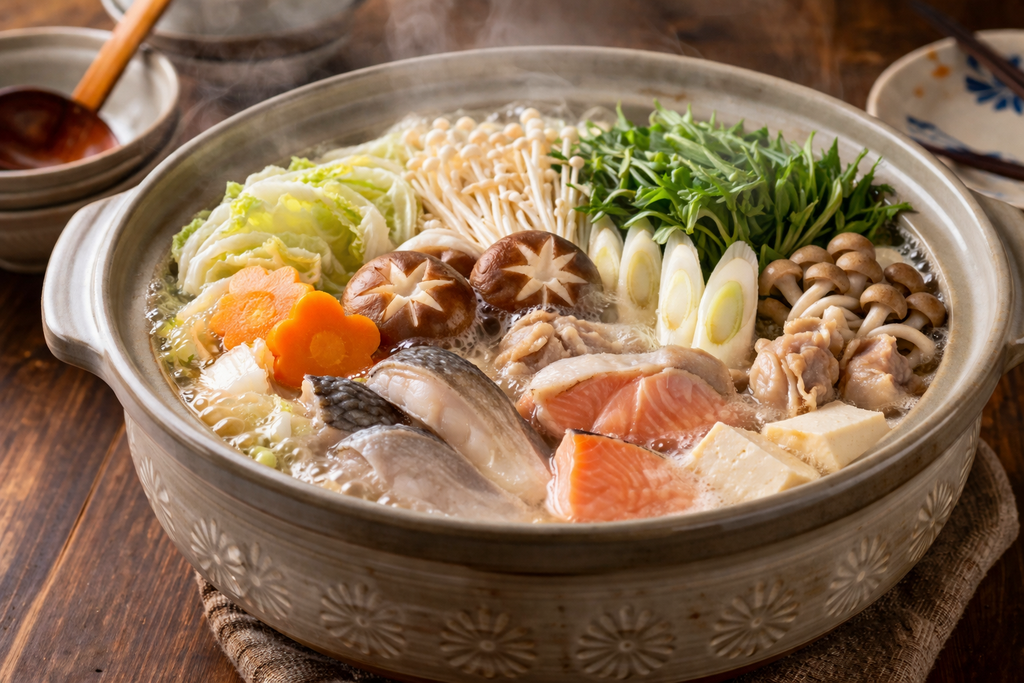
Kelly: “Next, I want to ask about hot pot dishes.”
Nobu: “Hot pot? These are also eaten while cooking. The basic idea is that family members take the ingredients they like, put them into the pot, and then take them out and eat them once they are cooked. However, it seems that the style differs from family to family. In some homes, the ingredients that will be eaten first are cooked in advance, and then more ingredients are added as people continue eating.”
Kelly: “For example?”
Nobu: “For example, you first put meat and vegetables into the pot and place it on the table. When someone takes out the cooked ingredients, you add more ingredients to replace what was eaten. In that way, people eat the ingredients according to the order in which they become cooked.”
Kelly: “I see.”
Nobu: “By the way, hot pot dishes are not only about cooking the ingredients. After everyone has eaten, sometimes rice is added to the remaining soup and eaten.”
Kelly: “You mean putting rice into the soup that is full of the flavors of the ingredients?”
Nobu: “That’s right. It’s called zosui. It is a delicious dish that warms the body. But this also seems to depend on the family. In some homes, they add udon noodles instead of rice, or even ramen noodles. I suppose you could call it a ‘family taste.’”
John: “A family taste. I like that, too.”
Shabu-Shabu — Eating Thinly Sliced Meat by Swishing It Through the Broth
Nobu: “By the way, people may think that hot pot dishes are all about ‘cooking the ingredients in a pot.’”
Kelly: “Aren’t they? You cook them and then eat them, right?”
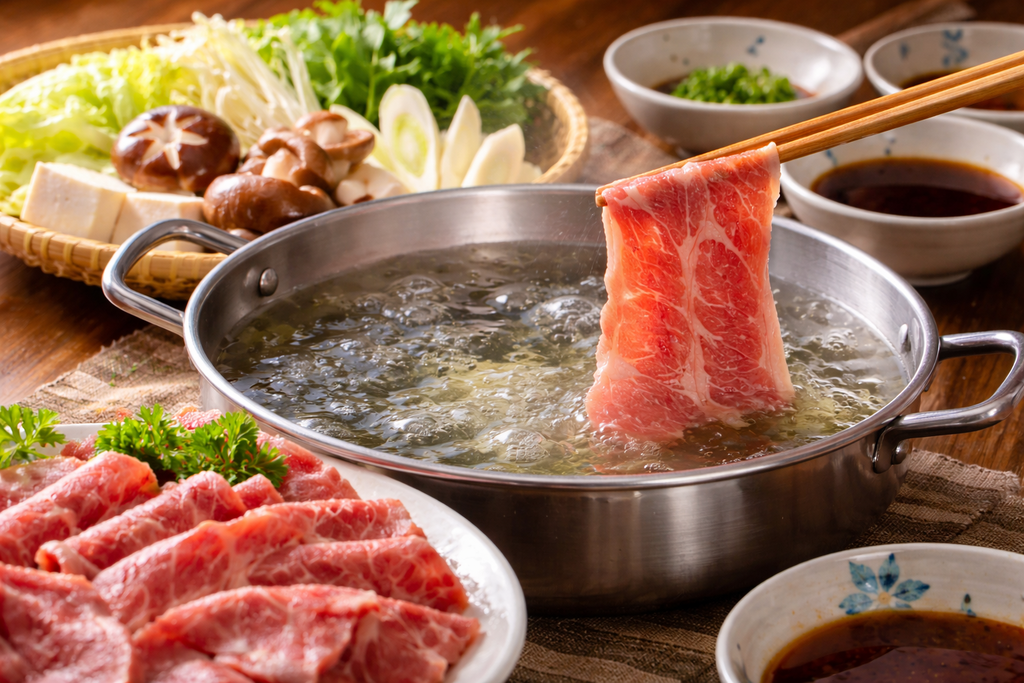
Nobu: “There are also dishes where, rather than cooking the ingredients in the pot, you pass them through the hot water. One such dish is called shabu-shabu, and you don’t cook it by boiling it for a long time.”
Kelly: “What exactly is it like?”
Nobu: “Thinly sliced beef is a typical example. You put it into boiling water and then take it out almost immediately. The name ‘shabu-shabu’ may come from the image of swishing the meat back and forth in the hot water.”
Kelly: “I see. Like washing it in the hot water. It sounds like you can enjoy a different taste from sukiyaki.”
Cooking Equipment — Hot Plates, Portable Gas Stoves, and Takoyaki Makers
John: “By the way, what kind of equipment do people use to make these dishes at home? I understand that they need to be heated, but I can’t really imagine what kind of cooking equipment they use. I don’t think having a table with a built-in iron griddle like an okonomiyaki restaurant is something most families have at home.”
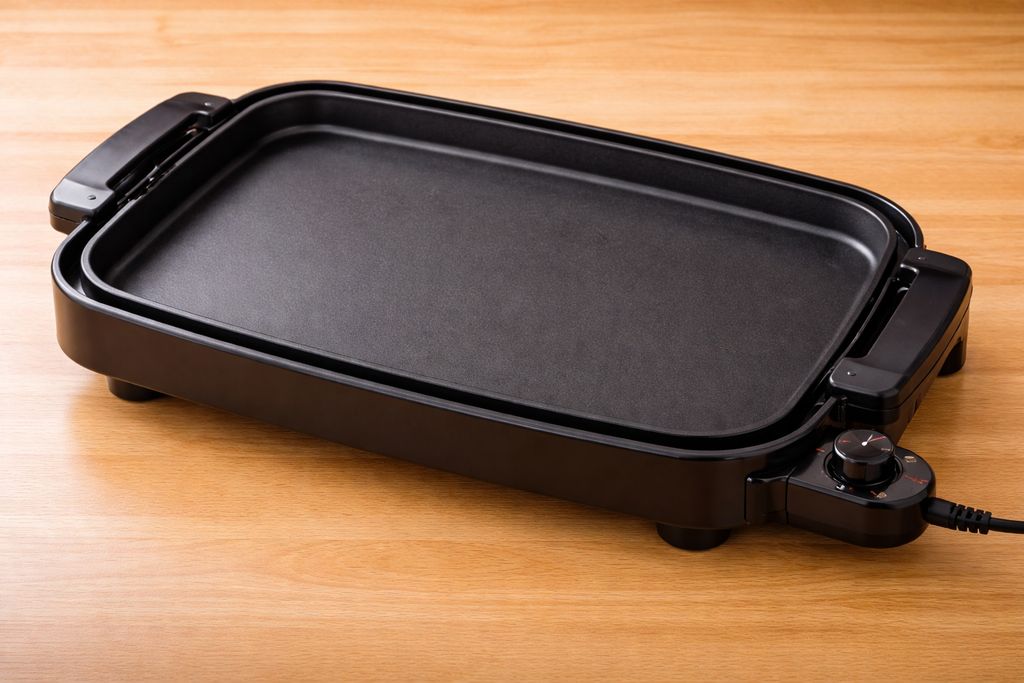
Nobu: “That’s right. First, for teppanyaki, people in Japan use a cooking appliance called a hot plate. It looks and works like an iron griddle, but it is heated by electricity. You can adjust the surface temperature, so it is convenient and easy to use.”
John: “Since it’s electric, you just plug it into an outlet and use it. That certainly sounds easy.”
Kelly: “Then what kind of equipment do you use for hot pot dishes?”
Nobu: “You use a gas stove for hot pot dishes. However, there are also portable cassette-gas stoves, so they are very easy to use.”
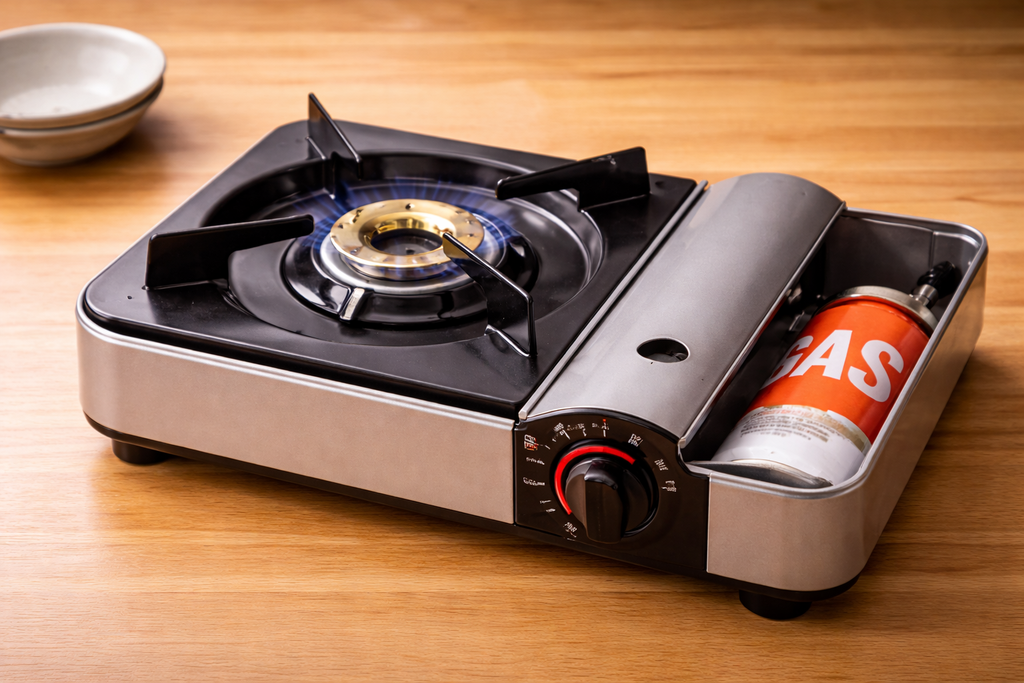
Kelly: “So you put the hot pot on the gas stove.”
Nobu: “Exactly.”
Mike: “By the way, aren’t there other cooking appliances that the whole family can use, like a hot plate or a portable gas stove?”
Nobu: “Let’s see… There are home-use takoyaki makers. The style is for everyone to gather together and cook takoyaki while eating.”
John: “You cook takoyaki while eating, too?”
Nobu: “Yes. This is especially common in western Japan. Okonomiyaki and takoyaki are particularly popular in western Japan.”
Mike: “It sounds fun to eat takoyaki while cooking it.”
Nobu: “Well… not always.”
John: “Why? It sounds fun.”
Nobu: “With dishes like takoyaki, the way they are made can differ from family to family. And if everyone has their own strong opinions about how it should be made, they can end up arguing. Even though it is supposed to be a fun occasion, the atmosphere can become unpleasant.”
John: “I see. That could be a problem.”
The End
Conclusion
I have introduced the Japanese culture of cooking and eating at the table.
A meal where the whole family enjoys spending time together while eating is something special.
Hot pot dishes also differ depending on the region.
The ingredients are different, and the seasoning is different, too.
For example, in coastal areas, hot pot dishes may be centered around seafood. In inland areas, there may be hot pot dishes centered around meat.
By the way, you may be thinking:
“Don’t I have to go to a Japanese home to eat these dishes?”
Don’t worry about that.
There are restaurants in Japan that serve hot pot dishes, and some traditional Japanese inns also serve them.
Eating hot pot with your travel companions may be a great way to experience the essence of Japanese culture.
So, please enjoy this delicious and warm part of Japanese culture.