I once heard a YouTuber who had moved to Switzerland say that thinly sliced meat was difficult to find there. I remember thinking that this was an interesting cultural difference. It even made me wonder whether Japan was unusual in the way it sells meat.
So why is thinly sliced meat so common in Japan? Is there a reason behind this difference in food culture?
Let’s explore the background through a story about a family trying to understand Japanese cooking.
The Characters
Mike: A 12-year-old American boy who is interested in Japan.
John: Mike’s father. He sometimes travels to Japan on business.
Kelly: Mike’s mother. She is good at cooking.
Nobu: A Japanese exchange student.
Prologue
Japanese and Western meat-eating cultures have some interesting differences. One that stands out to me is how commonly thinly sliced meat is sold in Japan.
Imagine someone from another country visiting a Japanese supermarket and seeing tray after tray of thinly sliced beef and pork. They might wonder, “Why is so much of the meat cut this way?”
In this article, we’ll explore some of the historical and practical reasons behind this aspect of Japanese food culture.
Thinly Sliced Meat Is Everywhere in Japan
Kelly: “I’ve run into an unexpected problem while trying to cook Japanese food at home. It’s more difficult than I thought!”
John: “What kind of problem?”
Kelly: “When I look at Japanese recipes, they often just say to use meat. But the meat seems to be cut much more thinly than what I’m used to buying here.”
John: “Ah, the thickness of the meat. I hadn’t really thought about that. But now that you mention it, I can’t imagine making sukiyaki with big chunks of beef!”
Kelly: “Exactly! I should ask Nobu about it next time I see him.”
Nobu: “Hello!”
Kelly: “You’re just in time! I wanted to ask you something about meat in Japan.”
Nobu: “Sure. What would you like to know?”
What You Find in Japanese Supermarkets
Kelly: “I’ve noticed something while trying to cook Japanese food. Don’t Japanese recipes use thinly sliced meat an awful lot? The recipes tell me how much meat to use, but they don’t always explain how it should be cut.”
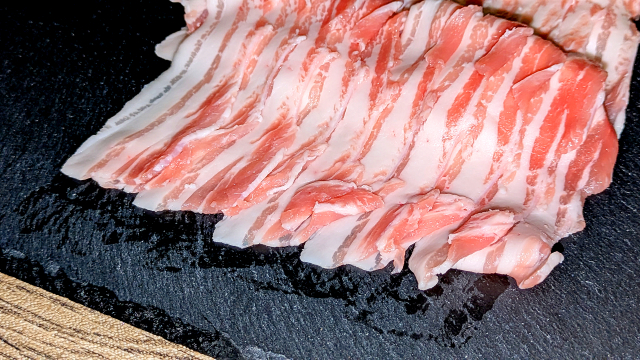
Nobu: “That’s a good observation. Thinly sliced meat is very common in Japanese supermarkets. You’ll often find beef and pork sold in thin slices, while thicker cuts are usually labeled for dishes such as steaks or sautéed meat. Larger pieces of meat are available, too, but the selection and presentation can be different from what you’re used to.”
Kelly: “Buying a large piece of meat and slicing it thinly myself is really difficult!”
Nobu: “I can imagine. It’s not just a matter of cutting the meat thinly. Getting the slices to a reasonably consistent thickness can be difficult, too.”
Kelly: “So, when supermarkets sell thinly sliced meat, they try to keep the thickness fairly consistent?”
Nobu: “Yes, although some variation is inevitable.”
Sometimes, the Thickness Really Matters
Nobu: “I’ve also heard that some Japanese beef bowl chains have paid close attention to the thickness of their beef when developing their products. It seems that even a small difference in thickness can matter.”
Kelly: “Why is that?”
Nobu: “There are several possible reasons. One is texture. If you want the meat to have a satisfying bite while still being easy to chew, the thickness makes a difference. And when you’re serving a wide range of customers, including older people, ease of eating may also be an important consideration.”
Kelly: “What about the seasoning?”
Nobu: “That can matter, too. Pieces of different thicknesses may cook at different rates, and the way they absorb or retain seasoning can vary. Keeping the slices reasonably consistent can help make the final dish more predictable.”
Kelly: “So getting the thickness right can help with both texture and consistency.”
Nobu: “Exactly. It’s one of those small details that can make a difference in the finished dish.”
Why Did Thinly Sliced Meat Become So Common in Japan?
John: “But Japan didn’t always sell meat this way, did it?”
Nobu: “Probably not in the way we see it today. Meat was not a major part of the traditional Japanese diet for a long time, and eating beef became more widespread during the modern era. I think Japan’s particular food history is one of the things that helps explain why thinly sliced meat became so familiar.”
John: “What do you mean?”
The Influence of Food Culture Since the Meiji Era
Nobu: “One important part of the story goes back to the Meiji era, which began in 1868. As eating beef became more common, hot pot dishes such as gyunabe helped introduce people to new ways of eating it. Sukiyaki later became another familiar example of this style of cooking.”
John: “And thin slices work well in a hot pot, don’t they?”
Nobu: “Exactly. When you cook meat in a pot at the table, thin slices heat through quickly. You can add them as you eat, rather than waiting a long time for thick pieces to cook. That makes thinly sliced meat particularly convenient.”
John: “So the history of Japanese cooking may have helped encourage the use of thin slices.”
Nobu: “Yes. History is part of the explanation, although it wouldn’t be the only reason.”
Thinly Sliced Meat Cooks Quickly
Nobu: “The fact that thinly sliced meat cooks quickly is useful in many other dishes, too. I think that practicality is another reason it has become so common.”
Kelly: “What kinds of dishes do you mean?”
Nobu: “Gyudon, for example—the beef bowl made with beef and onions simmered in a seasoned sauce. Thinly sliced meat also works well in dishes such as nikujaga, a home-style dish made with meat and potatoes, and in many Japanese stir-fries.”
Kelly: “What about the stir-fries you mentioned?”
Nobu: “In Japanese restaurants and cafeterias, you often see dishes such as yasai itame, which is a stir-fry of vegetables, often with some meat. Thin slices are convenient because they cook quickly alongside the vegetables. If you use thicker pieces, you may need to adjust the cooking time or cut the meat into smaller pieces to get a similar result.”
Kelly: “I see. Thin slices make it easier to cook everything together.”
Thinly Sliced Meat Works Well in Simmered Dishes
Nobu: “As we mentioned earlier, thin slices can also be convenient when you want meat to take on the flavor of a seasoned broth or sauce. Gyudon is one example, and there are plenty of simmered dishes where thinly sliced meat works well.”
Kelly: “I bet there are lots of dishes that are easier to make this way.”
Nobu: “Definitely. Tonjiru, a hearty Japanese soup made with pork and vegetables, is another good example. It often contains ingredients such as tofu, potatoes, and burdock root. Thinly sliced pork cooks relatively quickly and fits naturally into this kind of soup.”
Kelly: “So thinly sliced meat isn’t just a supermarket habit. It’s closely connected to the way many Japanese dishes are prepared.”
Nobu: “That’s right. The ingredients available in shops and the dishes people cook at home can influence each other.”
Thinly Sliced Meat and Older People
Nobu: “There’s another aspect of meat thickness that I’ve been thinking about recently. It may have an impact on the eating experience of older people, too.”
Mike: “Why older people?”
Nobu: “The key point is how easy the food is to eat.”
Mike: “Can you explain a little more?”
Japan’s Aging Population
Nobu: “First, Japan has a rapidly aging population. Older people make up a substantial part of society, and this has implications for many aspects of everyday life, including meals and food services.”
Mike: “So there are more older people who need meals that suit their needs?”
Nobu: “Yes. Care facilities and other services also have to think about how to provide meals that people can enjoy comfortably.”
Mike: “That makes sense.”
Sharing a Meal Can Matter, Too
Nobu: “For older people, being able to enjoy meals comfortably is important. And I think there’s another point worth considering: people generally want to enjoy the same meals as their family and friends whenever possible.”
Mike: “Sure. Nobody wants to feel left out at the dinner table.”
Nobu: “Exactly. Imagine a family where younger people are eating thick steaks while an older family member has to eat something completely different because chewing is difficult. Depending on the person’s circumstances, that difference might make them feel excluded.”
Nobu: “Of course, thinly sliced meat isn’t automatically suitable for every older person. But when a dish is prepared in a way that works for everyone at the table, it can make sharing a meal much easier. I think that’s an important point.”
Mike: “Right. Being able to enjoy the same meal together sounds nice.”
The End
From My Own Experience
An older member of my family lives with us, and we still share meals together.
As people get older, chewing firm foods can become more difficult. In my family’s case, eating some kinds of meat can be a challenge.
However, thinly sliced meat dishes have been much easier for this family member to enjoy. Shabu-shabu, a Japanese hot pot dish in which very thin slices of meat are briefly swished through hot broth, is particularly popular. It provides meat and vegetables in a meal that they enjoy eating.
Of course, everyone’s needs are different, and thinly sliced meat isn’t necessarily easy for every older person to eat. But in our household, it has worked well.
There’s another little detail about our family meals, too.
Sometimes, the older member of my family goes out for the day. On those evenings, we might have something like spare ribs for dinner.
Spare ribs are delicious, but they’re not an easy choice for someone who has difficulty chewing.
So, when that family member is out, we sometimes enjoy a meal that would be difficult for them to eat.
In other words, we occasionally have spare ribs when they’re not around!
It’s a small thing, but it reminds me that the way food is prepared can influence what a family can comfortably enjoy together.
Conclusion
We’ve explored the culture of thinly sliced meat in Japan, including some of the historical background and practical reasons it has become so common.
The story goes back at least in part to changes in Japanese eating habits during the modern era. Thin slices are convenient for hot pot dishes, simmered meals, and stir-fries, and they can make it easier to cook meat quickly and consistently.
There’s also a more personal side to this story. The way meat is cut can affect whether different members of a family can comfortably enjoy the same meal.
Thinly sliced meat may seem like a small detail, but it tells us something about the relationship between Japanese food culture, everyday cooking, and family life.
If you visit Japan, take a look at the meat section of a supermarket. You may notice just how many varieties of thinly sliced beef and pork are available.
Sometimes, an ordinary supermarket shelf can reveal an interesting difference in the way people cook and eat around the world.
Related Article
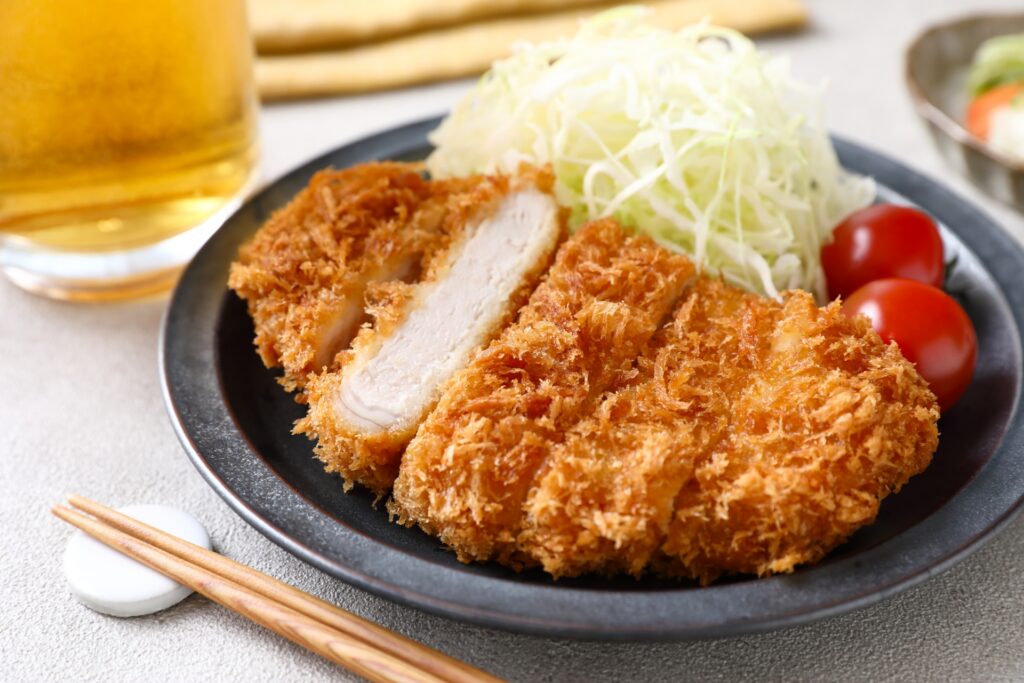
One dish made with thinly sliced meat is called Mille-feuille Katsu. It is a type of tonkatsu, but its preparation method is different from that of traditional tonkatsu.
In this article, we introduce Mille-feuille Katsu and explain what makes it unique.
Read the article →