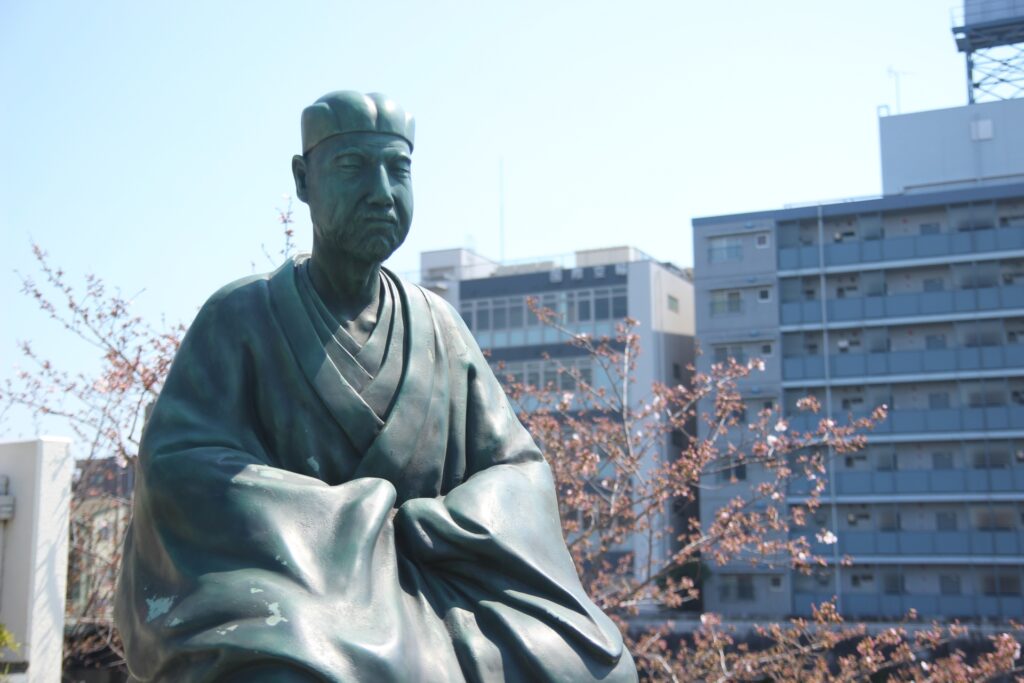
When we watch American movies, the clothes and footwear people wear often look familiar, even in films set in the past. But Japanese period dramas are different. The clothing, including the footwear, can look very different from what we see today.
Did you know that there were several types of traditional Japanese footwear? At first glance, some of them may look similar, but they had different designs and uses. Even in period dramas, the footwear worn by different characters can tell us something about their lives.
Let’s take a closer look at these traditional forms of Japanese footwear.
Characters
Mike: A 12-year-old American boy who is interested in Japan.
John: Mike’s father. He sometimes travels to Japan on business.
Kelly: Mike’s mother. She is good at cooking.
Nobu: A Japanese exchange student.
Prologue
One day, John was watching a Japanese period drama when something caught his attention.
He noticed the men known as kagokaki. These workers carried people in a traditional palanquin called a kago, supporting it on their shoulders as they walked. Judging from the scenes in the drama, they sometimes traveled considerable distances.
John began to wonder: What kind of footwear did they wear?
He also remembered hearing about people who carried letters over long distances in the days before Japan had a modern postal system. They must have needed footwear that could withstand a lot of walking.
Just as John was thinking about these questions, Nobu arrived.
How Far Did People Walk in Edo-Period Japan?
Nobu: Hello!
John: Hey, you’ve come at just the right time. I was wondering about traditional Japanese footwear.
Nobu: Footwear? That’s an interesting subject.
John: When I watch Japanese period dramas, people’s footwear looks very different from what we wear today. But I’ve also heard that people in the past walked incredibly long distances. What did they wear, and how far did they walk?
Nobu: Well, let’s start with the distance. Some travelers in the Edo period walked around 40 kilometers a day.
John: That’s a lot of walking! Where were they going?
Nobu: One example is the journey from Edo, which is now Tokyo, toward Kyoto and Osaka. Travelers used major roads such as the Tokaido to travel between eastern and western Japan.
John: And what kind of footwear did they use?
Nobu: One common choice for travelers on foot was called waraji (草鞋). These were traditional straw sandals that could be tied securely to the feet. They were suitable for long walks. Other types of footwear, such as zori (草履) and geta (下駄), were also used in everyday life.
John: They sound quite different. Can you explain how they worked?
Nobu: Of course!
Traditional Japanese Footwear Seen in Period Dramas
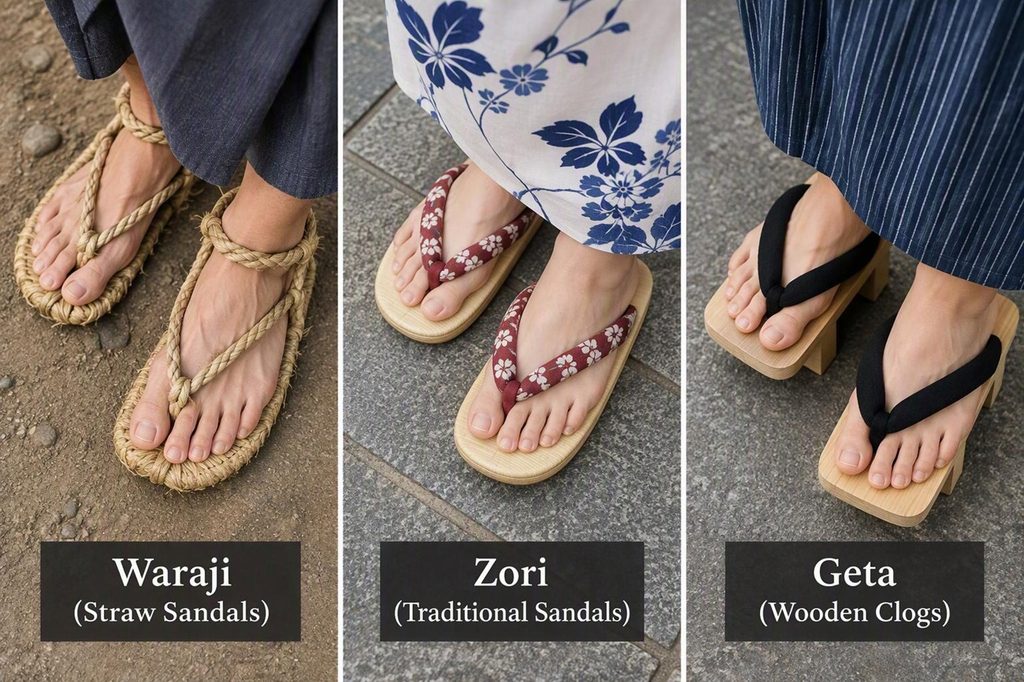
Nobu: As I mentioned, people in Japan used different kinds of footwear, including waraji, zori, and geta. Let’s look at each type.
Waraji (草鞋): Traditional Straw Sandals
Nobu: First, let’s talk about waraji. These were sandals woven from straw. Straps made from straw or other materials were wrapped around the feet and ankles to hold them in place.
Because waraji were made from natural fibers, they wore out much faster than many modern shoes. Travelers sometimes carried spare pairs with them.
Mike: But wouldn’t they run out of sandals if they had to walk for days? Modern shoes often have leather or synthetic materials, but straw doesn’t seem very durable.
Nobu: That’s a good point. Waraji were practical, but they could wear out quickly, especially when used on long journeys. That’s why travelers could buy replacement pairs along the way, including at post stations and other places along major roads.
Mike: So travelers would replace their sandals as they went along?
Nobu: Exactly. Waraji were useful for walking, but they were also something travelers had to replace regularly.
Zori (草履): Traditional Japanese Sandals
Nobu: Next are zori. Like waraji, zori are sandal-like footwear, but their design is different.
A zori has a flat sole and a strap called a hanao (鼻緒). The strap passes between the big toe and the second toe, helping to keep the sandal on the foot.
Traditional zori were made from materials such as straw, although different materials were used for different types and occasions.
Mike: I see. They look simpler than waraji because you don’t have to tie them around your ankles.
Nobu: Right. Zori were convenient for everyday use. However, the way they fit the foot made them different from waraji, which could be tied more securely for walking.
Geta (下駄): Traditional Japanese Wooden Footwear
Nobu: Geta are traditional Japanese footwear made from wood. Like zori, they have a strap that passes between the big toe and the second toe.
Many familiar geta have two wooden supports, called teeth, underneath the main wooden platform. These raise the wearer’s feet above the ground. However, some types of geta have no teeth.
Kelly: I’ve seen those in period dramas! The women’s geta can be very beautiful. They look as if they were designed to go with kimono.
Nobu: That’s true. Some geta were carefully decorated, and certain styles were associated with particular occasions or social roles. But geta weren’t just for women. Men wore them, too.
They could also be useful in wet weather because their raised wooden platforms helped keep the feet above mud and puddles.
Tabi (足袋): Traditional Japanese Socks
Nobu: There’s another item worth mentioning: tabi (足袋). These are traditional Japanese socks.
Kelly: I’ve seen those, too. Some of the women’s tabi look very elegant.
Nobu: Yes. Tabi have a separate compartment for the big toe, unlike ordinary socks. This design makes them suitable for wearing with footwear that has a strap between the big toe and the second toe, such as zori and geta.
Tabi could help protect the feet and provide warmth. However, not everyone wore them all the time. Their use depended on the period, the occasion, and the person’s circumstances.
Traveling in Edo-Period Japan
Nobu: In the Edo period, travelers used major roads known as kaido (街道). Along these roads were post stations called shukuba (宿場), where travelers could rest, find food, and stay overnight.
John: So people didn’t have to walk the entire journey without stopping?
Nobu: No. They could stop at post stations along the way. The distance between stations varied depending on the road and the terrain.
Kelly: I imagine that traveling with children would have made the journey more difficult.
Nobu: Certainly. Not everyone traveled at the same pace, and the distance covered in a day depended on the traveler and the conditions.
For those who traveled long distances on foot, suitable footwear was an important part of the journey.
People Who Carried Letters: Hikyaku (飛脚)
Nobu: There was another interesting job in old Japan: hikyaku (飛脚). These were couriers who carried letters and other items from one place to another.
Mike: How far did they run?
Nobu: That depended on the type of courier service. For long-distance deliveries, some systems used relays, with one courier handing the items over to another along the route.
Mike: So it was like a relay race?
Nobu: In a way, yes! The relay system made it possible to deliver important messages over long distances much faster than if one person had to carry them all the way.
For example, certain courier services could transport documents between Edo and Kyoto, a distance of roughly 490 kilometers, in about three to four days.
Mike: That’s impressive! They must have needed a reliable way to travel.
Nobu: Absolutely. Their work depended on the roads, the relay system, and the people who carried the messages.
The End
Conclusion
Today, we have many kinds of modern shoes, but traditional Japanese footwear tells us a lot about how people lived in the past.
Waraji (草鞋) were straw sandals that could be tied securely to the feet. Zori (草履) were simpler sandals with a strap between the toes. Geta (下駄) were wooden footwear, often with raised supports underneath. Tabi (足袋), with their separate big-toe compartments, were designed to work with this kind of footwear.
These differences were not just about appearance. They were also related to how people traveled, worked, and lived.
The next time you watch a Japanese period drama, take a closer look at the characters’ feet. You may notice details you hadn’t paid attention to before.
And if you’re interested in experiencing Japan’s old travel routes for yourself, you could visit parts of the historic Tokaido or other traditional roads. Walking along these routes may help you imagine what travel in Japan was like centuries ago.
Related Article
This article introduces traditional Japanese footwear from the past.
You may have also seen these types of footwear in Japanese historical dramas (jidaigeki).
But how do Japanese historical dramas ensure that their depictions of the past are historically accurate?
In this article, we take a closer look at the historical research and fact-checking behind Japanese period dramas.
Read the article →