Japanese people have created a wide variety of products over the years. I have heard that one key concept behind these achievements is kaizen, a Japanese word meaning “continuous improvement”—the idea of making something better than it is today.
Perhaps the enthusiasm and creativity of Japanese workers have played an important role in this process.
The same idea can be applied to cooking. Restaurants have also worked to improve their dishes, and sometimes an unexpected event has inspired a new creation.
In this article, we will explore some legends about how popular Japanese dishes were born. Not all of these stories may match historical facts exactly, but knowing them might make your next meal even more enjoyable!
Characters
Mike: A 12-year-old American boy who is interested in Japan.
John: Mike’s father. He sometimes travels to Japan on business.
Kelly: Mike’s mother. She is good at cooking.
Nobu: A Japanese exchange student.
Prologue
Kelly loves cooking. She is also interested in Japanese cuisine and spends much of her time reading recipes.
One day, she came across an article explaining that some Western-style dishes had actually been invented in Japan.
She had always assumed that Western-style food originated in Europe or America. However, she discovered that quite a few dishes had been created in Japanese restaurants, particularly in Tokyo.
“What inspired people to create these dishes in Japan?” she wondered.
Just then, Nobu appeared.
The Legends Behind These Dishes
Kelly: “Hey, I found something surprising while reading about Japanese food. Apparently, Japanese people invented not only traditional Japanese dishes but also Western-style dishes!”
Mike: “You mean Japanese chefs came up with them? That’s pretty amazing!”
John: “Exactly! Even Japanese ramen has become quite different from the noodles you find in China. I’ve even heard that some Chinese people are surprised by Jiro-style ramen!”
Mike: “Japanese chefs really are creative!”
Nobu: “Hello, everyone!”
Kelly: “Perfect timing! We were just talking about how Japanese dishes came into being. Do you know any interesting stories about their origins?”
Nobu: “Quite a few! Some of them might make your meals a hundred times more enjoyable.”
John: “A hundred times? Now you’ve got my attention!”
Katsu Curry: A Dish Inspired by a Baseball Player?
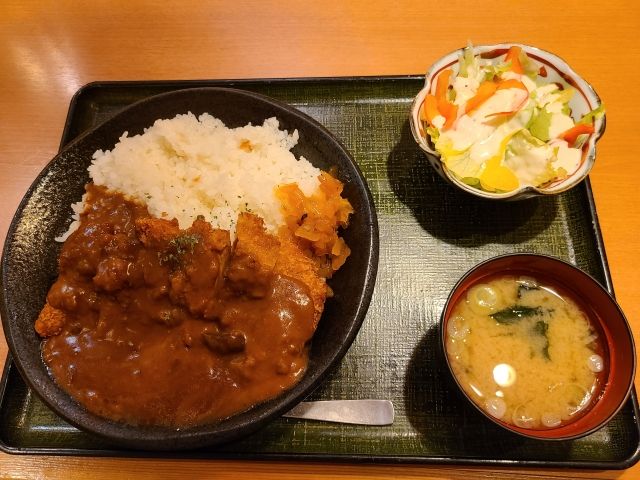
Nobu: “Let’s start with katsu curry. As you probably know, it consists of Japanese curry rice topped with a breaded and deep-fried pork cutlet called tonkatsu. It’s a hearty meal, and there is a legend that a professional baseball player helped inspire its creation.”
Mike: “A professional baseball player? That’s an interesting way for a dish to be born!”
Nobu: “According to one story, the player visited a Western-style restaurant in Tokyo and asked the staff to put a pork cutlet on his curry.”
John: “That makes sense. Athletes need plenty of energy!”
Nobu: “There may have been another reason, too. The word katsu in tonkatsu sounds exactly like katsu, the Japanese verb meaning ‘to win.’ Because of this wordplay, people sometimes eat tonkatsu before an important match or competition, hoping it will bring them victory.
“Perhaps the player wanted to take advantage of that lucky association when he ordered his curry.”
John: “I see! That’s a fun story.”
Katsudon: A University Student’s Clever Idea?
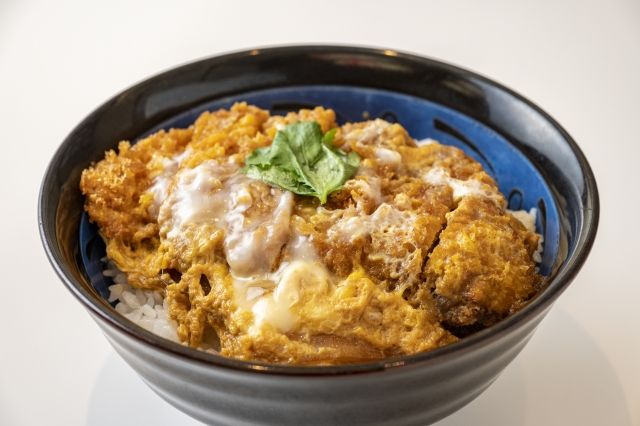
Nobu: “Next is katsudon, a bowl of rice topped with a pork cutlet and egg. One legend credits a university student with helping inspire the dish.”
Mike: “A university student? This story keeps getting more interesting!”
Nobu: “In the old days, tonkatsu was considered a relatively expensive dish and was sometimes served at banquets. But banquets were occasionally canceled, leaving restaurants with pork cutlets they had already prepared.
“According to one story, a university student who came to the restaurant suggested a solution: ‘Why not simmer the leftover pork cutlets with eggs?’”
Kelly: “That sounds like a sensible idea. Throwing away food would be a waste, especially if it was expensive.”
Nobu: “Exactly! The combination apparently turned out to be delicious, and the dish became popular among university students. This is said to be one possible origin of the katsudon we enjoy today.”
John: “A university student with a talent for cooking! That’s quite a useful discovery to make.”
Omurice: A Dish Created Out of Consideration?

Nobu: “Here’s another story. One legend says that omurice was created for a regular customer who had a weak stomach.”
John: “Was it invented for a hospital or a care facility?”
Nobu: “Not exactly. According to the story, the customer used to eat an omelet and rice separately. The restaurant’s chef thought about how to make the meal easier for the customer to enjoy and came up with the idea of wrapping ketchup-seasoned rice inside an omelet.”
Kelly: “So, in this story, omurice was born from a chef’s kindness and consideration for a customer.”
Nobu: “That’s right. Sometimes, a simple act of consideration can inspire a dish that becomes a favorite for generations.”
Napolitan Spaghetti: A Japanese Dish with a Postwar Story
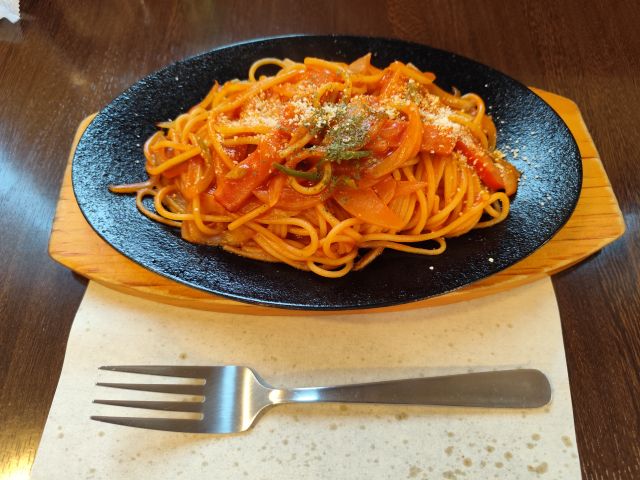
Nobu: “Napolitan spaghetti is another dish that could be described as a Japanese creation inspired by the aftermath of war.”
John: “War? How did that happen?”
Nobu: “After Japan lost the Pacific War, American military personnel came to Japan. One story says that a chef at a hotel in Yokohama saw American soldiers eating a simple pasta dish seasoned with salt, pepper, and ketchup.
“The chef wondered whether he could create a more refined version suitable for serving at a hotel. That idea is said to have inspired Napolitan spaghetti.”
John: “So the presence of American soldiers in postwar Japan helped inspire a new Japanese dish!”
Nobu: “That’s the story, at least. And today, Napolitan spaghetti is recognized as a classic example of yoshoku—Japanese-style Western cuisine.”
Doria: A Chef’s Response to a Customer’s Request
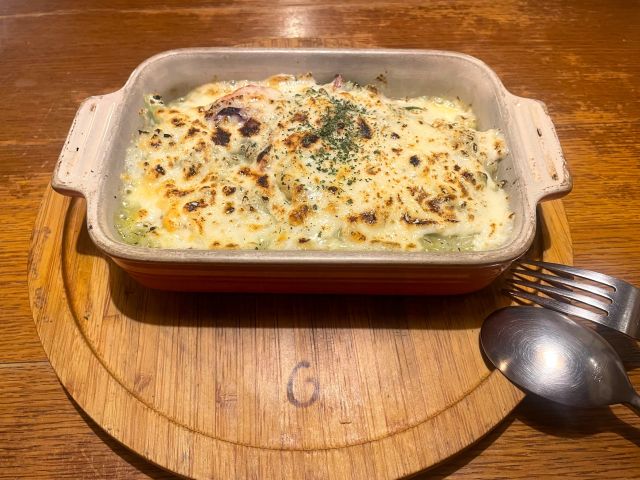
Nobu: “Doria is also said to have originated in Japan. According to one story, a hotel chef created it in response to a customer’s request for something easy to swallow.”
Kelly: “So the chef was trying to make a dish that suited the customer’s needs?”
Nobu: “Exactly. The story suggests that doria was born from a chef’s thoughtfulness and desire to satisfy a customer.”
Kelly: “It’s lovely to think that such a popular dish might have started with someone simply trying to help another person.”
Nobu: “Indeed. Some dishes are born not from grand plans, but from small acts of kindness.”
The End
The Creativity of Chefs
Creativity is essential when making new products, but it is not limited to industrial manufacturing. As we have seen, chefs can also be remarkably inventive.
Even more interestingly, their creativity can produce different results depending on the region and its food culture.
I suspect that many of the dishes known in Japan as B-kyu gourmet—affordable, casual foods that are especially popular with local people—also have similarly interesting stories behind them.
In any case, many dishes seem to have emerged from the desire to improve on what already existed. These creative ideas have given us countless delicious meals, and I look forward to seeing what chefs come up with next.
A Little Experiment of My Own
Let me share a small cooking achievement of mine.
I once came up with a rather unusual dish. Of course, someone else may have invented it before me, but for the purposes of this story, let’s say it was my original idea!
One day, I decided to make homemade hamburger steak from scratch. I prepared all the ingredients, but when it came to seasoning, I discovered that I had almost nothing suitable in the kitchen.
Then I happened to notice some curry powder.
I decided to mix it directly into the ground meat before shaping the patties.
And that was how my curry-flavored hamburger steak was born!
I feel a little embarrassed praising my own cooking, but I thought it turned out surprisingly well. If you enjoy experimenting in the kitchen, why not give it a try?
Who knows? You might discover your own signature dish.
Conclusion: Every Dish Has a Story
Today, we have explored several legends about how popular Japanese dishes came into being. Some of these stories are surprising, while others remind us of the simple human ideas that can inspire great food.
Behind katsu curry, we find a possible desire for victory. Behind the legend of katsudon, we find the practical idea of making good use of leftover food.
These stories may not tell us exactly how each dish was invented, but they offer an enjoyable way to think about the creativity and consideration that can lie behind our meals.
We live in an age when recipes are readily available online. The next time you look up a recipe, why not take a moment to explore the story behind the dish as well?
You might discover that knowing how a dish came to be makes it taste even better!

