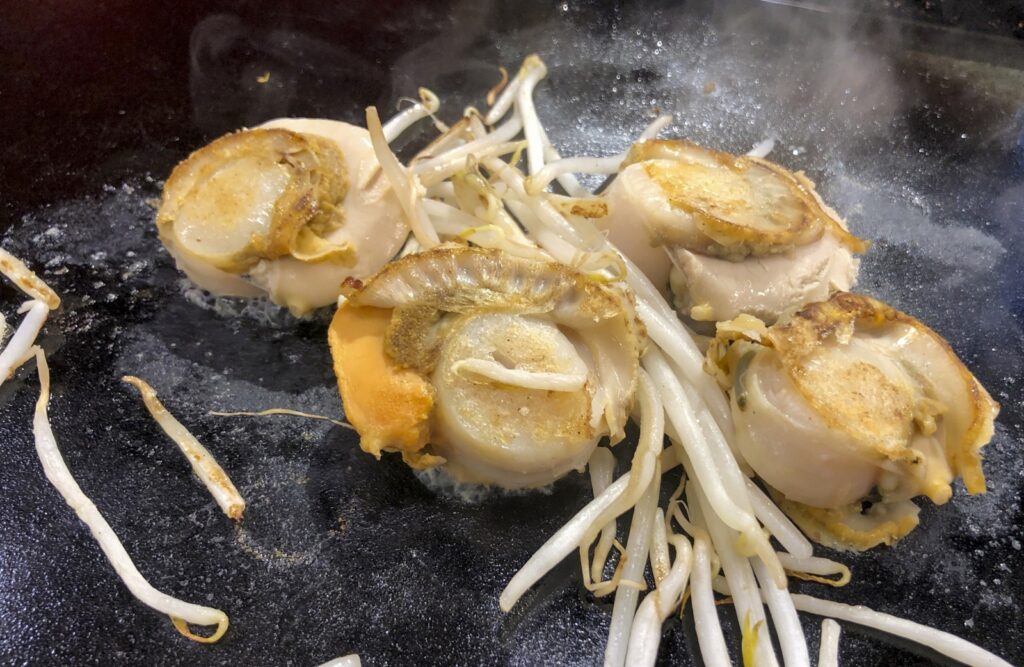
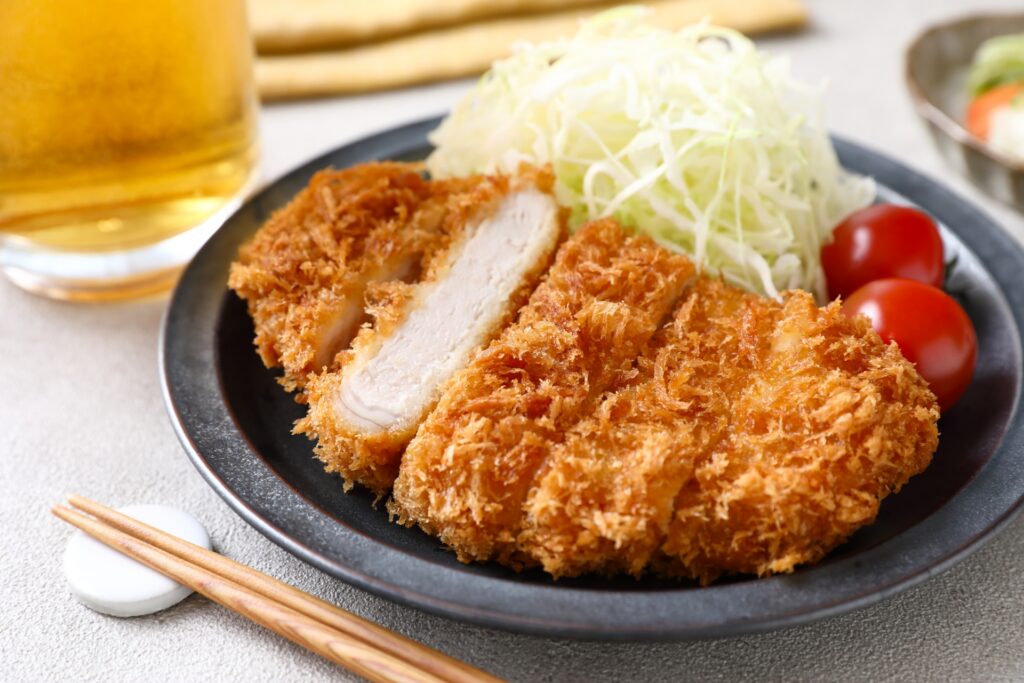
Japanese cooking often uses soy sauce and dashi (Japanese soup stock) as the foundation for its flavors. Popular dishes such as Oyakodon (chicken and egg rice bowl) and Katsudon (pork cutlet rice bowl) are good examples. The same combination is also used in many simmered dishes, including fish and vegetables.
However, preparing Japanese seasonings from scratch can take time. Making dashi and adjusting the balance of soy sauce, mirin, and sugar may seem troublesome, especially for people who want to cook quickly.
This is where Mentsuyu comes in handy.
But what exactly is Mentsuyu? And how can you use it in dishes other than soba and udon noodles?
Characters
Mike: A 12-year-old American boy who is interested in Japan.
John: Mike’s father. He sometimes travels to Japan on business.
Kelly: Mike’s mother. She is good at cooking.
Nobu: A Japanese exchange student.
Prologue
Kelly, who was studying Japanese cuisine, had a small problem. It was a matter of time.
Japanese food is certainly delicious, but some dishes require more preparation than people might expect. Many people do not have enough time to spend cooking, and Kelly was having trouble finding practical cooking tips that she could recommend to them.
Just then, Nobu appeared.
Kelly decided to ask him for advice.
Nobu: Hello!
Kelly: Oh, you’re just the person I wanted to see. I’ve been thinking about seasonings used in Japanese cooking.
Nobu: Really? What seems to be the problem?
Kelly: I think Japanese seasonings are wonderful, but some dishes take quite a bit of time to prepare. Many people don’t have that much time, so I was wondering if there was an easier way to introduce Japanese cooking to them.
Nobu: Ah, I have just the thing. It’s about how to use Mentsuyu.
Kelly: Mentsuyu?
Mentsuyu Has Many Uses
Kelly: Do you mean the dipping sauce used for soba and udon noodles?
Nobu: That’s right. You can find it in stores that sell Japanese food products. It’s a very convenient seasoning to keep in your kitchen.
It Can Be Used in Many Japanese Dishes
John: But isn’t it only for soba and udon? I thought different dishes needed different seasonings.
Nobu: Not necessarily. Many Japanese dishes use a combination of soy sauce, dashi, and mirin as their flavor base. Mentsuyu already contains these ingredients, so it can often be used in their place.
John: That’s true. Mentsuyu is usually based on soy sauce and contains dashi for extra flavor.
Nobu: Exactly. That’s why it works in so many dishes.
The Concentration Is Important
Kelly: I understand that it can be used in other dishes, but can I simply pour it into the pot as it is?
Nobu: Not always. Mentsuyu often comes in concentrated form, so you need to dilute it with water before using it. Just as you dilute it when preparing noodle soup, you often need to adjust its concentration for other dishes as well.
Mike: I see. If you use it without diluting it, the dish might become too salty.
Nobu: That’s right. If you look at recipes using Mentsuyu, you’ll often notice that they call for only a small amount. The appropriate quantity depends on the product and the dish, so it’s best to start with a little and adjust the flavor.
Dishes You Can Make with Mentsuyu
John: So, what kinds of dishes can we actually make with Mentsuyu?
Nobu: One of the most common uses is for Japanese rice bowls, known as donburi.
Kelly: Donburi?
Nobu: Two good examples are Katsudon and Oyakodon.
Katsudon and Oyakodon
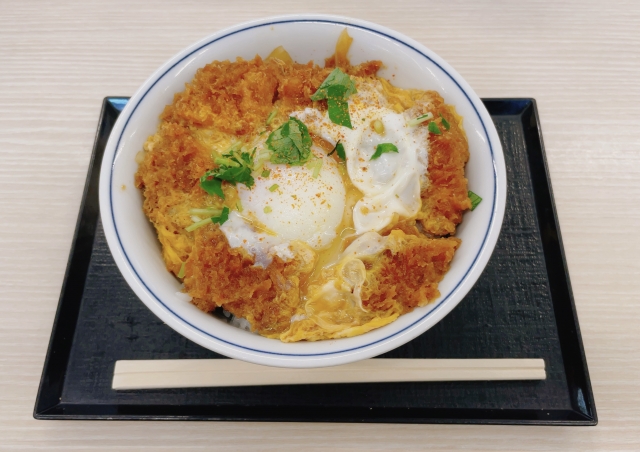
Nobu: Both Katsudon and Oyakodon generally use soy sauce, mirin, sugar, and dashi for their flavor. Since Mentsuyu already combines these ingredients, it can be used as a convenient substitute.
Kelly: So, the idea is to simmer the ingredients in diluted Mentsuyu and then pour beaten eggs over them?
Nobu: That’s basically it. The final taste will depend on things like the heat and how you cook the eggs, but you’ve got the general idea.
Mike: That sounds pretty easy!
Simmered Dishes
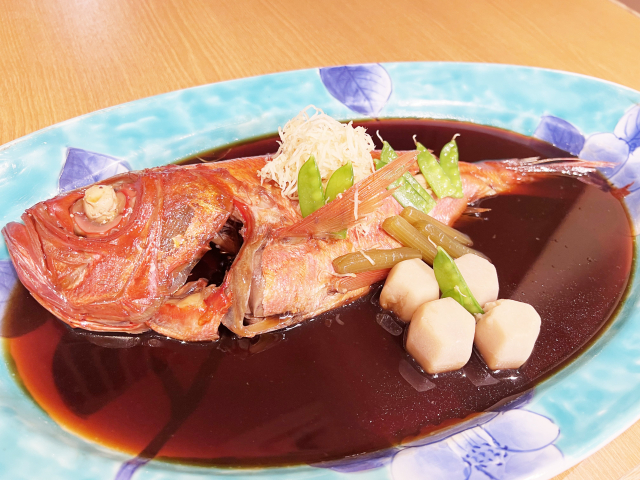
Nobu: You can also use Mentsuyu for simmered dishes. These dishes often rely on soy sauce and dashi as their main flavor base, so Mentsuyu works well here too.
Kelly: Simmered vegetables are probably a typical example. Are there any other possibilities?
Nobu: You can also use it when simmering fish. Simmered fish is a classic Japanese dish, and Mentsuyu makes preparing it much easier.
Japanese Seasoned Rice
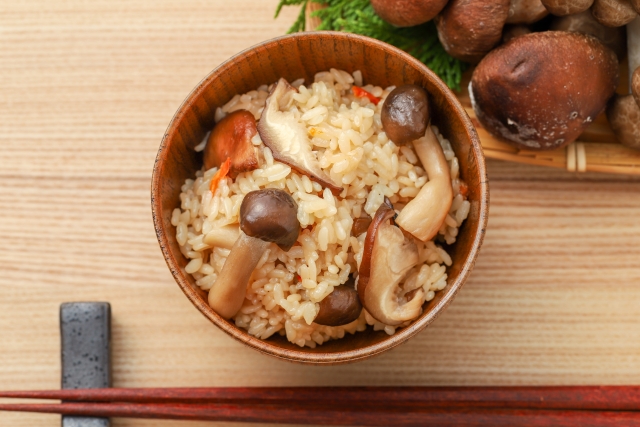
Nobu: Another good use is Takikomi Gohan, or Japanese seasoned rice.
Kelly: I can see why that would be convenient. Getting the right balance of seasonings can be difficult. If you get the proportions wrong, the rice can become too salty or, on the other hand, too bland.
Nobu: Exactly. Since Mentsuyu already contains a balanced combination of seasonings, it makes preparation much easier.
Even More Ways to Use Mentsuyu
Mike: Are there even more ways to use it?
Nobu: Of course! Mentsuyu is especially useful when you want to give an ordinary dish a Japanese-style flavor.
Mike: Can you give us some examples?
Japanese Curry Udon
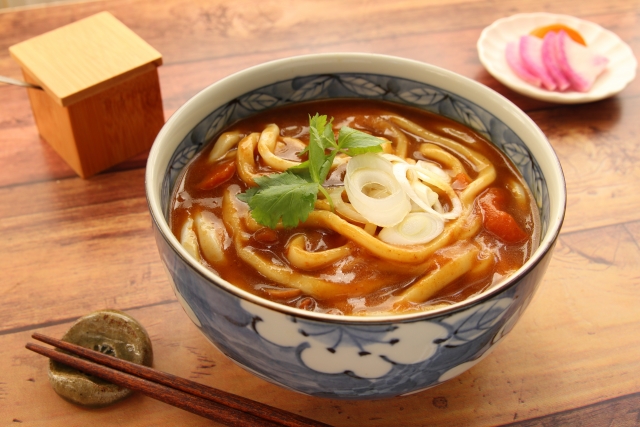
Nobu: Let’s start with Curry Udon.
Kelly: Can’t I just use ordinary curry to make it?
Nobu: You certainly can. However, the curry udon served at traditional Japanese soba restaurants often has an additional Japanese-style flavor. Mentsuyu is a convenient way to add that flavor.
John: I see. Without the right seasonings, curry udon might end up tasting more like Indian or Nepalese curry. Mentsuyu really does seem useful.
Nobu: That’s right!
Japanese Curry Rice
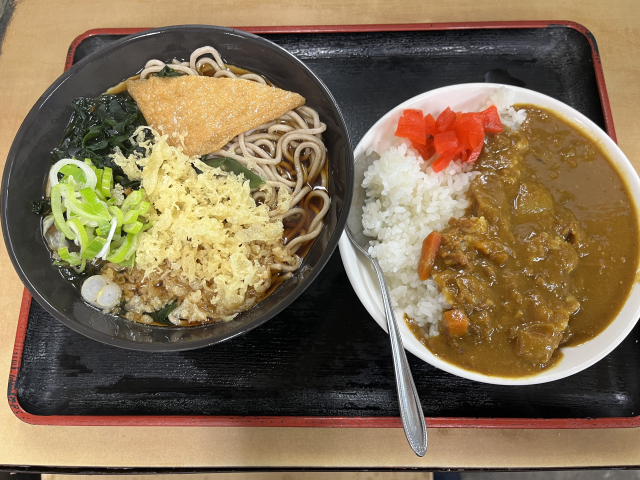
Nobu: You can also use Mentsuyu in Japanese curry rice.
Mike: If it works for curry udon, I suppose it can work for curry rice too!
Nobu: Exactly. Curry served at soba restaurants often has a distinctive Japanese-style flavor. Mentsuyu can help reproduce that taste.
Some soba restaurants also serve Katsukare, or curry rice topped with a pork cutlet. Its flavor can be different from the Katsukare served at specialty curry restaurants.
If you want to recreate the taste of curry served at a traditional soba restaurant, Mentsuyu can be a useful ingredient. Just remember that the concentration is important.
Japanese-Style Salad Dressing
Nobu: You can also use Mentsuyu to make Japanese-style salad dressing.
Kelly: That sounds interesting. I suppose it would go well with a light salad served alongside a Japanese-style main dish.
Nobu: Exactly. You can combine Mentsuyu with ingredients such as vinegar and oil to make a simple Japanese-style dressing.
Kelly: I see. I hadn’t thought of using noodle soup seasoning that way!
The End
From My Personal Experience
One dish I often made using Mentsuyu was Oyakodon. It is surprisingly easy to prepare.
All you need to do is add sliced onions to chicken, pour in the seasonings, simmer the ingredients, and finish by covering them with beaten eggs.
I often made it when I didn’t have much time to cook.
When I was especially busy or simply too tired to prepare a meal, Mentsuyu was particularly convenient. Since the basic balance of seasonings was already prepared, I didn’t have to measure and combine several different ingredients.
That was one of the biggest advantages for me.
Conclusion
In this article, we’ve looked at the many ways to use Mentsuyu.
For people who find preparing Japanese seasonings time-consuming, or who have difficulty getting the right balance of flavors, Mentsuyu can be a very useful ingredient.
It is especially convenient for people who want to enjoy Japanese cooking without spending too much time in the kitchen.
There are also many other Japanese dishes that use soy sauce and dashi as their flavor base. Some of them may be suitable for Mentsuyu as well.
With a little creativity, you might even come up with your own original Japanese-style dishes.
Why not give it a try?
Related Article
Mentsuyu, a Japanese noodle soup base, can be used to prepare a wide variety of dishes.
What kinds of dishes can you make with it?
Surprisingly, katsudon (a Japanese pork cutlet rice bowl) is one example of a dish that can be prepared easily using mentsuyu.
In the following article, we will show you how to make it.
Read the article →