Katsu-don, a Japanese rice bowl topped with pork cutlet, has more regional variations than you might expect. So, even if you order katsu-don at a restaurant in Tokyo, you cannot always be sure that you will receive the familiar version topped with egg. In fact, when I once ordered katsu-don in another part of Japan, I was served a dish I had never seen before. It was delicious, but I have to admit that I was rather surprised.
Recently, I learned that some of these regional katsu-don dishes can be surprisingly easy to prepare using mentsuyu, a Japanese noodle soup base. In this article, I will introduce two examples: Tare Katsu-don and Miso Katsu-don.
Characters
Mike: A 12-year-old American boy who is interested in Japan.
John: Mike’s father. He sometimes travels to Japan on business.
Kelly: Mike’s mother. She is good at cooking.
Nobu: A Japanese exchange student.
Prologue
Kelly enjoys Japanese food and has recently started making rice bowl dishes more often.
One reason is that she has discovered how versatile mentsuyu can be. Until now, she had found it rather troublesome to prepare dashi broth from scratch. However, using mentsuyu makes this much easier. The basic balance of soy sauce, mirin, and dashi is already adjusted, so there is less chance of getting the seasoning wrong.
While looking for new rice bowl dishes to add to her cooking repertoire, Kelly discovered that katsu-don also comes in various regional styles. She began wondering whether she could make some of these local dishes herself.
Just as she was thinking about this, Nobu happened to visit.
Nobu: Hello!
Kelly: Oh, hello! You’ve come at just the right time. I wanted to ask you something.
Kelly: I was looking into katsu-don and found out that there are different regional versions. I was wondering if I could make some of them myself.
Nobu: Well, making every kind of katsu-don might be difficult, but there are a few versions that are relatively easy to prepare.
Kelly: What kind are you talking about?
Nobu: Tare Katsu-don and Miso Katsu-don.
Tare Katsu-don
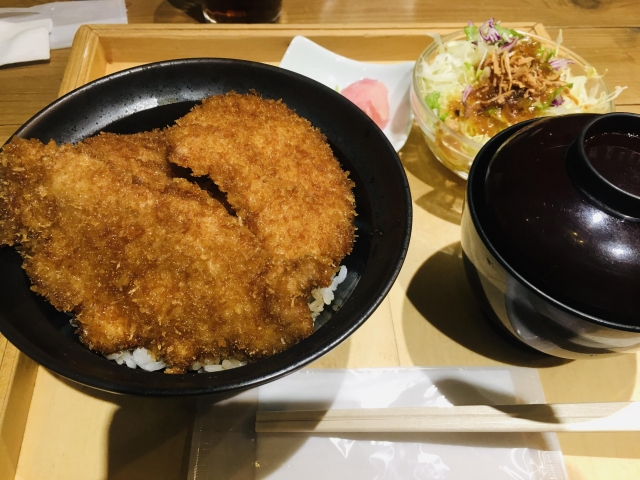
Nobu: Let’s start with Tare Katsu-don. It is a popular style of katsu-don, particularly in Niigata Prefecture.
Mike: Is Niigata far from Tokyo?
Nobu: Yes. Tokyo is on the Pacific coast, while Niigata is on the Sea of Japan side of the country. You could say it is on the opposite side of Japan from Tokyo.
Mike: I see. It sounds quite far away.
What Is Tare Katsu-don?
Nobu: One of the main differences between Tare Katsu-don and the more familiar style of katsu-don is that it is not topped with beaten egg. Instead, pork cutlet is placed directly on a bowl of rice, and a soy sauce-based sauce is poured over it.
Kelly: So, it’s simply rice, pork cutlet, and sauce. That’s very straightforward.
Nobu: Yes, it is a simple dish. That also means that the quality of the ingredients matters. The flavor of the sauce is important, too.
Kelly: I see.
How to Make Tare Katsu-don
Mike: How do you actually make Tare Katsu-don? I understand that you put the pork cutlet on the rice and pour sauce over it, but what about the sauce?
Nobu: If you make it from scratch, you would usually prepare a slightly sweet sauce using soy sauce, dashi, mirin, and other ingredients. However, you can save time by using mentsuyu. The basic balance of soy sauce, dashi, and mirin is already prepared, so you can adjust the flavor by adding a little sugar or mirin.
Kelly: Even if it’s a simplified method, it sounds like it would still taste good.
Nobu: By the way, Niigata is one of Japan’s well-known rice-producing regions. Its rice is highly regarded for its quality. Perhaps the availability of delicious rice helped Tare Katsu-don become established as a local dish.
Miso Katsu-don
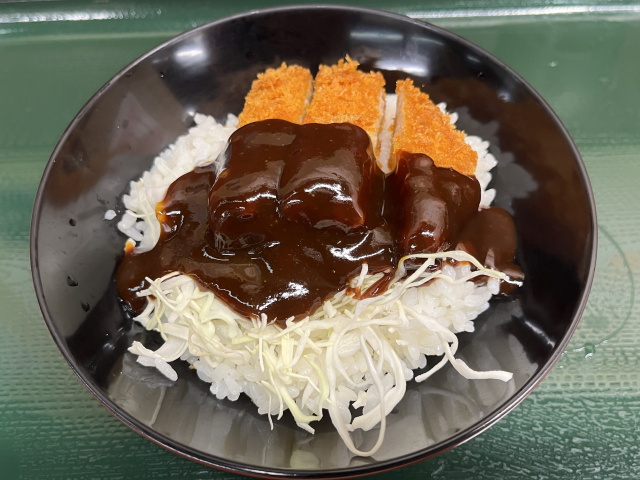
John: Tare Katsu-don sounds good, but Miso Katsu-don looks interesting, too. Japanese miso culture is quite fascinating.
Mike: Miso can be used in so many ways, from miso soup to sauces.
What Is Miso Katsu-don?
Nobu: Miso Katsu-don is made by placing shredded cabbage on a bowl of rice, putting a pork cutlet on top, and pouring miso sauce over it. The sauce is the key to the flavor of this dish.
John: Looking at the pictures, that miso sauce looks really tempting. It makes me hungry just thinking about it.
Nobu: Aichi Prefecture, where Miso Katsu-don is popular, is also famous for a type of miso called Hatcho Miso. It has a distinctive flavor that sets it apart from many other types of miso.
John: I suppose local ingredients and even the climate have something to do with the differences in food culture.
How to Make Miso Katsu-don
Nobu: The most important part of Miso Katsu-don is the miso sauce. You heat miso, sugar, mirin, and other ingredients in a saucepan until the sauce becomes thick. However, using mentsuyu can make the seasoning process easier because the basic balance of seasonings has already been prepared. I think this is a good approach for beginners.
Mike: How much miso sauce should you pour over the cutlet? It looks so delicious that I might be tempted to use too much.
Nobu: I understand why you would want to, but I wouldn’t recommend using too much. You should think about the balance between the pork cutlet, cabbage, and sauce.
John: Can you use any kind of miso?
Nobu: Red miso is generally used, but you can choose according to your preference. Reduced-sodium miso might also be worth trying.
Kelly: I see. It sounds like there is room to experiment.
About Tonkatsu
Mike: So, using mentsuyu makes both Tare Katsu-don and Miso Katsu-don relatively easy to prepare. But isn’t making the pork cutlet itself quite difficult?
Kelly: That’s true. Coating meat with breadcrumbs and deep-frying it takes more effort than you might expect. Some people have plenty of time to cook, but many others are quite busy.
Nobu: If you live in Japan, however, that part may not be much of a problem.
Kelly: Why is that?
Nobu: In Japan, tonkatsu is widely available as prepared food. You can find it in the prepared-food section of supermarkets, and many butcher shops sell it as well.
Mike: That’s convenient.
Nobu: Another option is to buy a tonkatsu bento from a takeout shop. If it comes with pork cutlet and shredded cabbage, you only need to prepare the miso sauce. Put the rice from the bento in a bowl, add the cabbage and pork cutlet, and pour the sauce over everything. That’s all you need to do.
John: So you’re turning a tonkatsu bento into Miso Katsu-don. That’s a good idea!
Nobu: Not bad, is it?
The End
Japan’s Culture of Prepared Foods and Bento
Before moving on, I’d like to take a moment to explain a little about Japan’s culture of prepared foods and bento.
Many supermarkets in Japan have dedicated sections for prepared dishes and boxed meals. These sections are used by a wide range of people, and there are several reasons for their popularity.
One reason is the need to save time and effort. Some people in Japan work late and do not get home until the evening. After a long day at work, they may have little time or energy left for cooking. For them, buying prepared food or a bento can be a practical choice.
Another factor may be the increase in smaller households, including people who live alone. Some may feel that cooking a full meal just for themselves is not worth the effort.
These circumstances may help explain why prepared-food and bento sections are so popular in Japanese supermarkets. Perhaps this everyday convenience also reflects certain social issues in modern Japan.
My Personal Thoughts
It may seem that the more time and effort you put into cooking, the better the result will be. However, the reality is that many people are busy. I think using mentsuyu is a good way to help such people enjoy Japanese dishes without too much effort.
It may also be meaningful to introduce Japanese food to people who are not particularly confident in the kitchen, even if they begin with simplified recipes.
Of course, some people may find these easy methods a little unsatisfying. If they want to try more elaborate cooking, they can always do so later.
In any case, there are many ways to discover and enjoy Japanese food culture. The first step can be anything. What matters most is finding a way to enjoy it.
Conclusion
In this article, we looked at Tare Katsu-don and Miso Katsu-don, two regional styles of Japanese katsu-don that can be made more easily with mentsuyu.
Some readers may be surprised to learn that these dishes can be prepared without making every sauce from scratch. Perhaps this article has inspired you to try making one of them yourself. You might even become interested in visiting the regions where these dishes are popular.
Japanese food offers many ways to enjoy its flavors without complicated preparation. Why not explore some of these easy methods and discover more about Japanese food culture?

