Japanese visual entertainment is well known around the world. Anime, in particular, has fans of all ages.
But did you know that Japanese television also has a genre called “jidaigeki(時代劇)” or Japanese period dramas?
Jidaigeki are stories set in historical Japan, especially periods such as the Edo period. This genre may not be as well known outside Japan as anime or modern Japanese dramas.
So, in this article, I would like to introduce jidaigeki, explain some of their appeal, and share a few of my personal recommendations.
Characters
Mike: A 12-year-old American boy who is interested in Japan.
John: Mike’s father. He sometimes travels to Japan on business.
Kelly: Mike’s mother. She is good at cooking.
Nobu: A Japanese exchange student.
Prologue
For many people, television programs can be one of the first ways they become interested in Japanese culture.
The family in this story is no exception. Watching Japanese television has become one of the things that sparked their interest in Japan.
However, the programs this family watched were a little unusual.
They were jidaigeki, or Japanese period dramas.
What kind of programs are included in this genre?
By the way, this family has also watched some of Akira Kurosawa’s period films. That seems to have been one of the reasons they became interested in Japanese historical stories.
Japanese Period Dramas Are More Than Kurosawa’s Films
Kelly: “I recently heard from a friend that Japan has a genre of television programs that is not about anime or modern life, but about Japan a very long time ago.”
John: “That’s right. It’s called jidaigeki. Many of them are set during the Edo period. Japan was a very different place back then, and samurai commonly carried swords. I think sword-fighting scenes were an important part of many of these programs.”
Mike: “What’s sword fighting called in Japanese?”
John: “It’s called chanbara. Basically, it means scenes in which people fight with swords. The word is often said to imitate the sound of swords clashing.”
Mike: “Do ninjas appear in them?”
John: “There were certainly some series featuring ninjas. But from here on, I think we need Nobu to explain.”
Nobu: “Hello.”
John: “Perfect timing. Could you tell us about Japanese period dramas?”
Nobu: “Sure. There is one thing I would like you to know first. Japanese historical films and dramas are not just about Akira Kurosawa.
Kurosawa made internationally famous films such as Seven Samurai. But Japan has many other period dramas that are worth discovering.”
John: “Other period dramas besides Kurosawa? That sounds interesting.”
Nobu: “Yes. Let me introduce a few of them.”
What Makes Jidaigeki Interesting?
Nobu: “Before I introduce some particular programs, let me explain why I think jidaigeki are interesting.”
Mike: “I’d like that. I don’t know much about Japanese television except anime, so I’d like to learn about period dramas, too.”
The Stories Are Often Easy to Follow
Nobu: “One interesting point is that many jidaigeki have stories that are relatively easy to understand.
A common example is a story in which a person of high status hides his identity and punishes someone who is abusing ordinary people.
In historical Japan, there were social distinctions between different groups and ranks. Samurai themselves also had different positions. You could see people such as the shogun, daimyo, government officials, townspeople, and farmers occupying very different positions in society.
In a typical story, for example, a corrupt local official might be taking advantage of ordinary people. Then a person of much higher status appears, sometimes secretly, and eventually exposes the villain and helps the people who have been suffering.”
Mike: “That sounds like something even I could understand.”
Nobu: “I think these kinds of stories can be enjoyed by people of many different ages.”
You Can Learn About Historical Japanese Culture
Nobu: “Another attraction is that you can see aspects of Japanese culture from the past.”
John: “I see. Historical Japanese culture.”
Nobu: “Exactly. As I mentioned earlier, Japanese society had different social ranks. Samurai carried swords, the monetary system was different from today’s system, and education was also very different.
There was no modern school system like the one we have today.”
Mike: “Japan must have been very different back then.”
Nobu: “That’s why I think jidaigeki can be an interesting way to see historical Japanese culture.”
Historical Background You Should Know Before Watching Period Dramas
Nobu: “In fact, it would not be an exaggeration to say that almost everything about Japan in the past was different from Japan today.
If you watch a Japanese period drama using only modern Japanese common sense, you may not understand some parts of the story.”
John: “That’s true. If you’re watching a story about the past, you need to know something about the customs of that time.”
Nobu: “Then let me introduce a few things that are useful to know when watching jidaigeki.”
Social Status and Hierarchy
Nobu: “First, let’s talk about social status.
You may have heard of a traditional description of Edo-period society called shi-no-ko-sho. It is often translated as samurai, farmers, artisans, and merchants.
The actual social structure of Edo-period Japan was more complicated than this simple four-part description, but knowing that people occupied different social positions is useful when watching period dramas.”
John: “So a person’s social position affected their power and how they were expected to behave.”
Nobu: “That’s right.
As I mentioned earlier, some stories feature a powerful person secretly helping people who are suffering.
If you don’t understand the social hierarchy of the time, you may wonder, ‘Why is that samurai bowing to another samurai?’
Knowing something about social status helps you understand those scenes.”
John: “I see.”
Money and Currency
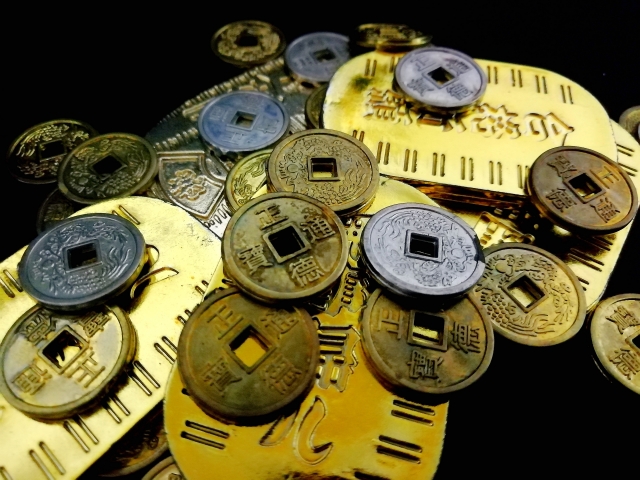
Nobu: “The monetary system in the Edo period was also different from today’s Japan.
Modern Japan uses the yen, but period dramas often mention old units such as the ryo. The monetary system was actually quite complicated, with different types of coins and units such as ryo, bu, and shu.”
John: “So understanding the old money system can make period dramas easier to follow.”
Nobu: “Exactly.
Bribes also appear quite often in period dramas. If you know something about the money used at the time, it becomes easier to imagine how large or small a particular amount of money was.”
Hairstyles and Clothing
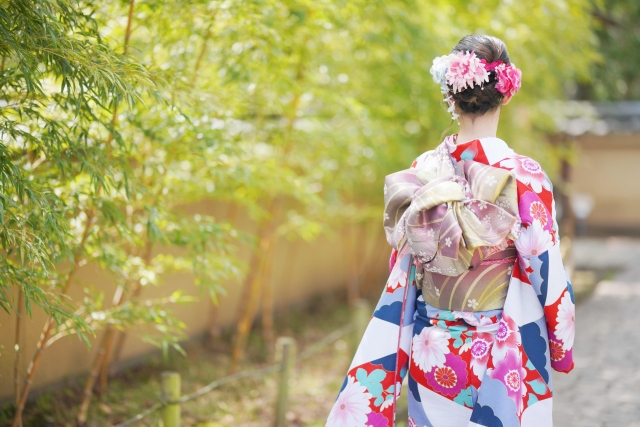
Nobu: “As you probably know, hairstyles and clothing in the Edo period were very different from those of modern Japan.
Men often wore traditional hairstyles such as the chonmage, while people generally wore kimono.”
John: “That’s interesting, too.”
Nobu: “And if you learn a little more, you can understand even more about the people in the story.
For example, women’s kimono sleeves could tell you something about their status and life stage. Young unmarried women often wore furisode, kimono with long sleeves.
Once you know these kinds of details, it can become easier to understand the relationships and circumstances of the characters.”
Kelly: “It’s interesting that you can sometimes learn something about a character just by looking at the length of her sleeves.”
Popular Types of Jidaigeki
John: “So, are there any period dramas you would recommend?”
Nobu: “I’m sorry if these recommendations are a little personal, but let me introduce some of my favorites.”
Stories About Good and Evil
Nobu: “First, there are jidaigeki based on a simple idea of good versus evil.
A common pattern is that ordinary people are being abused by villains, and someone with considerable authority eventually comes to their rescue.
The stories are usually straightforward, which makes them easy to follow.”
Recommendation 1: Mito Komon
Nobu: “First, there is Mito Komon.
The main character is Tokugawa Mitsukuni, a historical figure who is often known by the nickname Mito Komon. In the television series, he travels around Japan while concealing his identity and helps people who are suffering from corrupt officials and other villains.
A common story involves a local government official and a wealthy merchant secretly working together to exploit ordinary people.
Mito Komon investigates the situation, exposes the villains, and eventually reveals his true identity.
When the villains realize who he really is, they are shocked and bow before him.”
Mike: “I see. That sounds pretty easy to understand.”
Nobu: “Yes. But to fully appreciate why the villains are so shocked, it helps to understand the social hierarchy of the time.”
John: “So that’s where knowledge of the old social system becomes important.”
Recommendation 2: Abarenbo Shogun
Nobu: “Next is Abarenbo Shogun.
It has something in common with Mito Komon. The main character is Tokugawa Yoshimune, a real shogun who ruled Japan during the Edo period.
In the story, he hides his identity and goes among ordinary people. When he discovers people being unfairly exploited by villains, he takes action.
Eventually, he reveals that he is actually the shogun and punishes the villains.”
Recommendation 3: Hissatsu Shigotonin
Nobu: “Next is Hissatsu Shigotonin.
This one is different.
The people who punish the villains are not necessarily powerful members of the ruling class. Some are lower-ranking samurai or ordinary townspeople.
One common image is that a seemingly incompetent lower-ranking samurai is actually a highly skilled fighter at night, when he secretly takes on villains.
Unlike many other period dramas, there isn’t necessarily a large-scale sword fight. Instead, the final scenes can be particularly dramatic.”
John: “So the hero doesn’t have to be a high-ranking person?”
Nobu: “That’s right. Even when a high-ranking person appears, that person may actually be the villain who is eventually punished.”
John: “That’s unusual. Now I’m interested.”
Recommendation 4: Kage no Gundan
Nobu: “I would also like to introduce a series featuring ninjas: Kage no Gundan.
The story features a group of ninjas led by Hattori Hanzo, who fight against villains.
Instead of large-scale sword fights, you get to see the distinctive action of ninjas.”
Mike: “Ninjas! I’ve always thought they were cool.”
Nobu: “Just remember that jidaigeki are fictional entertainment. They are not necessarily accurate recreations of historical events.”
Historical Dramas Based on Real Japanese History
Nobu: “I also recommend period dramas based on historical events and people.
Japan has a long-running television series called the Taiga Drama.
These dramas use Japanese history as their setting, so they can give you another way to see Japan in the past.
And they are not limited to the Edo period. Some stories are set during the Sengoku period, for example.”
John: “The Sengoku period? That sounds like it could make for a huge story.”
Nobu: “It certainly can.
The End
My Personal Experience with Jidaigeki
I was also a big fan of jidaigeki for a while. That was about 40 years ago, and I especially enjoyed the Hissatsu Shigotonin series.
One reason I liked it was that it had a very different atmosphere from many other period dramas. The people who punished the villains were not necessarily high-ranking people. They could be lower-ranking samurai or ordinary townspeople.
Another unusual feature was that they did not simply defeat their enemies in traditional sword fights. They used a variety of unexpected methods to take revenge on the villains.
For example, there was not only the highly skilled swordsman I mentioned earlier. There were also characters who used a shamisen as a weapon and others who used hair ornaments as weapons.
The visual presentation was also quite unusual. Some scenes even used X-ray-style images to show what was happening to the villains. In that sense, Hissatsu Shigotonin really stood apart from other period dramas.
It was also a jidaigeki with a certain “cool” and understated atmosphere that I found very appealing.
…By the way, after reading this much, I can almost hear someone saying, “Tell us more about the story!”
But I am deliberately going to stop here. I would rather let you discover the rest for yourself.
Watch it with your own eyes and enjoy it.
Conclusion
In this article, I introduced Japanese period dramas, or jidaigeki. I hope some of you have become even more interested in Japanese visual entertainment.
Perhaps some of you have also become interested in the culture of Japan in the past.
In any case, I hope this article has helped you discover another genre of Japanese visual entertainment.
If you are curious, why not give a jidaigeki a try?
Related Article
Japanese period dramas are not simply based on an imagined version of the past.
In reality, their stories are often carefully crafted with reference to historical facts and research.
In this article, we will explore the historical research behind jidaigeki and how creators strive for authenticity.
Read the article →