Japan has a highly developed railway network. With a ticket, you can travel from Hokkaido in the north to Kyushu in the south. Japan also has the Shinkansen, or bullet train. With its combination of speed and passenger comfort, the Shinkansen could be considered one of Japan’s signature technological achievements.
Japan also has many railway enthusiasts. Among the country’s railway-related hobbies, there is one aspect of Japanese culture that I would like to introduce to readers overseas.
It is the world of Japanese model railways.
There are model railway enthusiasts in many countries, of course. However, Japanese model trains have their own distinctive appeal. I hope you will enjoy learning about them!
Meet the Characters
Mike: A 12-year-old American boy who is interested in Japan.
John: Mike’s father. He sometimes travels to Japan on business.
Kelly: Mike’s mother. She is good at cooking.
Nobu: A Japanese exchange student.
Prologue
Mike is fascinated by Japan. One day, he learns about the high standards of Japanese railways and becomes curious about their culture, including their reputation for punctuality.
Around this time, John introduces him to another interesting aspect of Japan: model railways.
Model Railways Are Fun!
Mike: “Hey, I’ve heard that Japanese trains run really well. Apparently, they arrive almost exactly on time! And in big cities, trains come so frequently that you hardly have to wait.”
John: “That’s right. In some other countries, train delays are fairly common. In Japan, trains are generally known for being punctual. When delays do occur, announcements are usually made at the stations. They seem to take punctuality very seriously.”
Mike: “And a lot of Japanese trains look really cool, too. The Shinkansen is especially impressive. Its sleek design looks amazing!”
John: “Absolutely. The Shinkansen is also popular with Japanese children. I’ve heard that some kids get jealous when another child tells them, ‘I got to ride the Shinkansen!'”
Mike: “Then Japan must have lots of railway toys, too. I bet playing with them makes you feel like a train driver.”
John: “There certainly are plenty of them. Some are battery-powered trains designed for young children. They seem to be among the more popular toys, along with miniature cars.”
Mike: “Wow! If they’re that much fun, I’d like to see some.”
John: “Ha ha! Mike, you’re probably too old for those toys now. They’re mainly designed for children around kindergarten age.”
Mike: “Yeah, I guess so. Still, that’s disappointing.”
John: “Don’t worry. There is something more suitable for you.”
Mike: “What? A railway toy for someone my age?”
John: “It’s not really a toy. It’s a model railway! Japanese model trains can be remarkably detailed. Some even have working lights.”
Model Railways in the West
Nobu: “Hello!”
Mike: “Hi! You’re just in time. We were talking about Japanese model trains, and I was hoping you could tell us more about them.”
Nobu: “Model railways? I’m not an expert, but I’d be happy to tell you what I know.”
John: “Let’s start with their size. Quite a few people in the United States enjoy model railways, too. HO scale is one popular choice. The track gauge is 16.5 mm, and the scale is commonly around 1:87. The models can be very detailed, which probably helps explain why they appeal to railway enthusiasts.”
Nobu: “So the trains are modeled at a scale of 1:87? That sounds impressive!”
John: “It is. Some enthusiasts even dedicate an entire room to their hobby. They can run their trains around a layout that fills much of the room.”
Nobu: “And they build scenery for the layout, too, right?”
John: “Exactly. They lay tracks around the room and build a miniature landscape around them. It must be quite a sight. There’s just one potential problem, though.”
Mike: “A problem?”
John: “If the rest of the family doesn’t share the same enthusiasm, they might feel that the trains and scenery have taken over the room!”
Mike: “I can imagine that happening!”
What Are Japanese Model Railways Like?
John: “Now it’s Nobu’s turn. Tell us about Japanese model trains.”
Nobu: “Well, let’s start with the scale. In Japan, N gauge is very popular. Many Japanese N-gauge trains are modeled at a scale of 1:150.”
John: “What? One to 150? They can make models that small?”
Nobu: “Yes. N gauge is widely used in Japan, and the track gauge is just 9 mm. Despite their small size, many models have a remarkable amount of detail.”
Mike: “Hey, just how small is a 1:150 model?”
Nobu: “Imagine trying to write something in a square that’s only 5 mm on each side, when you could normally write it in a square measuring 1 cm on each side. That would be much harder, wouldn’t it?”
Mike: “Of course! The smaller space would make it much harder to write.”
Nobu: “Exactly. If you compare a square measuring 5 mm on each side with one measuring 1 cm on each side, the smaller square has only one-quarter of the area. You have much less room to work with.”
“Japanese model makers have to deal with similar challenges when reproducing tiny details.”
Mike: “That’s amazing!”
Nobu: “Japanese model trains also come in a wide variety of types. You can find modern trains such as the Shinkansen, as well as steam locomotives from earlier eras.”
“There are also various features. Other countries have models with working lights, too, of course, but some Japanese models can reproduce details such as illuminated headlights.”
Mike: “They even have lights?”
Nobu: “Yes! Imagine a train emerging from a tunnel with its headlights on. It looks much more realistic. Some enthusiasts pay attention to even the smallest details.”
Mike: “That sounds really cool!”
Nobu: “Another interesting aspect is customization. People make their own scenery for their layouts, and some enthusiasts even build their own model railway vehicles.”
John: “They build the trains themselves, too?”
Nobu: “Yes, some do. Perhaps they want something that isn’t available as a ready-made model.”
John: “That’s impressive!”
Why Is N Gauge So Popular in Japan?
John: “There’s something I’ve always wondered about.”
Nobu: “What’s that?”
John: “Why did N gauge become so popular in Japan? There must have been reasons why people wanted such small, detailed models.”
Nobu: “One possible factor could be Japan’s housing situation.”
John: “Housing?”
Nobu: “As you probably know, finding enough living space can be difficult in some parts of Japan. Many households may not have enough room for a large model railway layout.”
John: “So N gauge could be a good solution. Smaller trains need less space!”
Nobu: “Exactly. In densely populated cities such as Tokyo, housing costs can also be high. Finding a spacious room for an HO-gauge layout might be difficult for some people. N gauge makes it easier to enjoy a model railway in a limited space.”
John: “That makes sense. Housing conditions could be one reason why N gauge became so popular in Japan.”
The Technology Behind N-Gauge Model Trains
Nobu: “There’s something else I’d really like you to understand about N-gauge trains.”
John: “What’s that?”
Nobu: “Japanese N-gauge trains are generally much smaller than HO-gauge models. Let’s imagine that a model train’s length, width, and height are each reduced to half their original dimensions.”
John: “All right. What happens then?”
Nobu: “In that simplified example, its internal volume would be reduced to one-eighth. In other words, the space available inside the train would become much smaller.”
John: “I see. That leaves very little room for the machinery!”
Nobu: “Exactly. So, how difficult do you think it is to fit a motor and the other parts of the drive system into such a small space?”
John: “I can hardly imagine!”
Nobu: “Take the motor, for example. It contains coils, and designing a smaller motor can be challenging. You need to provide enough power while keeping heat under control. Excessive current or an excessive load could cause overheating and damage the motor.”
John: “So simply making the motor smaller doesn’t solve everything.”
Nobu: “That’s right. The gears present their own challenges, too. Their design, materials, and manufacturing precision all matter. The drive system has to transmit power reliably if the train is to run smoothly.”
John: “So Japanese N-gauge trains have to overcome all these challenges?”
Nobu: “Yes. It’s not just a matter of making everything smaller. The components also need to be designed to work together while maintaining adequate strength and durability.”
“Think about mechanical wristwatches. Some have skeleton designs that let you see the intricate mechanisms inside. You can see how many tiny components work together within a very limited space.”
“Of course, a wristwatch and a model train have different mechanisms and performance requirements. But both can help us appreciate the challenges of fitting many components into a small space and making them work properly.”
John: “I see. Japanese technology never ceases to amaze me!”
The End
How Do Model Railway Enthusiasts Enjoy Their Hobby?
There are many ways to enjoy model railways. As we mentioned earlier, limited living space may influence how some people in Japan pursue the hobby.
Everyone has their own preferences, so it is difficult to put enthusiasts into strict categories. However, here are some common ways people enjoy model railways.
Displaying Models
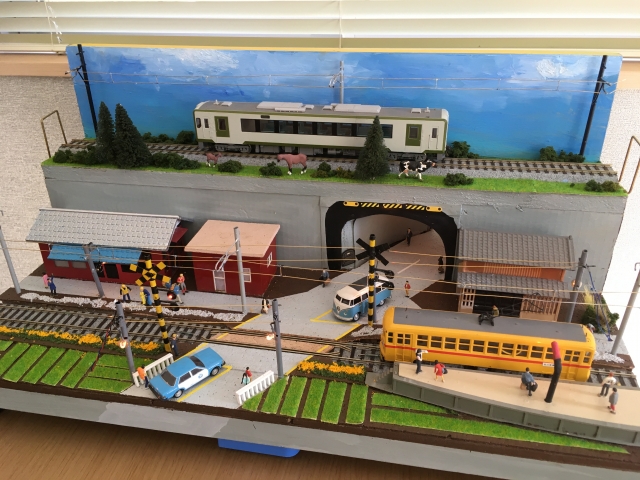
Some enthusiasts enjoy displaying their model trains.
There are many ways to do this. Some display individual trains, while others build small scenic layouts to show off their collections.
Because N-gauge models are relatively small, they can be displayed even when space is limited.
Operating Trains
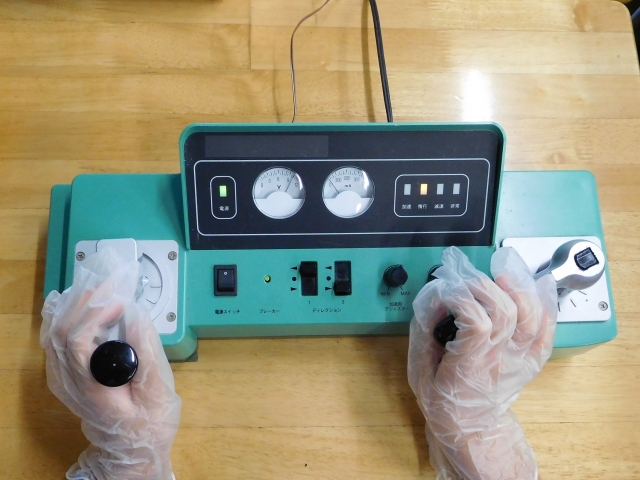
Others enjoy running their trains.
There are various ways to do this. Many enthusiasts use commercial power controllers to operate their model railways. Some hobbyists even build their own power controllers.
These enthusiasts may be especially interested in the technical side of the hobby. That sounds pretty geeky, doesn’t it?
Building Models and Layouts
There are two main ways to enjoy building things: creating layouts and making the trains themselves.
Building a layout allows enthusiasts to create the scenery they like. Some may prefer busy urban landscapes, while others might recreate mountains, rural villages, or quiet countryside scenes.
Each layout can reflect its creator’s individual interests and imagination.
Collecting Model Trains
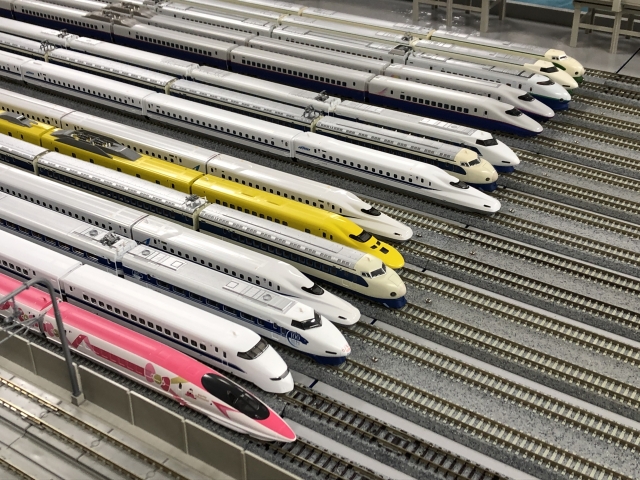
There are also collectors who enjoy acquiring model trains.
They may collect Japanese trains, overseas trains, or a mixture of both.
Prices vary considerably. Some models cost only a few thousand yen, while certain expensive models can cost more than 100,000 yen.
Making Videos
You can find plenty of videos of model railway layouts on video-sharing platforms.
Some enthusiasts film their own layouts and upload the videos online. With today’s video-making tools, creating and sharing videos has become accessible to many people.
Watching model trains race around a carefully built layout, perhaps accompanied by music, can be a very enjoyable experience.
Conclusion
We’ve taken a brief look at Japanese model railways. If you’re interested in Japanese trains, I hope you’ve discovered something new.
This may be especially interesting for people who already enjoy model railways and would like to learn more about Japanese railway culture.
Why not explore Japanese model trains for yourself?
One more thing: Japan has four distinct seasons. If you enjoy building layouts, why not try recreating the changing scenery throughout the year?
A summer landscape looks very different from one covered in deep snow. Autumn brings colorful foliage, while spring offers its own distinctive scenery.
Model railways could be a wonderful way to enjoy Japan’s seasonal landscapes in miniature.
There’s just one small problem. If you want to keep a separate layout for each of the four seasons, you might need four rooms!
I’m afraid you’ll have to find the space yourself. That’s your responsibility!
And please don’t come back saying, “It’s all this guy’s fault for introducing me to such an interesting hobby!”
I wouldn’t want to be blamed for that!
Related Article
This article introduced Japanese model trains. But what makes these model trains run so smoothly and reliably?
The following article explores the technology behind Japan’s N-gauge model trains.
Read the article →