Japanese homes are still mostly made of wood. But doesn’t that make them vulnerable to fire? If a fire breaks out, won’t the house simply burn down and collapse?
Actually, Japanese homes are designed with many features to make them highly resistant to fire. Let me explain why through a story.
Characters
Mike: A 12-year-old American boy who is interested in Japan.
John: Mike’s father. He sometimes travels to Japan on business.
Kelly: Mike’s mother. She is good at cooking.
Nobu: A Japanese exchange student.
Prologue
One thing that some people from overseas may find puzzling when they see Japanese homes is this:
“Many of them are made of wood. What happens if there is a fire?”
It is certainly true that wood can burn when exposed to flames. To people who live in houses made of stone or brick, as is common in some parts of Europe and North America, Japanese wooden houses may look extremely vulnerable to fire.
However, Japanese wooden houses incorporate various technologies designed to improve fire resistance.
So, what makes them more resistant to fire?
How Japanese Homes Are Protected Against Fire
Mike: “I heard that there are a lot of wooden houses in Japan. Are they safe if a fire breaks out? I feel like they would burn really quickly.”
Kelly: “That’s what I was thinking, too. Of course, many homes use induction cooktops these days, but plenty of people still use gas stoves. And there are still people who smoke, so fires can certainly happen.”
Nobu: “Hello!”
Kelly: “You came at just the right time. I have a question for you. What happens to a Japanese wooden house if there is a fire?”
Nobu: “I see. That’s a good question. Wood does burn, after all. If you only think about the material itself, you might expect a wooden house to burn easily. But Japanese wooden houses are designed with fire protection in mind.”
Mike: “How can wood be resistant to fire?”
Nobu: “There are several secrets. I’ll explain them one by one.”
The Surrounding Area
Nobu: “First, let’s talk about the area where the house is located. Some neighborhoods have houses packed closely together, while others don’t. Right?”
Mike: “Yeah. I think houses are especially close together in areas near train stations. But when you go out to the suburbs, the houses are usually more spread out.”
Nobu: “Exactly. Whether houses are close together or far apart is actually an important factor.”
Mike: “Why?”
Nobu: “Because it affects how easily a fire can spread. If houses are close together, there is less distance between neighboring buildings, so the risk of a fire spreading from one house to another is higher. In areas where houses are farther apart, that risk is lower.”
Kelly: “That makes sense.”
Nobu: “That’s why measures can differ depending on the area. In densely built-up areas, homes may use more fire-resistant materials and construction methods to reduce the risk of fire spreading.”
Kelly: “I see. If a house is harder to ignite, that also reduces the risk of the fire spreading to neighboring houses.”
Interior Materials
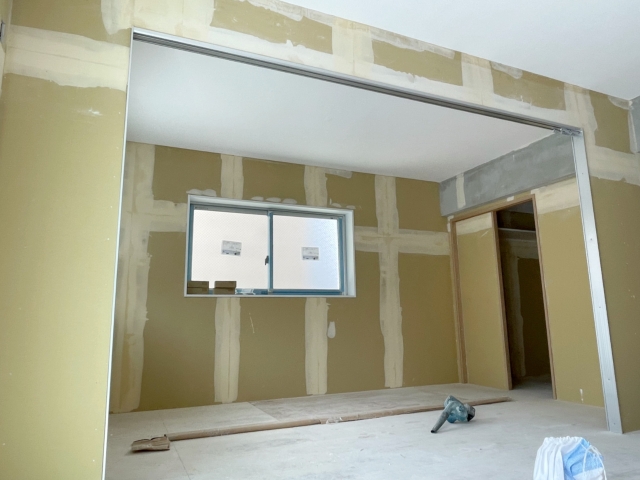
Nobu: “Next, let’s look at the materials used inside the house. Fire-resistant materials are used here as well. One of the most common is gypsum board. Gypsum is an inorganic material, so it doesn’t burn easily. This helps prevent a fire that starts inside a room from spreading quickly.”
John: “I wonder just how fire-resistant it actually is.”
Nobu: “Gypsum board is actually tested using flames to check its fire resistance. Tests can be performed on the board itself, as well as on walls and ceilings after the board has been incorporated into the building. The testing standards even specify things such as the temperature conditions during the test.”
John: “I see. So it’s not simply a matter of saying that the material is fire-resistant. Its performance is actually confirmed through strict testing.”
Exterior Materials
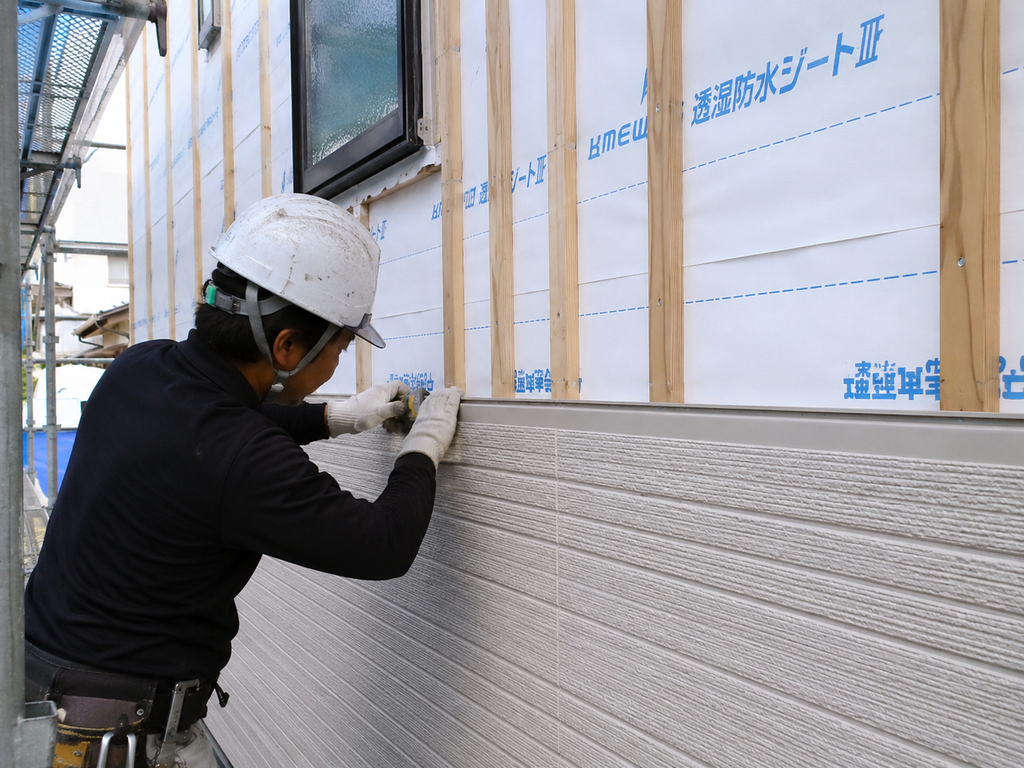
Nobu: “And it’s not just the interior materials that are designed to resist fire. The exterior walls are also made from highly fire-resistant materials.”
John: “What kind of materials are used?”
Nobu: “Many modern Japanese homes use something called fiber-cement siding. It is mainly made from cement-based materials, so it is inorganic. Like gypsum board, it doesn’t burn easily.”
John: “I see. So even if the house next door catches fire, the exterior is designed to help prevent the fire from spreading to your house.”
Nobu: “That’s right. Exterior siding also needs to have high strength. That’s because Japan has a lot of typhoons. Even if something is blown into the wall by strong winds, the exterior material is strong enough that it normally won’t be damaged unless the impact is severe.”
John: “I see. So it can also withstand objects being blown over from a neighboring house during a storm.”
Windows
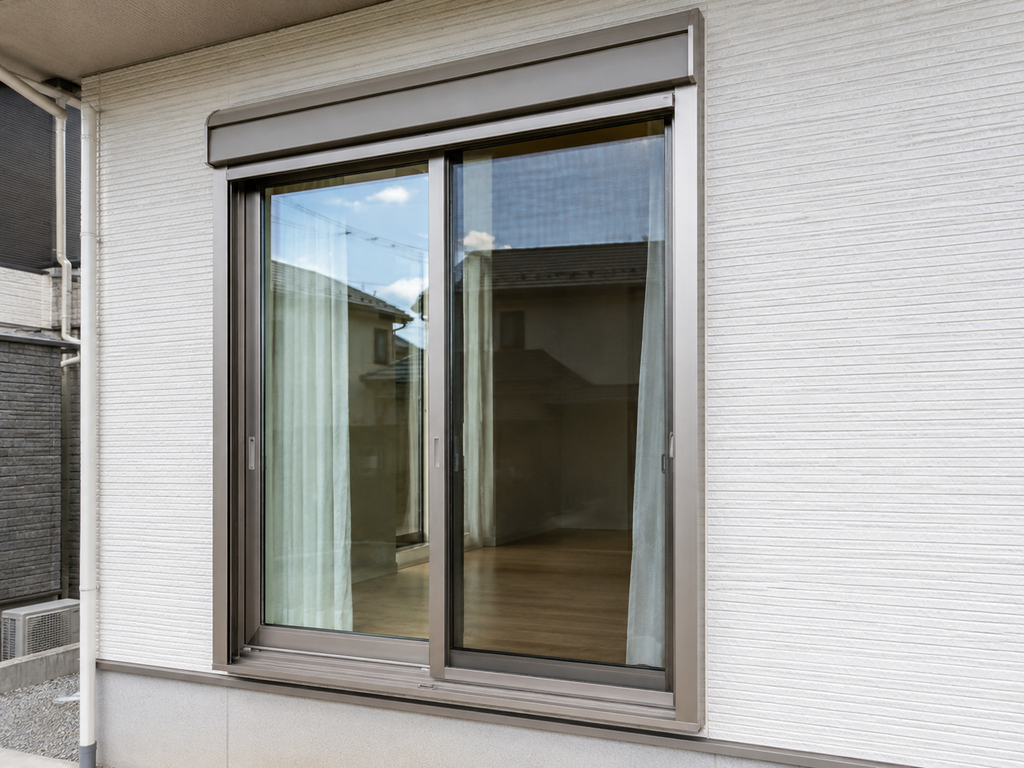
Nobu: “Next are the windows. Since windows use glass, they are more vulnerable to flames than solid walls. But there are ways to improve their fire resistance.”
John: “That sounds interesting. What do they do to the glass?”
Nobu: “Some windows use wired glass, which has a wire mesh embedded inside the glass. The mesh is made from thin metal wire, and it helps the glass maintain its integrity when exposed to fire.”
John: “I can see why that would be useful. Glass doesn’t seem very resistant to heat. A glass cup can even crack when you pour boiling water into it.”
Nobu: “By the way, many Japanese homes are also equipped with exterior shutters. Since the shutters are made of metal, keeping them closed can help reduce the risk of fire spreading through a window.”
Entrance Doors
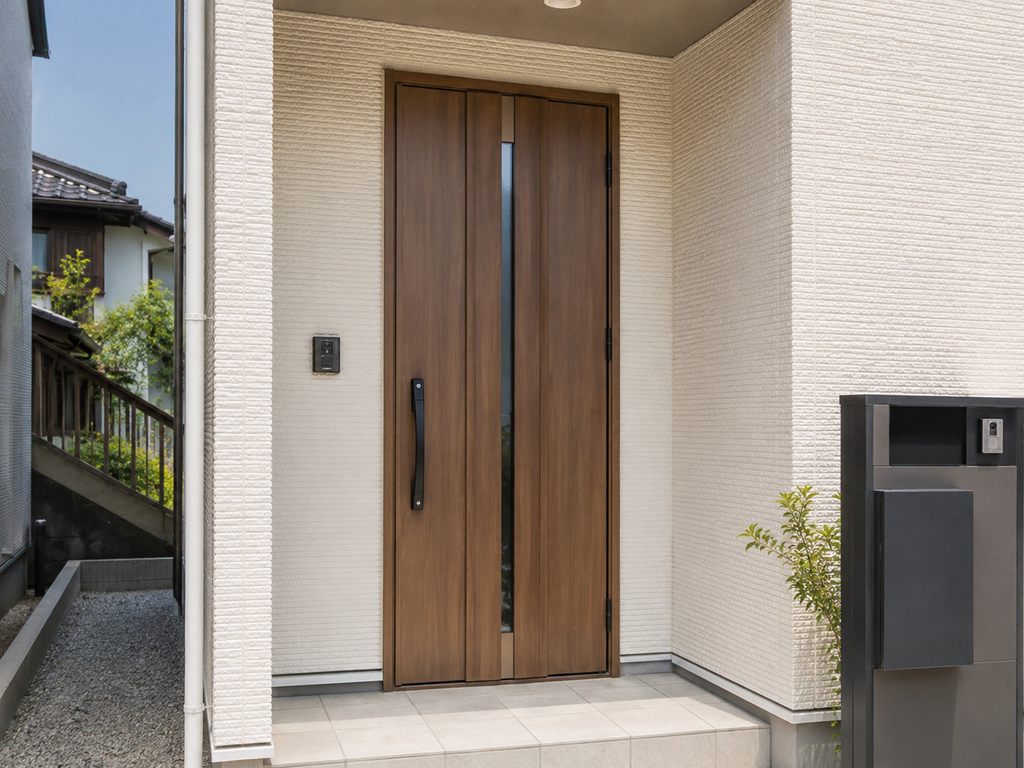
Nobu: “The entrance also has fire-safety measures. The entrance is one of the areas where fire can potentially spread, so entrance doors can be designed to provide fire resistance. Metal and wired glass are commonly used.”
John: “I see. So even the entrance needs to be designed with fire in mind.”
Nobu: “That’s right. There are also detailed requirements for entrance doors. For metal doors, there are specifications concerning the materials and even the thickness of the metal. Other types of doors may need to meet requirements through actual fire testing. It’s similar to the fire-resistance testing used for gypsum board.”
John: “I see. They’ve really thought about all the details.”
Evacuation
John: “By the way, evacuation must also be an important issue in a fire. Even if a house is highly fire-resistant, there must be limits to what those materials can withstand.”
Nobu: “That’s right. Japanese homes, whether they are wooden or not, are also designed with evacuation in mind.”
John: “For example?”
Nobu: “Think about places that are difficult to escape from. For example, imagine a three-story house with the kitchen on the second floor. A fire could start on the second floor, and if that happened, anyone on the third floor could be in an extremely dangerous situation.”
John: “That’s true. Jumping from the third floor would be far too dangerous.”
Nobu: “Exactly. That’s why some three-story homes have emergency escape ladders on balconies, allowing people on the upper floors to escape.”
Mike: “What about apartments? I understand that reinforced-concrete buildings don’t burn easily, but wouldn’t it still be dangerous if you couldn’t escape?”
Nobu: “Many apartment buildings are designed so that residents can escape through the balconies. In fact, the partitions between neighboring balconies are designed to be broken through in an emergency, allowing people to escape to the next balcony.”
Mike: “I see. That makes me feel a lot safer.”
The End
My Own Experience
I live in a three-story wooden house in Tokyo. When I look closely at the specifications of my house, I am often impressed by how much technology is incorporated into what appears to be an ordinary home.
For example, the exterior siding has a terracotta-like design reminiscent of European architecture. The roof is moss green to match the design. It may be a little unusual, but I think the house has a fairly stylish appearance.
However, the impression changes when you look more closely.
The exterior siding is actually a substantial cement-based material. The interior walls are covered with wallpaper, so you can’t see the materials underneath, but they are also made from materials designed to provide fire resistance.
When you purchase a newly built house in Japan, you also receive drawings and documentation describing the house. These documents include lists of the materials used, including materials selected for their fire-resistant properties.
In other words, my house is built with all of these kinds of materials.
That gives me peace of mind when I live there.
Conclusion
We’ve looked at some of the measures used to protect Japanese homes from fire. Has your impression of Japanese houses changed a little?
You may also be surprised to learn how much technology is incorporated into various parts of an ordinary Japanese home.
In any case, Japanese wooden houses are designed with fire safety in mind. If you come to Japan and are looking for a home, I hope you will remember that a wooden house does not necessarily mean that you are living in an unsafe home.