Seasonings play an important role in bringing out the natural flavor of ingredients. So, how are seasonings used in Japanese cuisine?
Characters
Mike: A 12-year-old American boy who is interested in Japan.
John: Mike’s father. He sometimes travels to Japan on business.
Kelly: Mike’s mother. She is good at cooking.
Nobu: A Japanese exchange student.
Introduction
Cooking involves more than simply cutting ingredients and heating them. Food also needs to be seasoned so that it tastes good. If you use seasonings without thinking about how much to add, even a good dish can end up tasting bad. Choosing the right seasonings and using them properly are important parts of making food enjoyable.
This can be particularly noticeable in Japanese cuisine. Soy sauce, for example, is one of Japan’s best-known seasonings, but people do not necessarily use it in the same way for every dish. How it is used often depends on what is being served.
So, how are seasonings used in Japan?
Let’s take a look through a conversation about some common ways of using them.
There Are Different Ways to Use Soy Sauce, Sauce, and Other Seasonings
Mike: “Do you know how people eat sashimi in Japan?”
John: “Sure. You dip it in soy sauce. I learned that when I visited Japan.”
Mike: “Then how do people eat tonkatsu?”
John: “They often put sauce on it. Some restaurants serve the sauce in a small dish on the side, but pouring it over the tonkatsu is also common.”
Mike: “It sounds like the way people use seasonings depends on both the seasoning and the dish.”
John: “That’s right. It’s not simply a matter of adding some seasoning and calling it a day.”
Nobu: “Hello, everyone!”
John: “Hi, Nobu. We were talking about how seasonings are used in Japanese cuisine. Soy sauce, for example, can be used in different ways, can’t it?”
Nobu: “Yes. Of course, people have their own preferences, but there are some traditional ways of using seasonings that are generally worth knowing.”
John: “Are there that many rules?”
Nobu: “I wouldn’t call them strict rules. Rather, there are customs and common practices. The way you use soy sauce, Japanese-style sauces, and other seasonings can affect how a dish tastes.”
Kelly: “That’s interesting. Tell us more.”
Nobu: “Of course.”
Dipping
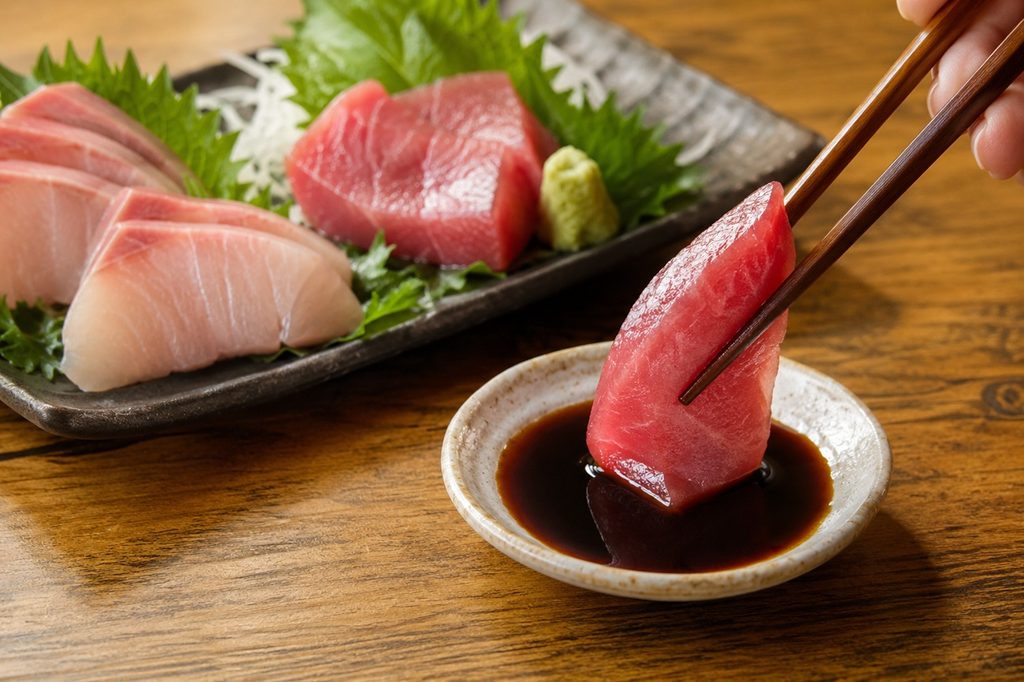
Nobu: “First, let’s look at dipping. Depending on the dish, you may put some seasoning in a small dish and dip the food into it just before eating. In many cases, using a small amount is a good way to start.”
Kelly: “So, the amount matters, too?”
Nobu: “Yes. If you use too little, the food might taste less seasoned than you would like. If you use too much, the seasoning can overpower the flavor of the ingredients.”
Kelly: “I see.”
Nobu: “Sashimi and sushi are good examples.”
Sashimi
Nobu: “Sashimi is a typical example of a dish eaten with soy sauce on the side. You put some soy sauce in a small dish and lightly dip a piece of sashimi into it. Some people also add wasabi to the soy sauce, although others prefer to put the wasabi directly on the fish. Either way, using a little at a time can help you enjoy the flavor of the fish.”
John: “That sounds familiar. That’s pretty much how I ate it when I was in Japan.”
Nobu: “Right. If you soak the fish in too much soy sauce, it can become excessively salty. Soy sauce contains a considerable amount of salt. And if you use too much wasabi, its strong heat may overwhelm the flavor of the fish.”
Kelly: “So, using just a little soy sauce can help preserve the natural flavor of the ingredients.”
Sushi
Nobu: “Sushi is another dish that is often eaten with a little soy sauce. For nigiri sushi, one common approach is to lightly dip the fish topping, rather than the rice, into the soy sauce.”
John: “That makes sense. If the rice absorbs too much soy sauce, it could become too salty. The sushi might even fall apart.”
Nobu: “Exactly. Also, not every piece of sushi needs extra soy sauce. Anago, or saltwater conger eel, for example, is often served with a sauce already applied, so you may not need to add any more.”
John: “I see.”
Pouring
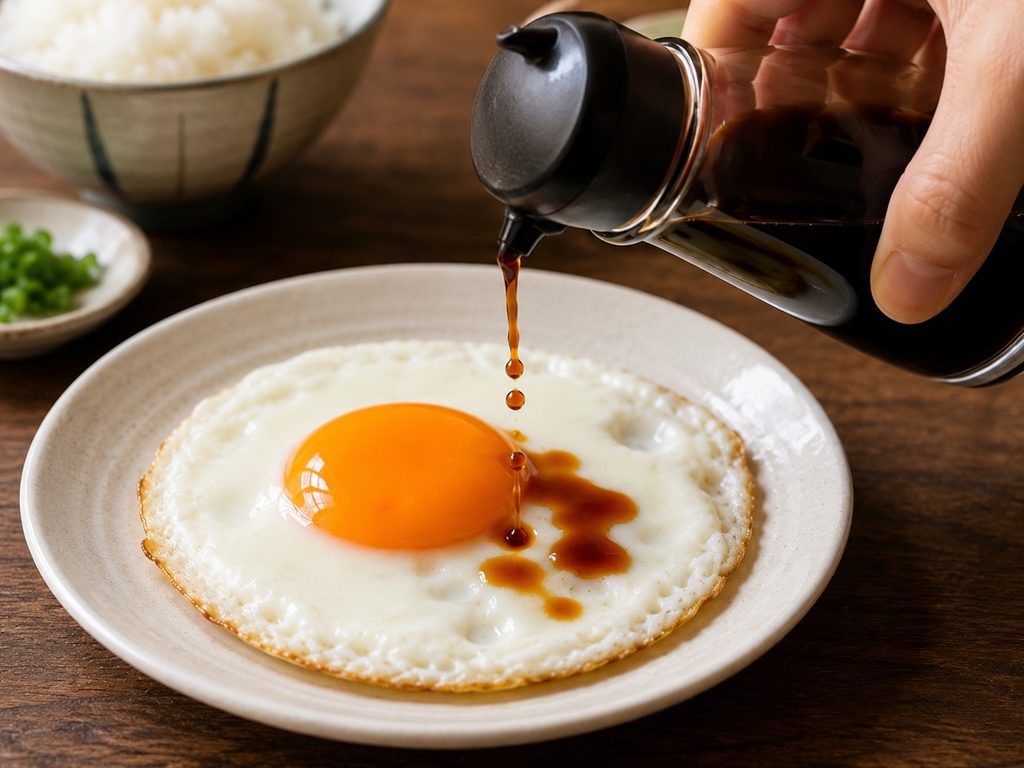
Nobu: “Next, let’s look at pouring. This means adding seasoning over the top of a dish. The amount still matters, though. If you pour on too much soy sauce, the whole dish can become too salty, and the seasoning may overpower the original flavor.”
Kelly: “What kinds of dishes are usually eaten this way?”
Nobu: “Fried eggs and tonkatsu are two examples.”
Fried Eggs
Nobu: “Fried eggs are popular around the world. Many people season them with salt and pepper.”
Kelly: “That’s right. I usually do that.”
Nobu: “In Japan, some people also season fried eggs with soy sauce or Japanese-style sauce. They pour a little over the egg before eating it.”
Kelly: “Wouldn’t that make the egg too salty?”
John: “It could if you use too much. As Nobu said, it’s important to control the amount, especially when using soy sauce.”
Tonkatsu
Nobu: “Tonkatsu is often eaten with a thick, savory sauce. Pouring the sauce over freshly fried tonkatsu can make it especially delicious.”
Kelly: “So, you pour the sauce over the top?”
Nobu: “Yes, that’s one common way to serve it. However, some restaurants provide the sauce separately so that you can dip the tonkatsu into it. Either way, using too much sauce can overpower the flavor of the pork and the crispy coating.”
Spreading or Brushing on Seasoning
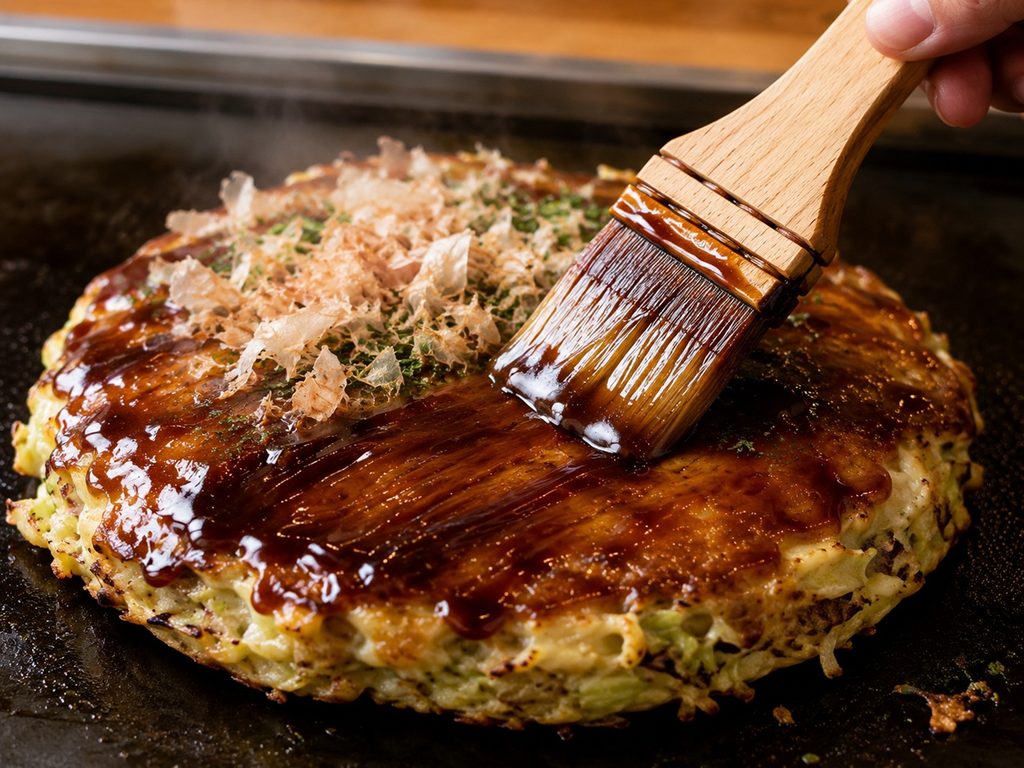
Nobu: “Another method is spreading seasoning over food. A brush is sometimes used to apply the sauce evenly.”
Mike: “Like painting with a paintbrush?”
Nobu: “In a way, yes, although the purpose is different. A brush helps spread the sauce across the surface, making it easier to control how much you use.”
Kelly: “So, it can help you apply an even layer without using too much.”
Nobu: “That’s right. Okonomiyaki and teriyaki dishes are good examples.”
Okonomiyaki
Nobu: “Okonomiyaki is often topped with a special savory sauce after it has been cooked. At some restaurants, the cook spreads the sauce over the surface with a brush.”
John: “Can’t you just pour the sauce over it?”
Nobu: “You can. Some people do pour it on, but using a brush can help spread the sauce evenly across the surface.”
Kelly: “And it may make it easier to avoid putting on too much.”
Nobu: “Exactly.”
Teriyaki and Kabayaki
Nobu: “Teriyaki dishes and kabayaki are also good examples of using a brush to apply sauce. In these cases, the sauce is often brushed onto the food during cooking.”
Kelly: “Couldn’t you just soak the food in the sauce before grilling it?”
Nobu: “That is possible in some recipes. However, repeatedly brushing sauce onto the food during cooking can make it easier to control the amount and build up the flavor gradually.”
Kelly: “I see. The amount of sauce and when you apply it can both make a difference.”
Dipping Food into a Sauce
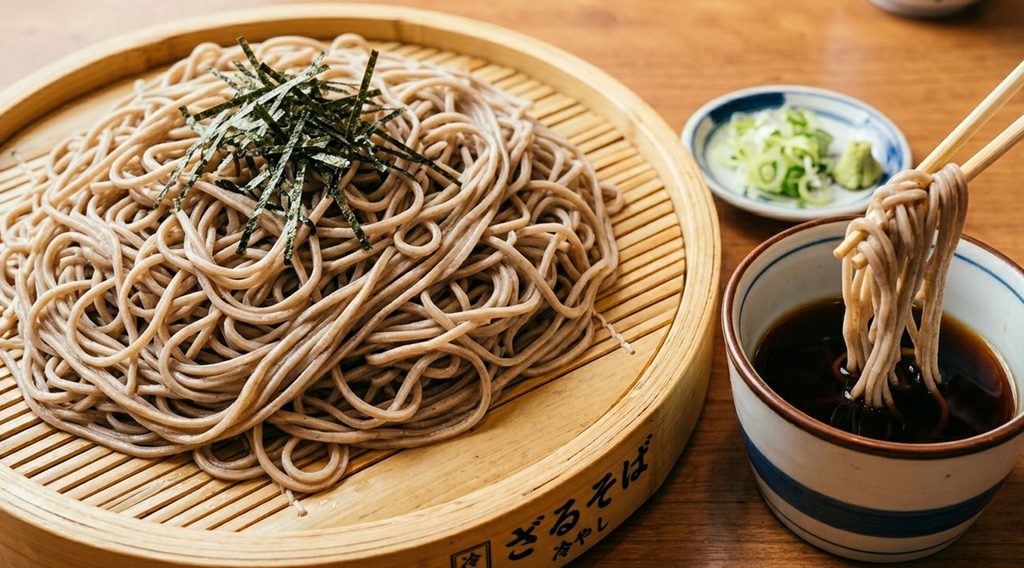
Nobu: “Next, let’s look at dipping food into a sauce. The idea is to briefly dip the food into the sauce before eating it. You generally don’t need to leave it submerged for a long time.”
Kelly: “If you leave it in the sauce too long, the sauce might overpower the flavor of the food.”
Nobu: “That’s right. In some cases, a quick dip is all you need. Zaru soba and tempura are good examples.”
Zaru Soba
Nobu: “Zaru soba consists of boiled soba noodles served on a bamboo or similar draining tray, often topped with shredded nori seaweed. You pick up some noodles with your chopsticks and dip them into a separate bowl of dipping sauce before eating.”
Kelly: “So, the idea is to dip the noodles into the sauce without soaking them completely.”
Nobu: “Yes. Some people prefer to dip only part of the noodles into the sauce so that the flavor of the soba is not overwhelmed by the stronger taste of the dipping sauce.”
Kelly: “That makes sense. You want to enjoy the flavor of the noodles as well as the sauce.”
Tempura
Nobu: “Tempura is another dish that is sometimes eaten with a dipping sauce called tentsuyu. You put some of the sauce in a small bowl and briefly dip the tempura into it.”
Kelly: “So, the trick is not to leave it in the sauce for too long?”
Nobu: “That’s one approach. If you leave tempura in the sauce for too long, the crispy coating may become soggy. A quick dip can let you enjoy both the flavor of the sauce and the texture of the coating.”
What Happens If You Use Seasonings the Wrong Way?
Mike: “What happens if you don’t use seasonings properly? Dipping something and briefly soaking it in sauce sound pretty similar to me.”
Nobu: “They can be similar, depending on the dish. But the amount of seasoning you use and how you apply it can make a difference. Let’s look at sashimi and sushi again.”
You May Lose the Original Flavor of the Food
Nobu: “One possible result is that the seasoning overpowers the original flavor of the food. Sashimi is commonly eaten with a little soy sauce on the side. If you pour too much soy sauce over it or leave it soaking in the sauce, it can become too salty.”
Mike: “What about sushi?”
Nobu: “The same idea applies. With nigiri sushi, for example, the rice can absorb soy sauce. If too much gets into the rice, the salty flavor may become stronger than the flavor of the fish.”
Kelly: “I see. The way you use the seasoning can affect how much you enjoy the food.”
You May Consume More Salt Than You Need
Nobu: “There is another point to consider. Using a lot of salty seasoning can increase your salt intake. Salt is necessary for the body, but consuming too much can be bad for your health. So, paying attention to how much seasoning you use can be helpful.”
John: “I see. So, there can be health concerns as well.”
Nobu: “Yes. There are many reduced-sodium seasonings available today, but it is still worth paying attention to how much you use.”
Kelly: “That makes sense. It’s better to use seasonings thoughtfully.”
The End
From My Own Experience
I once lived in a town by the sea. Fresh fish was readily available, and it often appeared on our family dining table.
As you might expect, we ate sashimi quite often. We would put small dishes of soy sauce on the table and dip the fish into the sauce before eating it.
However, when I was a child, I didn’t really know how much soy sauce to use. I remember dipping the sashimi so deeply into the sauce that it became far too salty.
Now that I’m an adult, I realize that using less soy sauce would probably have allowed me to enjoy the natural flavor of the fish more. Looking back, it seems a shame to have covered up the taste of such delicious, fresh fish with too much soy sauce.
Conclusion
In this article, we have looked at different ways of using seasonings in Japanese cuisine.
The differences between dipping, pouring, brushing, and briefly dipping food into a sauce may seem subtle. However, the way you apply a seasoning and the amount you use can affect the flavor and texture of a dish.
There are no absolute rules that everyone must follow. Still, using seasonings thoughtfully can help you enjoy the natural flavors of Japanese food.
The next time you eat Japanese cuisine, why not pay attention to how you use the seasonings? You may discover that a small change can make a difference.

