Japanese food names can sometimes be confusing for people who are not familiar with the language.
Japanese words are often made by combining kanji characters, and each character contributes to the meaning of the word.
The same applies to “yakiniku” and “yakitori.” Both words contain “yaki,” which means grilling or cooking over a fire. However, “niku” means meat, while “tori” means bird, usually referring to chicken in this context.
So, why are these two dishes treated as different types of Japanese food? Let’s take a closer look.
Characters
Mike: A 12-year-old American boy who is interested in Japan.
John: Mike’s father. He sometimes travels to Japan on business.
Kelly: Mike’s mother. She is good at cooking.
Nobu: A Japanese exchange student.
Prologue
Kelly enjoys cooking and has been exploring Japanese cuisine. However, she sometimes finds Japanese recipes confusing because of the language barrier.
This time, she is wondering about the difference between yakiniku and yakitori.
Fortunately, Nobu comes to visit just when she needs someone to explain it.
Japanese Food Names and Their Meanings
Kelly: Japanese food is wonderful, but some of the names are confusing.
John: What do you mean by confusing?
Kelly: Many Japanese food names include words like “grilled” or “boiled,” so they seem easy to understand at first. But when you look more closely, things aren’t always that simple.
John: Can you give me an example?
Kelly: Well, I don’t quite understand the difference between yakiniku and yakitori. Both names contain “yaki,” so I can tell that they involve grilling. I can also guess that yakitori is grilled chicken. But why is it treated as something different from yakiniku? After all, chicken is meat, too.
Nobu: Hello, everyone!
Kelly: Oh, Nobu! You’re just the person I wanted to see. We were talking about yakiniku and yakitori. Could you explain the difference?
Nobu: I see what you mean. The names can be a little confusing. Let me explain.
What Does “Yaki” Mean?
Nobu: First, let’s look at the names. Both yakiniku and yakitori contain the word “yaki,” which refers to grilling or cooking over a fire.
“Niku” means meat, while “tori” means bird. In the name yakitori, it generally refers to chicken.
Kelly: But that brings me back to my question. Why isn’t grilled chicken simply considered one type of yakiniku?
Nobu: That’s a fair question. Chicken is certainly meat, so I can understand why the names might seem confusing.
Kelly: Exactly!
Nobu: The main difference is the way these dishes are traditionally prepared and served. Let’s take a closer look.
The Difference Between Yakiniku and Yakitori
Nobu: Let’s start with yakiniku.
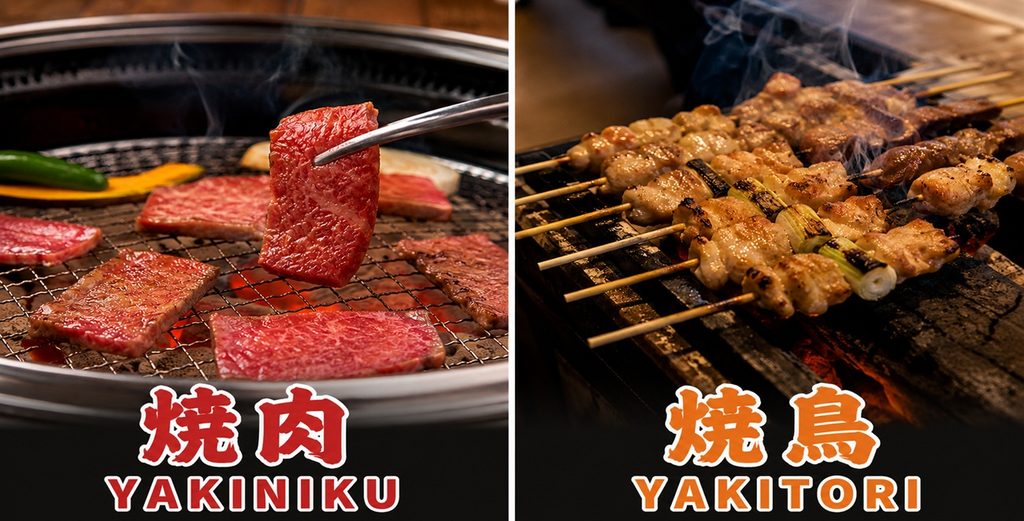
Yakiniku is a style of grilled meat that is often cooked at the table. The meat is usually cut into bite-sized pieces or thin slices, and diners grill it on a cooking surface over a gas flame or charcoal.
At a yakiniku restaurant, it’s common to see families and groups of friends chatting and enjoying themselves while grilling their own meat.
Kelly: That sounds like a fun way to eat! Everyone can cook while talking together.
Nobu: Yes. At many yakiniku restaurants, you grill the meat yourself at the table. However, some restaurants also offer a service where staff cook the meat for you.
Kelly: So, cooking it yourself is common, but it’s not an absolute rule.
Nobu: Exactly.
Nobu: At home, people in Japan also often enjoy yakiniku using an electric griddle, called a hot plate. It’s convenient because you can adjust the temperature without having to build a charcoal fire.
Kelly: That sounds handy!
Nobu: Now, let’s talk about yakitori.
Yakitori is made by putting small pieces of chicken on skewers and grilling them. At a typical yakitori restaurant, the staff prepare the skewers and serve them after cooking.
Kelly: So, unlike yakiniku, I usually don’t have to grill the chicken myself.
Nobu: That’s right. At a typical yakitori restaurant, you order the skewers and the staff cook them for you.
Yakitori Restaurants May Serve More Than Chicken
Nobu: There’s something else worth mentioning. You might expect a yakitori restaurant to serve only chicken, but that isn’t always the case.
Kelly: You mean they serve other kinds of meat, too?
Nobu: Yes. Some yakitori restaurants also serve grilled pork, including pork offal. Depending on the restaurant, you may even find other grilled foods, such as shrimp.
Kelly: So there can be quite a variety of skewered foods on the menu!
Nobu: Exactly. The selection depends on the restaurant, but you may find more than just chicken.
Strictly speaking, yakitori refers to grilled chicken on skewers. However, in Japan, some yakitori restaurants also serve other types of grilled meat and food on skewers.
Some Restaurants Also Serve Fried Skewers
Nobu: Some yakitori restaurants offer fried dishes, too.
Kelly: Fried dishes? At a yakitori restaurant?
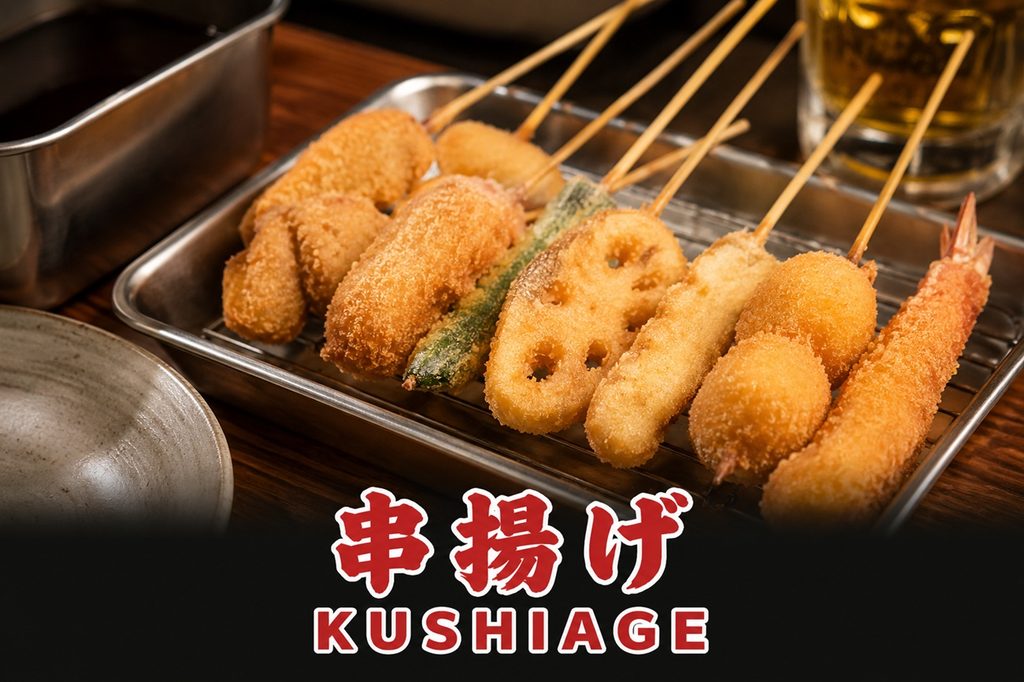
Nobu: Yes. One example is kushikatsu, which consists of ingredients placed on skewers, coated in batter or breadcrumbs, and deep-fried.
For example, you might find quail eggs on skewers. Kids may especially enjoy these kinds of dishes.
Kelly: That sounds like something the children would love!
Nobu: Of course, not every yakitori restaurant serves kushikatsu. The menu varies from place to place.
The End
Why I Wrote This Article
The idea for this article came from looking at search terms people were using online.
I noticed searches for “yakiniku vs. yakitori.” It seemed that people wanted to know what the difference was between these two Japanese dishes.
For Japanese people, yakiniku and yakitori are clearly different types of food. However, someone unfamiliar with Japanese may understand that “yaki” means grilling and still wonder why “niku” and “tori” are used differently.
In other words, the names can easily cause confusion.
That’s why I decided to write this article.
This also reminded me of something I once saw in an English-language article: “Buffalo chicken.”
I didn’t actually wonder whether it was buffalo or chicken. Instead, I wondered what “Buffalo” meant. Did it refer to the large animal?
Later, I learned that the name refers to Buffalo, a city in New York State, where the dish originated.
Once I understood that, the name made sense.
Food names can create unexpected language barriers, even when the food itself is familiar.
From My Own Experience
I often go to yakiniku restaurants. One of my favorites uses charcoal grills and offers reasonably priced meals, so I can visit fairly often without spending too much.
Yakiniku restaurants also serve chicken, and I sometimes order it. Since it’s served in bite-sized pieces, I can grill it myself at the table.
Whenever I eat chicken this way, I find myself thinking about one thing:
“It’s convenient not having to remove the meat from a skewer!”
Yakitori may look easy to eat because the meat is already on a skewer. However, if you prefer to remove the pieces from the skewer before eating, it can sometimes get in the way.
In that respect, I find it easier to grill chicken at a yakiniku restaurant.
Of course, this is just my personal preference. Many people enjoy eating yakitori directly from the skewer, so it really depends on how you like to eat it.
Conclusion
We’ve looked at the differences between yakiniku and yakitori.
Although their names sound similar, they are generally enjoyed in different ways. Yakiniku usually involves grilling pieces of meat at the table, while yakitori consists of grilled chicken on skewers, typically prepared by the restaurant staff.
You may also be surprised to discover that some yakitori restaurants serve other types of grilled food, too.
Personally, I recommend trying charcoal-grilled yakiniku or yakitori if you have the chance. I think charcoal grilling can make the food taste better, although people have different opinions about this.
If you visit Japan, why not try both yakiniku and yakitori? You’ll have a chance to experience two different styles of Japanese dining and decide which one you prefer.
Related Article
In this article, we explained the differences between yakiniku and yakitori.
By the way, charcoal grilling is a popular cooking method for both yakiniku and yakitori in Japan.
In the next article, we will explore why charcoal grilling is so popular in Japan.
Read the article →