There are several ways to cook food. To put it simply, we can use a flame, as with a gas stove; heat food inside an enclosed space, as with an oven; use electromagnetic waves, as with a microwave; or cook over charcoal, which transfers heat through radiation as well as other forms of heat transfer.
In Japan, charcoal has been used for cooking for a long time. Even today, it remains popular. You can often see Japanese yakitori and yakiniku restaurants advertising that they use charcoal to grill their food.
But does the type of heat really make a difference to the taste of food?
Let’s take a closer look at Japanese charcoal grilling.
Characters
Mike: A 12-year-old American boy who is interested in Japan.
John: Mike’s father. He sometimes travels to Japan on business.
Kelly: Mike’s mother. She is good at cooking.
Nobu: A Japanese exchange student.
Prologue
Kelly has noticed that charcoal is often used to cook food in Japanese restaurants. However, she finds charcoal inconvenient because it takes effort to handle. She is not convinced that it is worth the trouble.
Then Nobu arrives and explains why charcoal is still popular in Japan.
Does the Type of Fire Change the Taste?
Kelly: I’ve been watching videos of Japanese food, and I’ve noticed that restaurants seem to use different types of heat to cook yakitori and yakiniku.
John: That’s right. Some Japanese yakitori and yakiniku restaurants use charcoal instead of gas. Gas stoves are common in homes, but many restaurants still prefer charcoal grilling.
Kelly: Charcoal? Really?
John: Yes, charcoal. Some yakiniku restaurants even put a small charcoal grill called a shichirin on each table so customers can grill their own meat.
Kelly: But isn’t charcoal a lot of trouble to use? It must take time to light it and put it out. Unlike a gas stove, you can’t just turn it on and off. I’d find that exhausting!
John: Well, gas is certainly more convenient. But why do so many Japanese restaurants insist on using charcoal?
Nobu: Hello!
Kelly: Hello, Nobu! You’ve arrived at just the right time. We were talking about charcoal grilling in Japan.
Nobu: Oh, charcoal grilling? Food cooked over charcoal can be delicious.
Kelly: You’re saying that, too? I don’t understand why. It’s all heat, isn’t it? How can the type of heat make such a difference?
Nobu: Well, charcoal produces radiant heat, including infrared radiation. This heat helps cook the surface of food and develop a nice browned crust. With the right heat and cooking time, you can also keep the inside moist and tender.
John: I see. So charcoal has some useful characteristics.
Nobu: Exactly. But it’s not simply a matter of charcoal being better than gas. Gas grills can also cook food very well. The result depends on the heat, the food, and the way it’s cooked.
Kelly: All right. That makes more sense.
Nobu: There’s another important factor: aroma. Charcoal grilling can create a distinctive smoky, roasted flavor. Smoke from the charcoal and from fat dripping onto the hot fuel can contribute to that flavor. Many people enjoy this characteristic aroma, which is one reason they associate charcoal grilling with delicious food.
Kelly: So it’s not just the heat. The smell makes a difference, too. That’s interesting!
Nobu: Yes. However, charcoal isn’t very common in ordinary Japanese homes. It takes time and effort to light and extinguish, and you need somewhere to store it. It’s particularly inconvenient in apartments.
John: I suppose that makes sense, given the way many Japanese people live.
Nobu: That’s one reason people often leave charcoal grilling to restaurants.
Japan’s Attention to the Quality of Charcoal
Nobu: There’s something else worth mentioning. Some Japanese people care not only about how their food is cooked, but also about where the charcoal comes from.
John: Wait a minute. Isn’t charcoal just wood that has been burned? Surely it should be more or less the same wherever it’s made.
Kelly: I agree. Whether you use a stove at home or a grill in a restaurant, it’s still just heat, isn’t it?
Nobu: Not quite. Charcoal comes in different qualities, and different types can have different characteristics. Japan has several charcoal-producing regions, and some types are particularly highly regarded. One famous example is Binchotan, a high-quality charcoal associated with Wakayama Prefecture.
John: So even charcoal has its own regional specialties?
Nobu: That’s right. Charcoal is produced in various parts of Japan, including Wakayama, Miyazaki in Kyushu, and Iwate in northeastern Japan.
Kishu Binchotan, from Wakayama, is particularly well known. It is traditionally made from ubame oak, a type of evergreen oak, using a high-temperature carbonization process. It is valued for its strong heat and its ability to burn for a long time.
Kelly: I see. So the strength of the heat and how long the charcoal lasts are important. If the heat isn’t strong enough, it might be difficult to get that nice browned surface.
Nobu: Exactly. Some yakiniku restaurants even advertise that they use Binchotan. It’s a way of telling customers that they pay attention to the quality of their fuel.
John: I never imagined that a restaurant would advertise the kind of charcoal it uses!
Nobu: There’s another reason why charcoal’s ability to burn for a long time was important in traditional Japanese life. It wasn’t just used for cooking. It was also used for heating.
John: Heating? How did that work?
Nobu: In the past, Japanese people often used a heating device called a hibachi. It was a container in which charcoal was burned to provide warmth. Charcoal was useful because it could burn for a long time and generally produced less smoke than an open wood fire.
Traditional Japanese houses were often made of wood, so heating methods had to take the building’s design into account. A conventional Western-style fireplace, for example, generally requires a chimney to carry smoke outside.
John: That’s true. You can’t just build a fireplace without considering how the smoke will escape.
Nobu: Of course, things were different in rural Japan. Many farmhouses had an irori, a sunken hearth where people could make a fire, cook food, and gather around the warmth.
John: That sounds interesting.
Nobu: It certainly is. But the history of the irori is a topic for another day!
What Japanese Foods Benefit from Charcoal Grilling?
Mike: So what kinds of food taste different when they’re cooked over charcoal?
Nobu: There are quite a few. Let me introduce some common examples.
Yakitori: Japanese Grilled Chicken Skewers
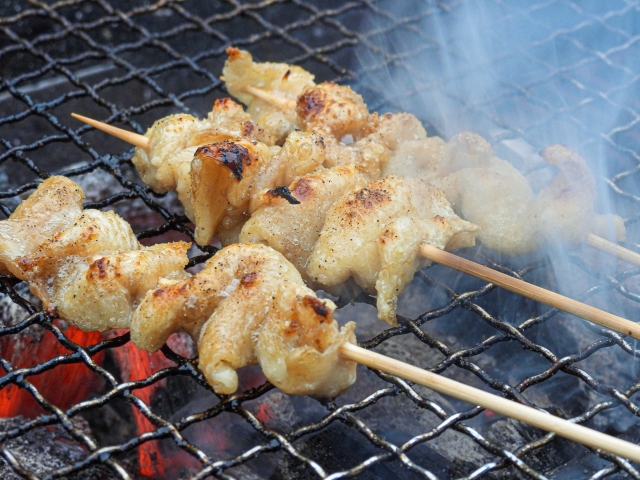
Nobu: One of the best examples is yakitori.
Yakitori consists of pieces of chicken grilled on skewers. Because the seasoning is often relatively simple, the way the chicken is cooked and the flavor of the meat itself are important.
Charcoal can help create a nicely browned surface while allowing the cook to control how the meat cooks inside. The smoky aroma can also add another layer of flavor. That’s why some yakitori restaurants prefer charcoal.
Kelly: We talked about that earlier. I can understand why it matters when the seasoning is simple.
Nobu: Of course, not every yakitori restaurant uses charcoal. Some use gas grills instead. That doesn’t mean their food tastes bad. Charcoal is just one cooking method, and a skilled cook can prepare excellent yakitori using gas, too.
Mike: So, in the end, you won’t know which you prefer until you try it?
Nobu: I suppose that’s true. I can’t tell you which one you’ll like better without tasting it myself!
Yakiniku: Japanese-Style Grilled Meat
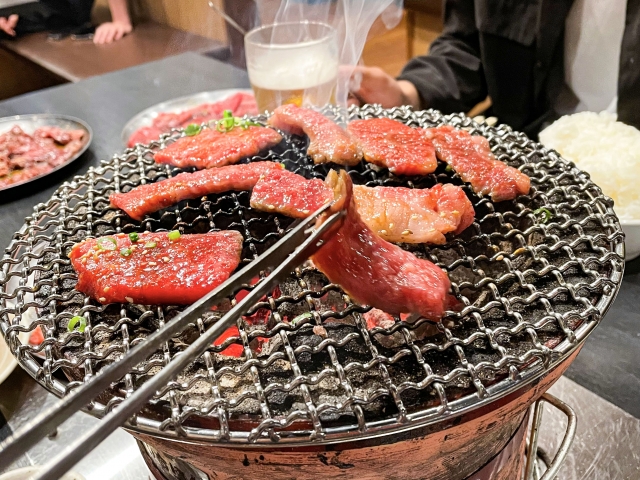
Nobu: Yakiniku is another good example.
Yakiniku is a style of Japanese dining in which customers often grill pieces of meat themselves at a table. Some restaurants use gas grills, while others use charcoal.
As with yakitori, the flavor of the meat and the way it is cooked are important. Charcoal can provide strong radiant heat and contribute a distinctive aroma.
Kelly: I imagine the difference can be noticeable when you’re cooking thicker pieces of meat. If you get the outside nicely browned while keeping the inside juicy, the result can be delicious.
Mike: Wow! Just listening to you makes my mouth water!
Grilled Fish
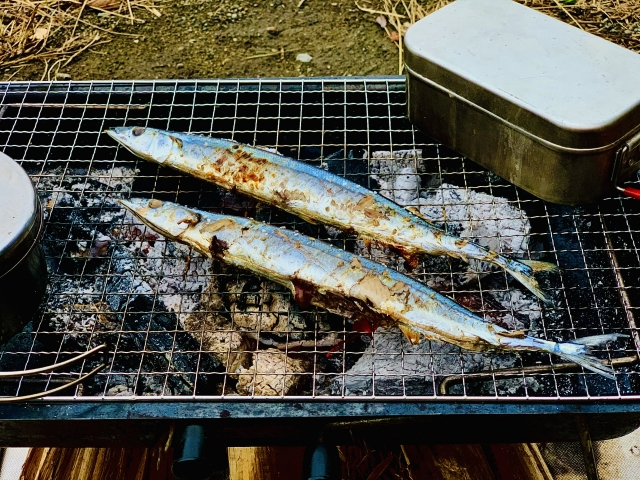
Nobu: Grilled fish is another example. I imagine charcoal grilling can be particularly appealing when cooking fish such as sanma, or Pacific saury.
Mike: Fish, too?
Nobu: Of course. Sanma is a popular seasonal fish in Japan, especially in autumn. It has a rich flavor, and its fat contributes to that flavor. The way you cook it can make a difference to the final result.
Kelly: Sanma? Is it a common fish in Japan?
Nobu: Yes, it is. And charcoal grilling isn’t limited to sanma. It can also be used to cook salmon, for example. Fatty fish can develop a delicious roasted flavor when grilled properly.
Mike: I’ve had salmon cooked over charcoal before. It tastes great!
Nobu: Oh, so you already know! Then you should try some Japanese charcoal-grilled fish when you visit Japan.
Unagi Kabayaki: Japanese Grilled Eel
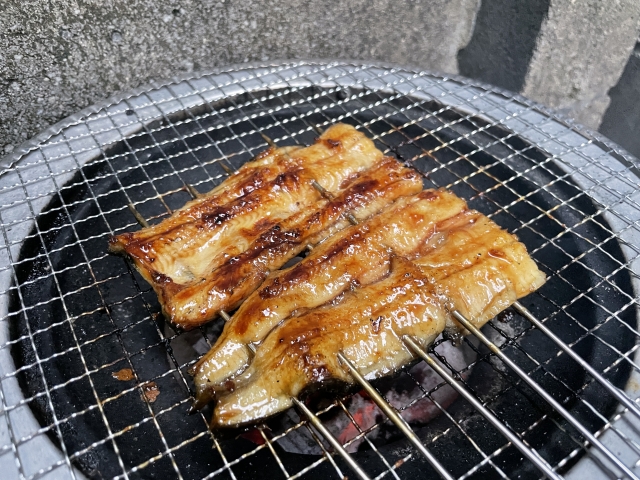
Nobu: Have you heard of unagi kabayaki?
Mike: Is unagi that long fish called an eel?
Nobu: That’s right. Eel is a popular food in Japan. To make kabayaki, the eel is prepared, grilled, and coated with a savory sauce. Charcoal has traditionally been favored for cooking it in many restaurants.
Kelly: So charcoal is used for eel dishes, too!
Nobu: Yes. The cook needs to control the heat carefully to achieve the desired texture and flavor. Charcoal can provide strong heat and a distinctive aroma that work well with the sauce.
Kelly: It sounds delicious!
Charcoal Grilling Has Its Disadvantages, Too
John: I understand why some Japanese restaurants prefer charcoal. But surely there are disadvantages, too?
Nobu: Absolutely. As we mentioned earlier, lighting and extinguishing charcoal takes time and effort. With a gas stove, you can usually turn off the flame immediately. Charcoal doesn’t work that way.
You also need somewhere to store the fuel. Charcoal has to be transported and handled, and high-quality charcoal can be expensive.
John: That makes sense.
Nobu: If you visit a yakiniku restaurant, you might even see charcoal stacked in a storage area away from the dining room. Restaurants have limited space, and not every restaurant has a separate warehouse for fuel. Storing enough charcoal can be a practical challenge.
Kelly: I see. So there’s quite a bit of work involved behind the scenes, too.
Nobu: Exactly. Charcoal grilling can produce wonderful results, but it requires extra effort. That’s why the convenience of gas is also important, and why both methods are used in Japan.
The End
Conclusion
We began by asking whether the type of heat used to cook yakitori and yakiniku can change the taste.
As we’ve seen, it can make a difference. Charcoal provides radiant heat and can contribute a distinctive smoky, roasted aroma. However, the final result also depends on the ingredients, the cooking temperature, the cooking time, and the skill of the person preparing the food.
We’ve also looked at Japan’s charcoal culture, from the use of Binchotan in restaurants to the traditional use of charcoal for heating.
Cooking fuel might seem like a small detail, but it can be an important part of a food culture. In Japan, some restaurants take their choice of charcoal seriously because they believe it contributes to the flavor and experience they want to offer.
So, when you’re looking for a yakitori or yakiniku restaurant in Japan, why not look for a sign that says sumibi-yaki, meaning charcoal-grilled?
You might discover a new favorite way to enjoy Japanese food!
Related Article
In this article, we explored whether Japanese restaurants tend to favor charcoal grilling.
By the way, at Japanese yakiniku restaurants, meat is cooked using either a traditional charcoal grill called a shichirin or a gas-powered grill called a roaster.
What are the differences between these two cooking methods?
In the following article, we compare charcoal-grilled yakiniku cooked on a shichirin with yakiniku cooked on a gas-powered roaster.
Read the article →