Whenever I stop by a curry restaurant on my way home from work, I often find myself thinking about how unique Japanese curry culture has become.
There is a Nepalese restaurant near one of the curry shops I frequently visit, and it also serves curry. However, the dishes are so different that it is hard to imagine they share the same culinary roots!
But the originality of Japanese curry is not limited to curry restaurants. It has spread into many other areas of everyday Japanese food culture.
In this article, I would like to introduce some examples of how Japanese people have embraced curry and incorporated it into all kinds of foods.
Just how far has this curry culture developed?
Characters
Mike: A 12-year-old American boy who is interested in Japan.
John: Mike’s father. He sometimes travels to Japan on business.
Kelly: Mike’s mother. She is good at cooking.
Nobu: A Japanese exchange student.
Prologue
Kelly has learned about Japanese curry culture and has been trying various curry dishes. She has tried dishes topped with fried foods, such as katsu curry, and even soup curry, which changes the consistency of curry itself. She is also thinking about creating her own original spice blends.
One day, however, Kelly came across something surprising in an online video. She discovered that curry-flavored ice cream existed!
Mike was watching the video with her, but rather than being surprised, he became curious about something else.
Mike: “I wonder just how many things in Japan are made with curry!”
Just then, Nobu arrived. Mike was ready to ask him about Japanese curry culture.
Nobu: “Hello!”
Mike: “Hi! I was wondering if you could tell us something about Japanese curry culture today.”
Nobu: “Of course! What would you like to know?”
Mike: “I’d like to know how much Japanese people love curry and what kinds of foods they have adapted it to.”
Nobu: “I see. That’s quite a broad topic!”
Japanese People Really Love Curry
Nobu: “Let’s start by looking at just how much Japanese people love curry.”
Mike: “Sounds good!”
Nobu: “I think one of the easiest ways to see this is by visiting a supermarket. The curry section is surprisingly extensive. There are many different kinds of curry roux, and entire shelves are filled with retort-pouch curry products.”
Mike: “That’s true. There are so many choices!”
Nobu: “You can also see how popular curry is by looking at school lunches. Curry is a common school lunch menu item, and it is particularly popular among children. Some company cafeterias also serve curry regularly. You could say that curry is enjoyed by people of all ages, from children to adults.”
John: “I see. School lunches and company cafeterias, huh? Even if the curry doesn’t have to be particularly special, I imagine people expect it to be at least reasonably good, or perhaps even better.”
Nobu: “There are even people who say that curry is contagious! For example, when someone is walking home in the evening and smells curry being prepared in a nearby house, they might suddenly feel like stopping at a curry restaurant on the way home.”
Kelly: “Contagious, huh? I can understand that. Curry has such a wonderful aroma!”
Nobu: “Exactly. It shows just how familiar and loved curry is in everyday Japanese life.”
So Many Things Are Made with Curry!
Kelly: “Bread comes from Western food culture, and steamed buns come from Chinese food culture. Japanese people really do seem to create all kinds of new foods by combining different culinary traditions!”
Nobu: “Now, let’s move on to your other question: the many ways curry is used in Japanese food.”
Mike: “That’s what I really wanted to hear. I’m sure there are some interesting examples!”
Kelly: “I’m curious, too!”
Nobu: “All right, let me introduce some of them.”
Dry Curry
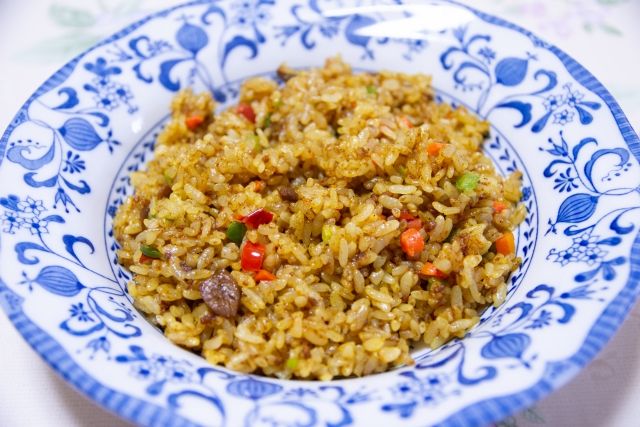
Nobu: “Let’s start with dry curry. One popular type is similar to pilaf or fried rice, with rice cooked or stir-fried together with curry seasoning. It is quite different from the usual style of eating curry, where the sauce is poured over rice.”
Kelly: “But don’t they have something similar in India?”
Nobu: “Yes. Indian cuisine also has various rice dishes prepared with curry spices. However, Japanese dry curry has developed its own characteristics.”
Kelly: “What do you mean?”
Nobu: “Japanese-style dry curry often resembles fried rice, with rice stir-fried together with curry seasoning. In contrast, some well-known Indian rice dishes, such as biryani, are prepared by cooking rice together with spices and other ingredients. The cooking methods and flavors can be quite different.”
John: “I see. So they aren’t quite the same thing.”
Nobu: “That’s right. The spice combinations can also differ. Japanese dry curry often has a flavor profile similar to ordinary Japanese curry, while Indian rice dishes can have their own distinctive combinations of spices and aromas. So I think it’s better to consider them different types of dishes.”
Mike: “That makes sense!”
Curry Udon
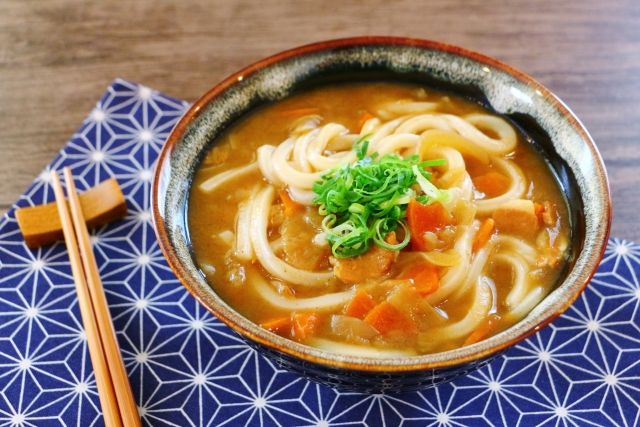
Nobu: “Next is curry udon. This is basically udon noodles served in a curry-flavored broth. Udon goes very well with curry, so it has become a fairly popular dish in Japan.”
John: “Udon is a traditional Japanese noodle dish, right? Adding curry to it is quite an interesting idea!”
Nobu: “By the way, curry udon is sometimes served as part of school lunches, too.”
Kelly: “Children can eat curry udon at elementary school? That’s quite something!”
Curry Soba
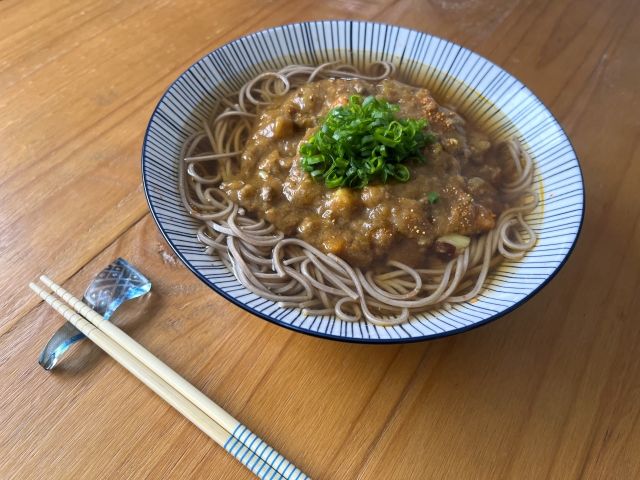
Nobu: “There is also a dish called curry soba. Soba noodles have a completely different flavor from udon, so combining them with curry must have seemed like quite a bold idea at first.”
John: “Soba? That’s surprising! I can imagine curry going well with udon because of its texture, but soba is a rather unusual combination.”
Nobu: “You’re right that curry soba isn’t as widely known as curry udon. However, there are plenty of people who enjoy it.”
Curry Bread
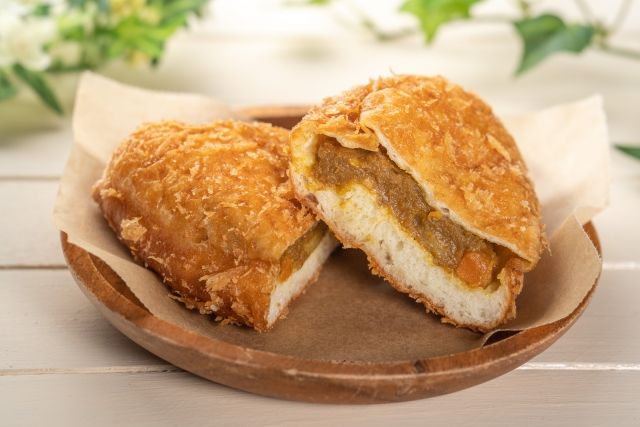
Nobu: “Next is curry bread. This is bread filled with curry and then deep-fried. It is extremely popular and can be found almost everywhere in Japan, not just in bakeries but also in convenience stores and supermarkets.”
Mike: “So it’s something you can buy quite easily.”
John: “Exactly. And it’s usually quite inexpensive, too.”
Curry Manju (Curry-filled Steamed Bun)
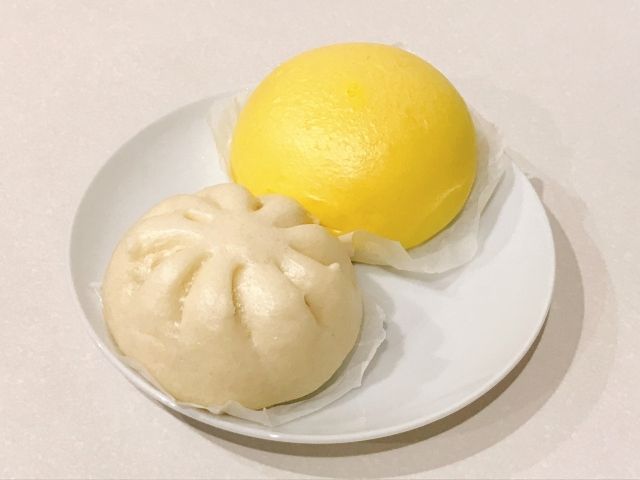
Nobu: “Next is curry manju, often called curry-man in Japan. It is similar to Chinese steamed meat buns, but the filling is seasoned with curry. I recommend trying one in winter because a hot steamed bun is a great way to warm yourself up.”
Curry Rice Crackers
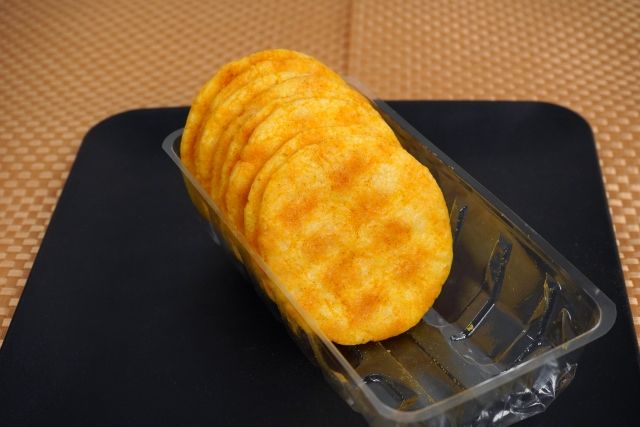
Nobu: “There are also curry-flavored rice crackers. Traditional Japanese rice crackers, called senbei, have been enjoyed in Japan for a long time. These are simply rice crackers flavored with curry. They are popular snacks that people of all ages can enjoy.”
Mike: “Snacks, too? Curry-flavored snacks sound pretty good!”
Curry-flavored Snacks and Traditional Japanese Confectionery
Nobu: “There are also countless curry-flavored snacks and dagashi, which are inexpensive traditional Japanese sweets and snacks. There are so many varieties that it would be difficult to list them all.
Sometimes I even wonder whether food manufacturers think, ‘If we make it curry-flavored, people will probably buy it!’
In any case, it seems that even children are growing up surrounded by curry-flavored foods.”
John: “But surely there must be even more unusual curry products out there?”
Nobu: “There seem to be some rather strange ones, too. However, some disappear from the market quite quickly, so let’s stop here for now!”
The End
Conclusion
Looking again at Japanese food culture, I am once again impressed by how skillfully Japan has taken culinary traditions from other countries and transformed them into something uniquely Japanese.
Take ramen and bread, for example. They have developed so much in Japan that sometimes it is easy to forget that their origins lie elsewhere.
And these adaptations are not always straightforward. Some combinations are more like unexpected curveballs, such as curry soba!
I am sure that even more curry-flavored products will appear in Japan in the future. I look forward to seeing what Japanese food manufacturers come up with next!
Related Article
In this article, we explored the many different curry dishes enjoyed in Japan.
However, Japanese curry itself can generally be divided into two main categories: curry made from individual spices and curry made from curry roux.
In the following article, we compare these two styles of curry and examine the differences between them.
Read the article →

