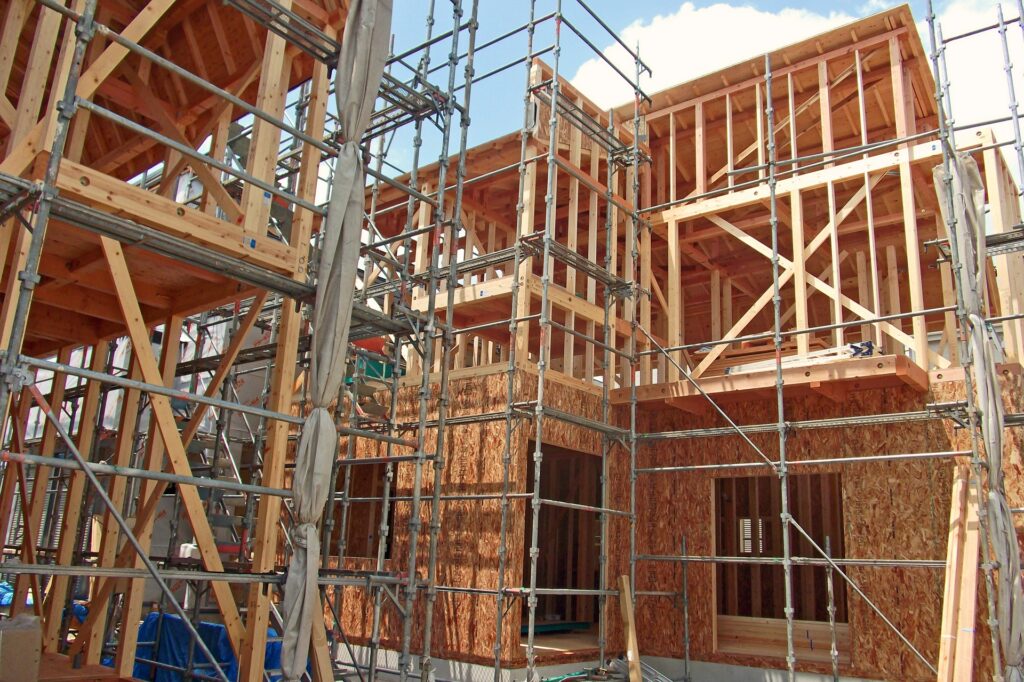
If you look at old Japanese streets, you’ll notice that many traditional houses are made of wood. Japan has abundant forest resources, so it’s no surprise that wooden houses have long been common here.
But wood is generally less resistant to impact than materials such as stone or brick. Old wooden doors might look easy to break through. And once you step inside a traditional Japanese house, you’ll find sliding screens made with paper, such as shoji and fusuma. At first glance, these materials don’t look particularly strong.
So, what about modern Japanese houses?
Japan is often described as a safe country. But how well are its houses protected against burglars and other intruders? Let’s take a closer look at the technology behind home security in Japan.
Characters
Mike: A 12-year-old American boy who is interested in Japan.
John: Mike’s father. He sometimes travels to Japan on business.
Kelly: Mike’s mother. She is good at cooking.
Nobu: A Japanese exchange student.
A Break-In at an Old Japanese Inn: Have You Heard of the Ikedaya Incident?
John: “Oh, so the Shinsengumi were involved in the Ikedaya Incident!”
Mike: “The Ikedaya Incident? What’s that?”
John: “The Shinsengumi were a group of samurai formed during the final years of the Tokugawa shogunate. They raided an inn called Ikedaya, where people suspected of plotting against the shogunate had gathered. It was an important event near the end of the shogunate, when Japan was going through major political changes.”
Mike: “A raid, huh? I’ve always imagined Japanese houses as being made of wood and paper. I wonder if that had anything to do with how easy it was to break into them.”
Kelly: “What do you mean?”
Mike: “Well, if thieves or other criminals want to break into a building, I’d imagine they look for its weakest points. But if the whole building were strong, they wouldn’t have many opportunities to get inside. I was wondering whether the construction of traditional Japanese houses might have played a role in incidents like that.”
John: “What do you have in mind?”
Mike: “For example, what if all the wooden shutters at Ikedaya had been made of iron?”
John: “That’s an interesting thought. Breaking in would certainly have been more difficult. Even if the attackers eventually got inside, it would have taken longer. That might have increased the chances of their plan failing.”
Mike: “The strength of the shutters… That’s actually an interesting subject!”
Kelly: “Yes, it is.”
Are Modern Japanese Houses Vulnerable to Burglars?
John: “Thinking about it, I’m beginning to wonder about modern Japanese houses, too. Many of them are still made of wood.”
Mike: “Why don’t we ask Nobu about that?”
Nobu: “Hello!”
John: “Perfect timing! I wanted to ask you about home security in Japan. I know Japan is considered a safe country, but that doesn’t mean there are no burglaries, right?”
Nobu: “That’s right. Theft and burglary do happen in Japan, so home security is important here, too.”
Mike: “But houses are often made of wood, aren’t they? Wood doesn’t seem like the strongest material for keeping burglars out.”
Kelly: “Exactly. I’d be especially worried if I were home alone.”
Nobu: “Well, there’s no need to assume that wooden houses are automatically unsafe!”
Why Japanese Houses Can Offer Good Security
John: “Are you sure? Even if the house is made of wood?”
Nobu: “Yes. Japanese homes can incorporate a range of security features, including specially designed doors, windows, and other security equipment.”
John: “I’m curious about how that works. Can you explain?”
Nobu: “Of course!”
Doors and Windows Are Designed to Resist Intrusion
Nobu: “First, many burglars enter houses by forcing their way through doors or windows. These are the main openings they try to exploit.”
John: “That makes sense. It’s much more practical to attack a door or a window than to tear off the exterior wall!”
Nobu: “Exactly. That’s why the materials and construction of doors and windows matter. Aluminum and steel are commonly used in Japanese window frames and doors.”
Mike: “I see! So the openings can be much stronger than I imagined.”
John: “Hold on a second. Windows have glass, don’t they? What happens if a burglar simply breaks it?”
Nobu: “That’s an important point. Some security windows use laminated glass, which contains a special film between layers of glass.”
John: “What difference does the film make?”
Nobu: “Even if the glass cracks, the film helps hold the broken pieces together and makes it harder to create an opening large enough to reach through.”
“For example, one way an intruder might try to open a window from outside is to break the glass near the lock and reach inside to operate it. If the glass cannot be penetrated easily, reaching the lock becomes much more difficult.”
Mike: “Wow! I never thought window glass could make such a difference.”
Kelly: “That sounds reassuring!”
Security Testing for Doors and Windows
Nobu: “Another interesting thing is that some window frames and other building components undergo security testing.”
John: “Security testing? You mean there are actual tests for that?”
Nobu: “Yes. Japan has specialized testing organizations that evaluate building materials and security products under specified conditions.”
Mike: “What kind of tests do they perform?”
Nobu: “The details depend on the test, but there’s a well-known standard for security performance. Products that pass the relevant test can be recognized as having a high level of resistance to intrusion.”
John: “I’ve heard people talk about a five-minute rule in home security. Does that have something to do with these tests?”
Why Is Five Minutes Important in Home Security?
Nobu: “Yes. Five minutes is often used as an important reference point when discussing resistance to break-ins.”
John: “Why five minutes?”
Nobu: “Research on burglars’ behavior has suggested that if breaking into a property takes too long, some intruders will give up and look for an easier target.”
John: “So the idea is to make the break-in take long enough that the intruder decides it’s not worth the risk?”
Nobu: “Exactly. In Japan, research involving former burglars has been used to help understand how long they are willing to spend trying to break in. The five-minute figure became an important benchmark in developing security standards.”
John: “Interesting! So information from former burglars helped shape home security measures.”
What Is the CP Mark?
Nobu: “There’s another useful thing to know. Some building products that meet designated security performance requirements can carry a label called the CP mark.”
John: “So it’s a sign that the product has passed certain security tests?”
Nobu: “That’s right. If you’re looking at windows or doors in Japan, checking for the CP mark can help you identify products recognized for their resistance to intrusion.”
John: “That’s a useful thing to look for.”
Nobu: “It can certainly be worth considering when choosing a home in Japan.”
Mike: “But if a product doesn’t have the CP mark, does that mean it isn’t secure?”
Nobu: “Not necessarily. The mark indicates that a product has met the relevant testing requirements. Products without the mark may still have useful security features, but you shouldn’t assume they have the same verified performance.”
John: “I see.”
Kelly: “That could be useful information when looking for a home in Japan.”
Other Home Security Devices Used in Japan
Nobu: “We’ve talked about windows, but there are several other security devices that can help protect a Japanese home. Let me introduce a few common examples.”
Video Doorbells and Intercoms
Nobu: “First, there are video intercoms. They let you see who’s at your front door without opening it.”
“Imagine opening the door without knowing who’s outside, only to discover that the visitor is carrying a weapon. Being able to check who is there first can help you avoid putting yourself in that situation.”
Mike: “That definitely sounds safer. You could also turn away pushy salespeople without opening the door!”
Nobu: “Exactly. And not everyone who pretends to be a salesperson necessarily has honest intentions. In some cases, criminals may disguise themselves as salespeople.”
John: “That makes sense.”
Nobu: “Modern video intercom systems may also support recording and remote viewing. Depending on the model, you can check the footage or see who’s at your door using a smartphone, even when you’re away from home.”
Mike: “That’s pretty amazing!”
Security Cameras
Nobu: “Security cameras can also help deter crime. A video intercom mainly covers the entrance, so cameras can help monitor other areas around the house.”
Mike: “Like the back of the house? That could be a vulnerable spot.”
Nobu: “Exactly. Cameras can be installed in those areas, too. Some affordable models are available, making it possible to improve home security without spending a fortune.”
Motion-Activated Security Lights
Nobu: “Recording suspicious activity is useful, but discouraging intruders from approaching in the first place is important, too.”
Mike: “What do you mean by discouraging them?”
Nobu: “Simply put, you want to make them feel that they might be discovered. Intruders generally don’t want to be seen because being noticed can increase the risk of getting caught.”
“Motion-activated security lights take advantage of that. When movement is detected, the lights turn on, potentially drawing attention to someone approaching the house.”
John: “So the idea is that the light comes on when someone approaches, alerting the residents and making the intruder feel exposed?”
Nobu: “Exactly!”
Noise-Making Security Gravel
Nobu: “There’s another interesting product called security gravel. It’s a special type of gravel that can be spread around the outside of a house to help deter intruders.”
Kelly: “How can gravel improve security?”
Nobu: “When you walk over ordinary gravel, it makes a crunching sound. That sound can reveal that someone is walking nearby.”
John: “That’s true. You can often hear someone walking over gravel.”
Nobu: “Security gravel is designed to make an especially loud noise when someone steps on it. This can make it easier for residents to notice someone approaching or moving around the house.”
Kelly: “That sounds useful. You might hear it even if you’re some distance away.”
Flame Detectors
Nobu: “Most people think about theft when they hear the word burglary, but there are other risks, too. Arson is one example.”
“Japanese houses can incorporate exterior materials designed to resist fire, but that doesn’t mean every house is protected against someone deliberately starting a fire.”
John: “That’s a serious concern. If someone started a fire near the front entrance, escaping could become difficult.”
Nobu: “Exactly. That’s why flame detectors can also be useful. Certain types can detect flames from a distance and trigger an alert, helping people become aware of a possible fire.”
“Some devices are designed to detect relatively small flames, although their actual detection capabilities depend on the model and the conditions.”
John: “I see. Japanese homes have more security options than I expected. I was wrong to assume that a wooden house must be weak. I’ll look at them differently from now on.”
Nobu: “I’m glad you see it that way!”
The End
Conclusion
We’ve looked at several aspects of home security in Japan. Although wooden houses are common, their security doesn’t depend on the strength of the wood alone.
Doors, windows, security glass, video intercoms, cameras, motion-activated lights, and other devices can all play a role in making a home more difficult to break into.
Some of these technologies may surprise people who imagine that traditional Japanese building materials are inherently weak.
Of course, no house is completely burglar-proof. Security depends on the design of the building, the products installed, and how they are used.
Building technology continues to advance, and home security products are developing, too.
If you’re planning to live in Japan, it’s worth considering security features when choosing a home. Don’t judge a house by whether it is made of wood or brick alone. Take a closer look at how it is designed to protect the people living inside.