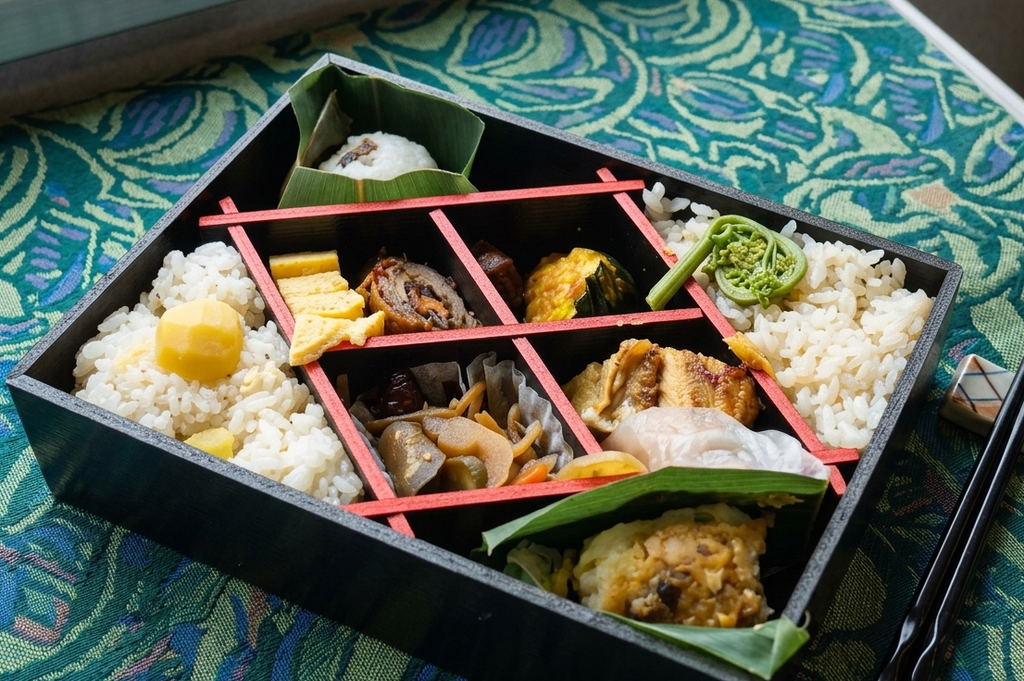
I don’t think it is an exaggeration to say that bento is one of Japan’s representative food cultures. In fact, even when you look at articles written by overseas bloggers, ekiben are highly praised.
But are ekiben simply delicious boxed lunches? …Actually, they can also give us clues for understanding Japan.
Here, I would like to explain the history and characteristics of ekiben while using them as a way to explore Japan. They can give us some interesting insights into the country.
Characters
Mike: A 12-year-old American boy who is interested in Japan.
John: Mike’s father. He sometimes travels to Japan on business.
Kelly: Mike’s mother. She is good at cooking.
Nobu: A Japanese exchange student.
Prologue
Japan has a highly developed railway system. From the steam locomotives of the Meiji era to today’s Shinkansen, Japan has more than 100 years of railway history.
As railways developed, a culture of traveling by train also developed. Japan is not a particularly large country, but traveling around it by train can be very enjoyable.
One of the things that makes train travel in Japan interesting is ekiben.
An ekiben is not simply a boxed lunch sold at a station. There can be many stories hidden behind it.
So, how do Mike and John see this unique Japanese ekiben culture?
What Makes Japanese Ekiben So Interesting?
John: “When I travel long distances in Japan, I often use the Shinkansen. It’s incredibly fast, but it’s also surprisingly quiet and smooth. Sometimes I can even put a cup on the tray without worrying about it spilling.”
Mike: “That sounds more like an airplane than a train.”
John: “There is another interesting thing about traveling by train in Japan. It’s ekiben.”
Mike: “Ekiben? Isn’t that just a boxed lunch you buy at a station?”
John: “Well, yes, but there’s more to it than that. Ekiben can be very different depending on the station and the region. An ekiben in Tokyo can be completely different from one in Osaka.”
Mike: “So there are only about ten kinds or so?”
John: “I doubt it. There are probably hundreds of varieties if you include the differences in ingredients and regions.”
The Quality of Ekiben
Kelly: “But isn’t an ekiben basically an ordinary boxed lunch with some meat and cooked vegetables?”
John: “Not necessarily. Many ekiben use special local ingredients. Compared with convenience-store bento, which often feature fried foods and other familiar dishes, ekiben can include regional seafood, meat, and other specialty foods.”
Kelly: “Do some of them contain raw fish? Isn’t that dangerous if you’re traveling with it?”
John: “Some fish products are prepared using methods such as vinegar curing. Of course, food safety depends on how the food is prepared and handled.”
Kelly: “So they’re not just convenient lunches. They can actually be quite high-quality meals.”
How to Enjoy Ekiben
Nobu: “Hello.”
Mike: “Oh, hi, Nobu. We were just talking about ekiben. Do you like them?”
Nobu: “Absolutely. I love them. They’re delicious because they often contain local specialties. And you can also get a taste of the local culture, environment, and history.”
John: “Wait a minute. Aren’t ekiben simply boxed lunches that come in many different varieties?”
Nobu: “Yes, there are certainly many varieties. But it’s not just a matter of different ingredients or recipes. Some ekiben use local specialties to showcase what makes the area special. Others are inspired by the local environment, while some are connected to the history of the place.”
John: “You can actually experience history through an ekiben? …That’s surprising.”
Nobu: “Then let me show you some examples.”
Ekiben That Can Tell You About a Region Through Its Local Specialties
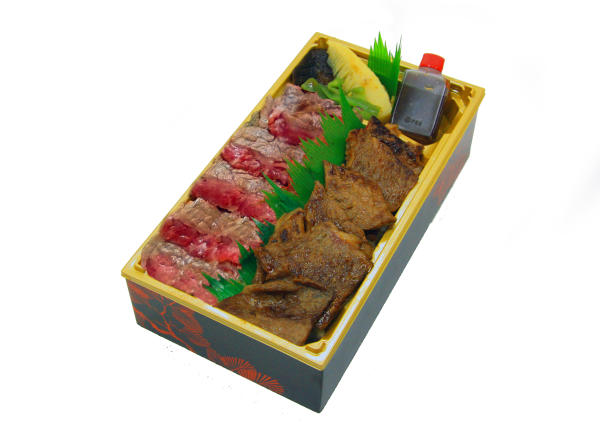
Nobu: “First, let’s look at ekiben made with local products. Japan isn’t a particularly large country, but the foods people eat can be quite different from one region to another. Some areas are famous for delicious fish and seafood, while others are known for their meat.”
John: “I see. Different places have different local foods. That makes sense.”
Nobu: “For example, some regions are famous for seafood, especially shellfish. Oysters are a specialty in some areas, and you can find ekiben made with oysters in those regions.”
John: “I see. Oysters. That certainly comes from the sea.”
Nobu: “On the other hand, some regions are famous for wagyu beef. In those places, you can find ekiben featuring dishes made with local beef.”
Mike: “Wagyu? Isn’t that expensive?”
Nobu: “It can be. But yes, these ekiben really do exist.”
Ekiben Inspired by the Local Environment
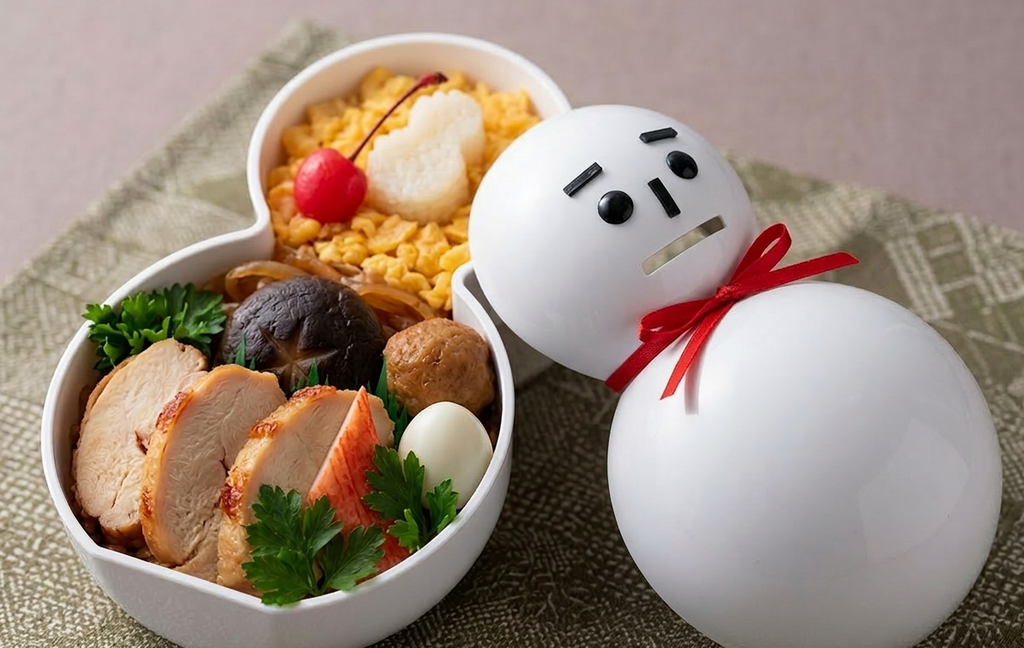
Nobu: “Next, there are ekiben inspired by the local environment. A good example is an ekiben from a cold region that uses a snowman as part of its design.”
Mike: “Wow. So when you eat it, you can get a sense of what the local area is like?”
Nobu: “Exactly. Many areas on the Sea of Japan side of the country become heavy-snow areas in winter. In some places, the snowfall can be so heavy that houses can practically disappear under the snow. I guess that’s why a snowman can be connected with the character of the region.”
John: “I see. So a snowman can represent the heavy snowfall of the area. That’s an interesting idea.”
Ekiben Connected with History
Nobu: “Next, let’s look at ekiben that evoke history. Japan has a very long history, and many important events took place during different periods. There were also many famous historical figures.”
John: “That’s true. Japan has the Meiji period, the Edo period, and even the Sengoku period, when we go further back in history.”
Nobu: “Exactly. There are even ekiben that highlight the history of the Sengoku period.”
John: “Really? How do they do that?”
Nobu: “There was a famous warrior named Takeda Shingen during the Sengoku period. He was a powerful warlord who fought against other warlords during the struggle for control of Japan.”
John: “I’ve heard of him. He lived during the same period when Oda Nobunaga and Toyotomi Hideyoshi were active, right?”
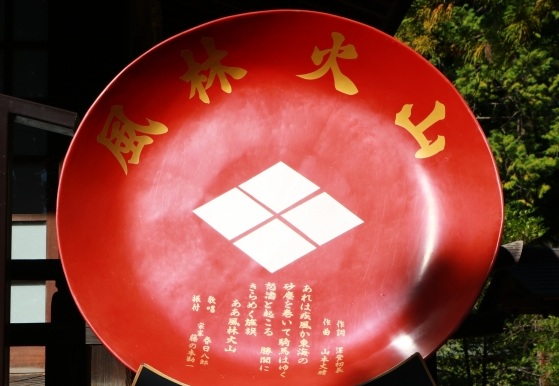
Nobu: “That’s right. And each samurai warlord had his own family crest. Takeda Shingen’s crest is called the ‘Takeda-bishi.’ It’s a diamond-shaped design.”
John: “A family crest. I hear that Japanese people placed great importance on those.”
Nobu: “And there is an ekiben in a place associated with Takeda Shingen that uses the Takeda-bishi design on its bento box.”
John: “I see. Eating that ekiben could actually lead you to learn more about Takeda Shingen. I imagine history fans would find that pretty exciting.”
Nobu: “Exactly. It’s an ekiben I would recommend to fans of Japanese history.”
A Local Train Journey Can Make Ekiben Even More Interesting
Nobu: “However, these kinds of ekiben aren’t necessarily available on Shinkansen trains. Shinkansen stations tend to be major stations, so some local ekiben may be difficult to find there.”
John: “I’ve seen shops in Tokyo that sell ekiben from different parts of Japan.”
Nobu: “Yes. But personally, I think it’s better to eat a local ekiben in the place where it comes from.”
John: “Why?”
Nobu: “Take the ekiben associated with Takeda Shingen, for example. If you eat it in the area connected with him, you can enjoy the food while imagining the history of that place.”
Mike: “How do you get there?”
Nobu: “You may have to use local train lines and change trains along the way.”
John: “I can’t take that much time off work just to eat an ekiben.”
Mike: “Then I’ll send you pictures so you can feel like you ate it!”
John: “Don’t tease me. That’s depressing.”
The End
What Happens When You Look for Ekiben by Looking at the Land?
As we have seen, ekiben often reflect the local climate, history, and specialty products of a region.
But what if we turn the idea around?
Suppose you are interested in an ekiben connected with Takeda Shingen because you are a fan of Japanese history.
Instead of starting with the ekiben, you can start with the place.
The clue is a map.
When you look at a map of Japan, you can see that the country has plains, mountains, coastlines, and many other types of terrain.
These geographical features are closely connected with what people produce and eat in each region.
Plains
Rice is Japan’s staple food.
Plains are well suited to paddy fields because rice cultivation benefits from relatively flat land. Rice can also be grown in mountainous areas, but this often requires terraced fields, which are generally more difficult to manage than large areas of flat farmland.
Niigata Plain, for example, is famous for Koshihikari rice. Koshihikari is also used in the name of an ekiben, the “Niigata Koshihikari Bento.”
There was also an ekiben called “Sasanishiki Bento,” named after Sasanishiki rice, which was associated with the Sendai Plain, although it appears to have been discontinued.
Mountainous Areas
Mountainous regions have their own traditional foods and local specialties, sometimes referred to as “mountain foods.”
When looking for ekiben connected with mountainous areas, it can be useful to know not only the geography but also some Japanese words.
One example is “Toge no Kamameshi.”
It is an ekiben served in a small earthenware pot and contains a variety of ingredients.
The word “toge” refers to a mountain pass.
So, when trying to understand this ekiben, it can be interesting to look at both the map and the meaning of the Japanese place names and words associated with it.
Coastlines
Japan is surrounded by the sea, and different types of coastlines are associated with different marine products.
Some parts of Japan have very rugged coastlines with many bays and inlets. What kinds of seafood can be produced in such places?
Oysters and other shellfish are good examples.
The Pacific coast of the Tohoku region has many areas with complex coastlines, and oyster farming is one of the local industries found there.
There is also an ekiben called “Matsushima Kakimeshi,” which features oysters.
In this way, looking at the geography of Japan can give you clues about what kinds of local specialties you might find in an ekiben.
Ekiben Can Be a Clue to Understanding Japan
Ekiben are not simply boxed lunches with many different ingredients.
They can contain local foods, reflect the climate of a region, and even connect us with its history.
The best way to enjoy them may be to eat them locally. For example, eating an ekiben associated with Takeda Shingen while traveling through the land connected with him can make the historical experience much more vivid.
But there is another way to enjoy ekiben.
Look at a map of Japan.
Think about the mountains, plains, coastlines, climate, history, and place names.
Then ask yourself:
“What kind of local food would people produce here?”
And then look for an ekiben that gives you the answer.
A map alone won’t tell you exactly what ekiben you will find. But geography, climate, and place names can give you clues that help you make a guess.
Then you can use the ekiben to see whether your guess was right.
Maybe that is another fun way to enjoy ekiben—and another way to discover Japan.