In Japanese, combining two words can sometimes create a meaning that is quite different from what you might expect from the individual words.
Food is no exception. Take “ochazuke” and “ochazuke nori,” for example. The names look similar, but they refer to different things.
What exactly is the difference? And what does seaweed have to do with a bowl of rice soup?
Let’s find out!
Characters
Mike: A 12-year-old American boy who is interested in Japan.
John: Mike’s father. He sometimes travels to Japan on business.
Kelly: Mike’s mother. She is good at cooking.
Nobu: A Japanese exchange student.
Prologue
Kelly has been exploring Japanese cuisine, and one day she discovers a dish called ochazuke.
She likes the idea of pouring tea or broth over rice. It seems like a simple and convenient way to enjoy rice, even when it has cooled down or when she doesn’t feel like eating a heavy meal.
As she researches ochazuke, however, she comes across a product with a rather confusing name: ochazuke nori.
It sounds like something used to make ochazuke, but the word nori also appears in the name of another familiar Japanese food, ajitsuke nori, or seasoned seaweed.
Are these products related? And what exactly is ochazuke nori?
Just then, Nobu arrives to explain.
Ochazuke and Ochazuke Nori Are Not the Same Thing
Nobu: “Hello, everyone!”
Kelly: “Oh, hello! You’ve come at just the right time. I’ve been trying to understand some Japanese food names, and I’m a little confused.”
Nobu: “What’s confusing you?”
Kelly: “I found a Japanese dish called ochazuke online. Then I came across something called ochazuke nori. The second name seems to be the same as the first, except that it has the word nori added to it. Does ochazuke nori simply mean ochazuke with lots of seaweed?”
Nobu: “Hold on a moment. It’s not quite that simple.”
Kelly: “Then is it different from ajitsuke nori, or seasoned seaweed? Both names contain the word nori.”
Nobu: “Yes, they’re different, too. Let me explain.”
What Is Ochazuke?
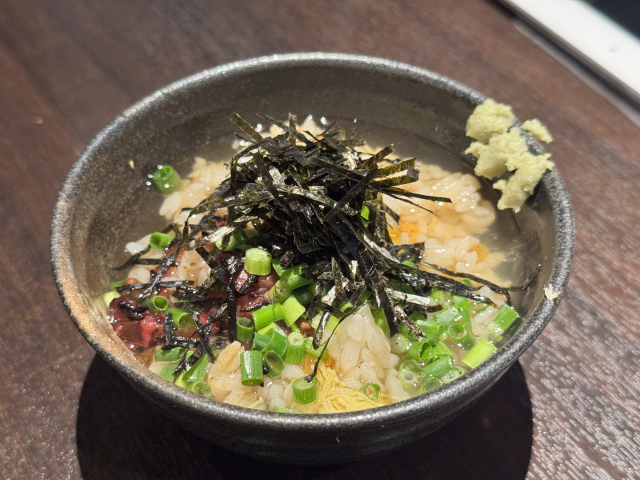
Nobu: “Let’s start with ochazuke. It’s a Japanese dish made by pouring tea or another suitable liquid, such as broth, over cooked rice. People often add toppings, too.
There are many variations. Some are quite simple, with just umeboshi, or pickled Japanese plums. Others include grilled salmon, other fish, or pickled vegetables.
Ochazuke is easy to eat, and some people enjoy it when they don’t have much of an appetite or want something lighter than a regular meal.”
Mike: “It sounds like you could use ingredients from different parts of Japan.”
Nobu: “Exactly! Besides umeboshi, people use grilled fish, pickles, and all sorts of other ingredients. If you use local ingredients, you could even create your own regional version of ochazuke.”
John: “That makes sense. The ingredients available in Hokkaido must be quite different from those in Kyushu. It sounds fun to experiment with different combinations.”
Nobu: “And don’t forget the liquid itself. Choosing different kinds of tea or using broth can also change the flavor. That’s part of the fun.”
What Is Ochazuke Nori?
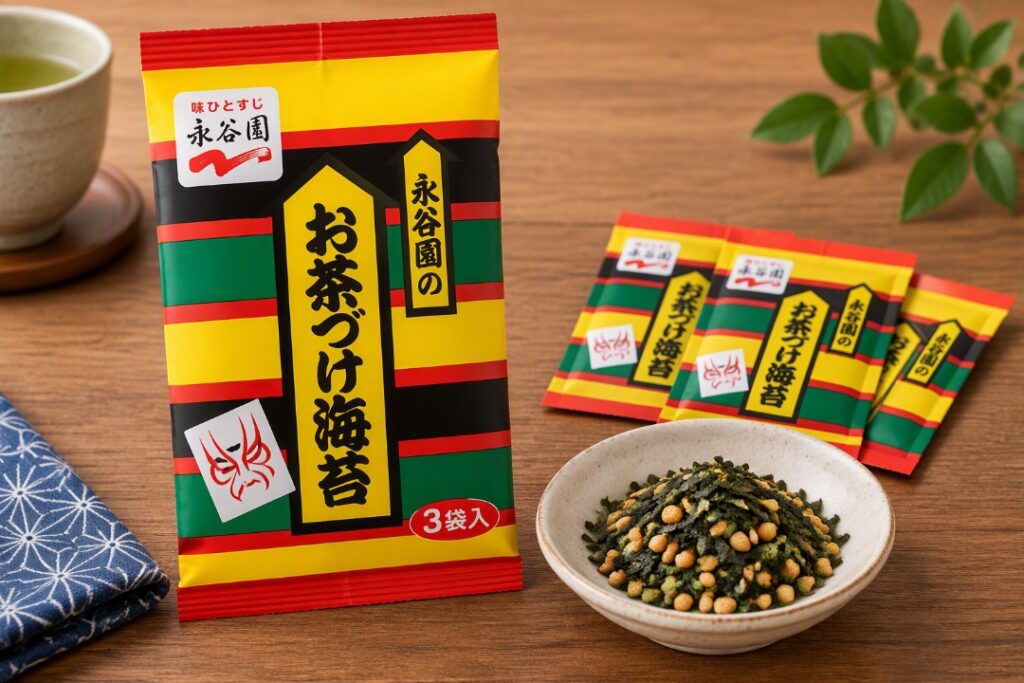
John: “All right, then. What exactly is ochazuke nori? And how is it different from seasoned seaweed?”
Nobu: “The first thing to understand is that ochazuke nori is a seasoning mix used to make ochazuke. You sprinkle it over cooked rice and pour hot water over it. That’s usually enough to make a simple bowl of ochazuke.
It’s a convenient, instant-style food product.”
Kelly: “I see. So it’s a quick way to make ochazuke!”
Nobu: “That’s right. But remember that ochazuke itself can be made with all sorts of toppings.
In fact, people often use leftovers from the previous night’s dinner. For example, if you have some grilled fish left over, you can break it into small pieces, put it on rice, and pour tea or broth over everything to make ochazuke.”
Mike: “So you don’t have to prepare everything from scratch just to make ochazuke?”
Nobu: “Exactly. You can be as creative as you like.”
What’s the Difference Between Ochazuke Nori and Furikake?
Nobu: “There’s another Japanese food product that looks quite similar to ochazuke nori, but it’s intended for a different purpose. It’s called furikake.”
John: “What’s that?”
Nobu: “Furikake is a seasoning that you sprinkle directly over cooked rice.
Ochazuke nori often contains small pieces of seaweed and crunchy rice crackers called arare. Many kinds of furikake also contain chopped seaweed, so the two products can look quite similar.
The easiest way to tell them apart is to check the packaging. If you look only at the dry ingredients, it might not be so easy to distinguish them.”
Mike: “So it’s better to check the package before using them?”
Kelly: “But what if I accidentally use ochazuke nori and furikake the wrong way?”
Nobu: “You can still eat them, of course. But the result might not be quite what you expected.”
Kelly: “Why is that?”
Nobu: “They are designed for different ways of eating rice. Furikake is meant to be sprinkled over rice and eaten as it is. If you pour hot water over some kinds of furikake, you might lose the flavor or texture you were expecting.
Of course, that doesn’t mean you can never experiment with it.”
Mike: “Then what happens if you sprinkle ochazuke nori directly over rice without adding water?”
Nobu: “That depends on the product and your taste. The seasoning might taste too strong, and the little rice crackers could be quite hard and crunchy. Some people might enjoy it, but it isn’t the usual way to eat it.”
Kelly: “Now I understand. They may look similar, but they’re meant to be used differently.”
The End
You Can Make Ochazuke with Ordinary Nori, Too
Earlier, we explained that ochazuke nori is a convenient seasoning mix for making ochazuke. However, that doesn’t mean you need a special product to prepare the dish.
Ordinary nori, or dried seaweed, works perfectly well, too. In fact, adding seaweed can give your ochazuke an appealing aroma and flavor.
For example, suppose you have some leftover grilled fish. Break it into small pieces, place it over rice, and pour tea or broth over it. Then add some finely shredded nori on top.
You’ll have a simple bowl of ochazuke with an extra layer of flavor.
You can also buy nori that has already been cut into small pieces. Products called kizami nori, meaning shredded seaweed, and momi nori, meaning crumbled seaweed, are convenient options for this kind of dish.
You can also improve instant ochazuke by adding extra toppings.
For example, try adding mentaiko, or spicy pollock roe, to a bowl made with ochazuke nori. It gives the dish a spicy kick and creates a different flavor from the basic version.
The possibilities are limited mainly by your imagination.
Ochazuke Nori Can Be Used in Other Dishes, Too
Ochazuke nori is designed for making ochazuke, but you don’t have to limit yourself to that dish.
One easy idea is to use it as a seasoning for pasta.
Simply boil your pasta, drain it, and sprinkle some ochazuke seasoning over it. You can also add a little olive oil or butter, depending on your preference.
The result is a quick pasta dish with a distinctly Japanese flavor.
It’s an especially useful idea when you’re short on time and want to prepare something simple without buying lots of ingredients.
Of course, the exact result will depend on the seasoning you use and how much you add. Start with a small amount, taste it, and adjust as needed.
You Can Even Make Ochazuke with a Convenience Store Rice Ball
Here’s another convenient idea: you can make a simple version of ochazuke using an onigiri, a Japanese rice ball sold at convenience stores.
It’s easy to do.
First, unwrap the onigiri and place the rice and filling in a bowl. Break up the rice ball with a spoon or chopsticks.
If you like, tear the seaweed into small pieces and sprinkle them over the rice. Then pour hot tea or broth over everything.
That’s it! You’ve made a simple bowl of ochazuke using a convenience store snack.
However, it’s worth choosing your onigiri carefully.
For example, an onigiri filled with pickled plum or salmon is a good choice because these ingredients work well with the flavors commonly found in ochazuke.
On the other hand, a tuna-mayonnaise onigiri might produce a rather unusual result. The mayonnaise could mix with the hot liquid, creating a richer and creamier dish than traditional ochazuke.
That doesn’t necessarily mean it would taste bad. It simply wouldn’t be the usual style of ochazuke.
If you’re trying this for the first time, a salmon or pickled-plum onigiri is probably the easiest place to start.
Conclusion
Today, we explored the difference between ochazuke and ochazuke nori.
Japanese food names can certainly be confusing. You might have thought that ochazuke nori was simply a type of seaweed, or perhaps you wondered why a product containing seaweed had such a specific name.
Now you know that ochazuke is the dish itself, while ochazuke nori is a convenient seasoning mix used to prepare it.
We also looked at how ochazuke nori differs from furikake, which is intended to be sprinkled directly over cooked rice.
But the most interesting thing is that you don’t have to follow a single recipe. You can use ordinary seaweed, add your favorite toppings, experiment with different ingredients, or even try using ochazuke seasoning in pasta.
You can also turn a simple convenience store onigiri into a quick meal of ochazuke.
Cooking is all about experimenting and discovering combinations you enjoy. So why not give it a try
Related Article
Ochazuke nori contains nori (dried seaweed), one of the key ingredients in Japanese cuisine.
But what exactly is nori, and how is it made?
If you are curious about this ingredient, take a look at our article below, where we explore the world of Japanese nori.
Read the article →

