I personally think that dishes can generally be divided into two categories: those introduced from other regions or countries, and original creations.
Bread, for example, is a staple food that came to Japan from overseas. However, Anpan, a sweet bread filled with red bean paste, is an original Japanese creation.
The same kind of development can be seen in many other dishes.
In this article, I would like to look at how Katsu-don has evolved in Japan. There is a story that Katsu-don originated in Tokyo, but other versions have developed under the influence of local food cultures.
So, what kinds of Katsu-don can we find in Japan?
Characters
Mike: A 12-year-old American boy who is interested in Japan.
John: Mike’s father. He sometimes travels to Japan on business.
Kelly: Mike’s mother. She is good at cooking.
Nobu: A Japanese exchange student.
Prologue
Kelly, who has been studying Japanese cuisine, had recently become fascinated by Japanese Tonkatsu culture. She was almost in awe of how much the Japanese had transformed a dish that originally came from overseas.
Then she discovered Katsu-don.
She was surprised to see a bowl of rice topped with Tonkatsu covered in a soft egg mixture. Although the egg was cooked together with the cutlet, some parts remained slightly runny. Furthermore, serving such a dish in a rice bowl was something she had rarely seen in the United States.
Just then, Nobu appeared.
Nobu: Hello!
Kelly: Oh, you’re just the person I wanted to see! I was hoping to learn more about Katsu-don today.
Mike: Kelly says Katsu-don is a uniquely Japanese dish. It looks interesting and delicious, so she wanted to know more about it.
Nobu: I see. Well, let me introduce you to Katsu-don.
The Story Behind Katsu-don
Nobu: Tonkatsu was not originally a Japanese dish. I have heard that it developed from French cuisine. Apparently, Japanese university students came up with the idea of combining it with eggs, which eventually led to the familiar style of Katsu-don.
Kelly: That’s right. I was surprised when I first saw Tonkatsu served with eggs.
Nobu: Now, let me ask you something. What kind of food culture do you think influenced the seasoning? The sauce used for traditional Katsu-don is based on soy sauce.
Kelly: Oh, I see! Soy sauce is a traditional Japanese seasoning. So, the dish was adapted using Japanese flavors.
Nobu: I think that’s a reasonable way to look at it. From a regional perspective, we could even say that it reflects Tokyo’s own food culture.
Kelly: That makes sense.
The Influence of Regional Food Cultures
Nobu: Japan may look like a relatively small country, but it has a surprising variety of regional food cultures.
Even when dishes share the same origins, they can develop into completely different foods depending on the region.
For example, Miso Ramen was developed by ramen restaurants in Sapporo. Perhaps its development was influenced by the local food culture of Hokkaido.
The same thing happened with Katsu-don. Different regions have created their own versions.
John: Wait a minute. You mean Katsu-don also has regional variations? There are even more original versions?
Nobu: That’s right. Some reflect the food culture of an entire region, while others are more localized. There are even some versions that might make you wonder whether they are simply creative dishes.
John: That sounds interesting. Tell us more!
Katsu-don Influenced by Regional Food Cultures
Nobu: Let me introduce some types of Katsu-don that appear to have been strongly influenced by regional food cultures.
Two good examples are Katsu-don influenced by the sauce culture of Osaka and the miso culture of Nagoya.
Osaka has a strong sauce culture. Two representative dishes are Okonomiyaki and Takoyaki.
Nagoya, on the other hand, is famous for its miso culture. Miso Nikomi Udon is one of its best-known dishes.
These regional characteristics can also be seen in Katsu-don.
Mike: How are they reflected in the dishes?
Sauce Culture: Sauce Katsu-don
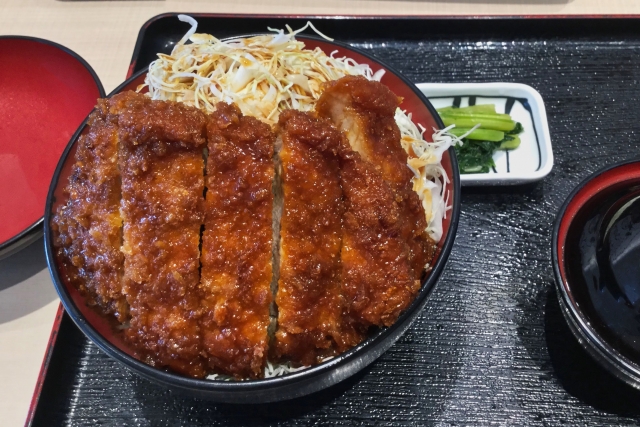
Nobu: First, let’s look at Sauce Katsu-don, a dish that uses sauce as its main seasoning.
It consists of Tonkatsu served on a bed of rice and seasoned with a sauce-based dressing.
John: Sauce? So it’s different from the version covered with eggs.
Nobu: Exactly. However, Osaka also has a version of Katsu-don made with eggs. Apparently, some people distinguish it from other types by calling it Katsu-ni Don.
John: I see. Katsu-ni Don!
Miso Culture: Miso Katsu-don
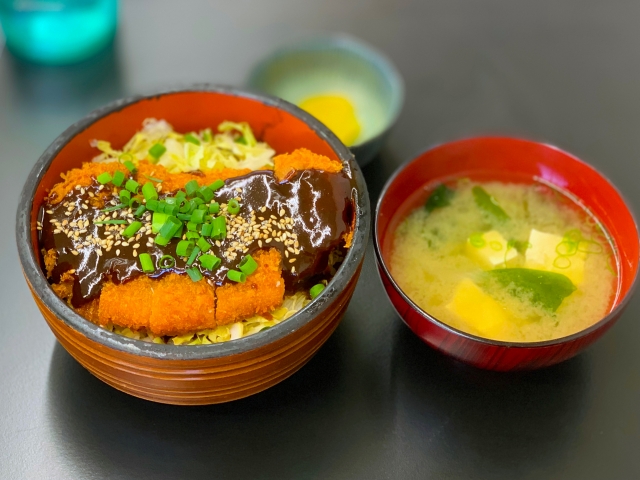
Nobu: Next is Miso Katsu-don, which reflects the region’s miso culture.
Miso culture is particularly strong in and around Aichi Prefecture, where Nagoya is located.
Miso is used in many local dishes, including Miso Nikomi Udon. It is also used in various sauces and seasonings. Apparently, some versions of the sauce for Okonomiyaki even use miso as a base.
John: So, this is another example of a regional food characteristic.
Nobu: That’s right. One dish that developed in this region is Miso Katsu-don.
It is made by seasoning Tonkatsu with a miso-based sauce. Like Sauce Katsu-don, it is quite different from the familiar version topped with egg.
John: I see!
Katsu-don as a Local Gourmet Specialty
Mike: By the way, didn’t you mention that there were even more specific types of Katsu-don?
Nobu: Yes, there are. Some are more localized and are often treated as examples of B-kyu Gourmet, or affordable local specialties.
Let’s take a look at two examples from Niigata and Okayama.
Niigata’s Tare Katsu-don
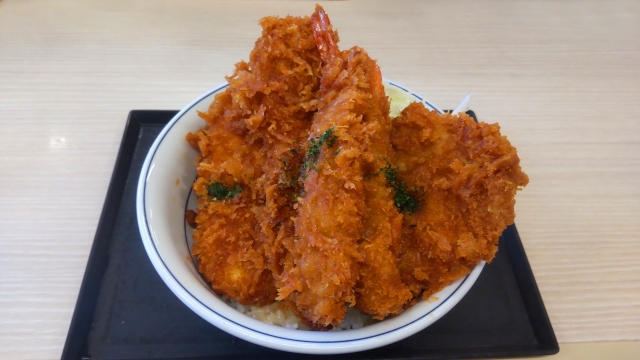
Nobu: First, let’s look at Niigata.
This region has its own distinctive soy sauce culture. Soy sauce is used throughout Japan, but Niigata has also developed its own traditions involving Dashi Shoyu, a type of soy sauce blended with Japanese soup stock.
Dashi Shoyu itself did not originate in Niigata, but local brewing companies seem to have played an important role in developing its popularity in the region.
Kelly: So, was this where the local soy sauce culture met Katsu-don?
Nobu: It’s difficult to say for certain, but I think that is one possible explanation.
Okayama’s Demi Katsu-don
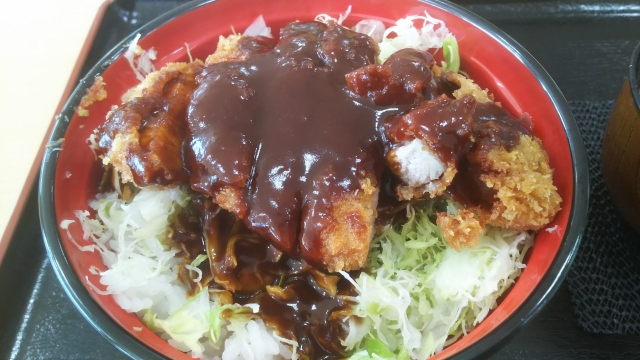
Nobu: Next is Demi Katsu-don.
This dish consists of Tonkatsu served over rice and topped with demi-glace sauce. It is said to have been created by a restaurant in Okayama.
Mike: So, is it unique to Okayama?
Nobu: Not anymore. However, Okayama still plays a major role in its history and popularity.
That’s why many people consider it one of Okayama’s local B-kyu Gourmet specialties.
Mike: I see. Another example of local gourmet food!
Some Types of Katsu-don Are Almost Like Creative Dishes
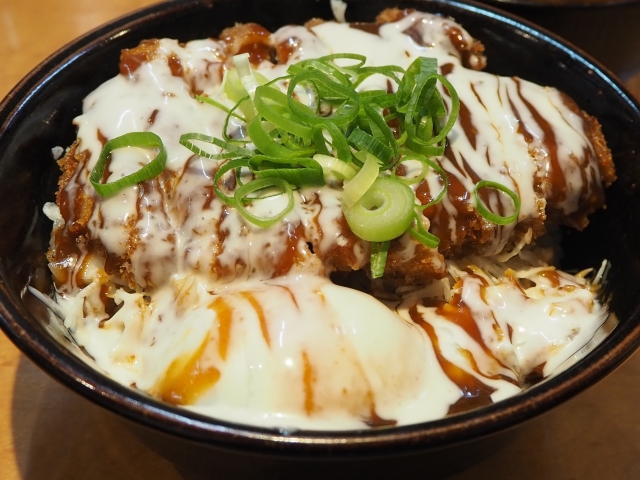
Nobu: Tonkatsu has become an extremely popular dish in Japan. You can even buy ready-made Tonkatsu relatively cheaply at supermarkets.
This means that people who are not particularly good at deep-frying can still enjoy experimenting with different combinations and creating their own dishes.
Kelly: So, ready-made Tonkatsu has made it easier for people to create their own variations?
Nobu: That’s one way to look at it.
Recently, I came across something called Mayo Katsu-don, which uses mayonnaise as a seasoning.
Some Japanese people really love mayonnaise, so perhaps someone came up with the idea as a result of that enthusiasm.
Mike: That’s amazing!
Nobu: Some Tonkatsu restaurants also offer their own original versions of Katsu-don. I’ve even seen versions topped with tartar sauce.
Kelly: Tartar sauce? That’s quite surprising!
The End
From My Personal Experience
There is a Tonkatsu chain restaurant along my usual commuting route, and I sometimes stop there on my way home.
The restaurant not only maintains the traditional flavor of Tonkatsu but also offers its own original menu items.
Whenever I look at the menu, I find myself wondering what kinds of stories and ideas lie behind the creation of these dishes.
For example, whether it’s the Demi Katsu-don mentioned earlier or a Katsu-don with tartar sauce, I doubt that someone simply decided to put a different sauce on top of a cutlet.
There must have been considerable experimentation with the ingredients and seasoning ratios, as well as plenty of effort before each dish was perfected.
In any case, I think Katsu-don is also a product of regional food culture.
Whenever I visit different parts of Japan, I would like to try the local versions.
Conclusion
In this article, we have looked at the different types of Katsu-don found in Japan.
I hope you found it interesting to learn that Katsu-don has developed differently in various regions, influenced by their own food cultures and traditions.
Perhaps some of you were also surprised by how creative Japanese people can be when developing new dishes.
This might even inspire you to try creating your own original version of Katsu-don.
Who knows? Perhaps somewhere overseas, a new type of Katsu-don will eventually emerge that Japanese people would never have imagined!
If I ever have the opportunity, I would certainly like to try it. After all, it would be a chance to experience not only a new variation of Katsu-don but also the food culture and regional character of another country.
Related Article
● This article focused on Katsudon, but the rice beneath the toppings is also a key element of any great donburi (Japanese rice bowl dish).
In the following article, we take a closer look at how rice should be prepared for donburi dishes and introduce some helpful tips for achieving the best texture and flavor.
Read the article →
● In this article, I introduced four different types of katsudon. Among them, sauce katsudon and miso katsudon can surprisingly be prepared using some simple shortcuts.
In the following article, I will show you how to make these two types of katsudon.
Read the article →

