Living in a rental apartment in Japan may be more restrictive than you expect. Even accidentally damaging a wall can sometimes result in repair costs when you move out. Rules vary from country to country, but Japanese rental properties can have fairly strict requirements regarding changes to the interior.
Have you ever heard of a Japanese household item called a tension rod?
A tension rod is an adjustable pole that can be extended by turning a screw mechanism. It is held in place by pressure between two surfaces, so it can often be installed without drilling holes or damaging walls.
With a little creativity, tension rods can make a room much more functional and comfortable.
So, what can you actually do with them?
Characters
Mike: A 12-year-old American boy who is interested in Japan.
John: Mike’s father. He sometimes travels to Japan on business.
Kelly: Mike’s mother. She is good at cooking.
Nobu: A Japanese exchange student.
Prologue
One day, John received a phone call from a colleague living in Japan.
The colleague had apparently become frustrated with his Japanese apartment. He found it inconvenient to live in, and he was particularly unhappy about the many restrictions imposed by the landlord.
He complained that he could not do much to improve his living environment.
John asked him what he meant.
The colleague explained that there were restrictions on rearranging the room, and that he could not even install shelves. This was causing him considerable inconvenience.
That was when Nobu arrived.
Nobu: Hello!
John: Hi! Actually, I have a bit of a problem. Could you give me some advice?
Nobu: What’s the matter?
John: A colleague of mine who rents an apartment in Japan is having trouble arranging his room the way he wants.
Nobu: I see. You generally cannot make holes in the walls of a rental apartment without permission. However, there is a simple solution that might help.
John: What kind of solution?
Nobu: You can make use of tension rods.
The Convenience of Tension Rods
Nobu: First, let me explain what a tension rod is. It is an adjustable pole that can be extended by turning a screw mechanism. When you place it between two walls and tighten it, the pressure holds it in position.
Kelly: So, it is installed horizontally between two walls?
Nobu: That’s right. You can even use it to hang lightweight items. For example, it works well for things like socks and handkerchiefs.
Kelly: But that means it is mainly useful for hanging lightweight items, isn’t it?
Nobu: Yes. Ordinary tension rods are generally intended for relatively simple purposes. If you hang something too heavy, the rod may come loose and fall. However, there are also products that use the same basic principle to create much larger storage systems.
John: What kind of products are those?
Nobu: There are special tension fittings designed for use with 2×4 lumber.
John: 2×4 lumber? You mean the kind of wood used for building houses? How can that be used as a tension rod?
Nobu: Let me explain.
What Is a Tension System Using 2×4 Lumber?
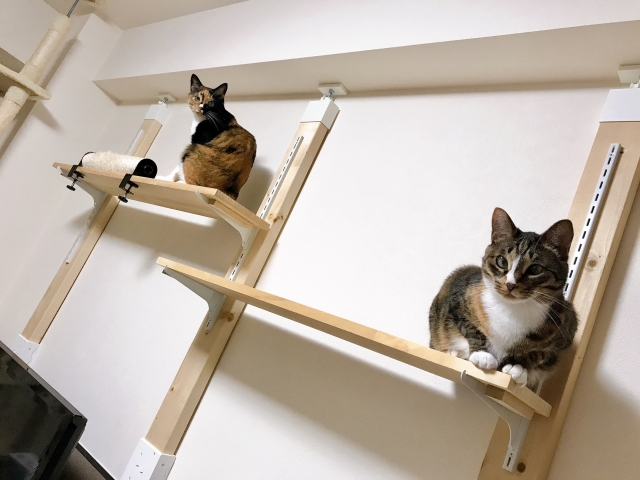
Nobu: These systems are not made entirely from 2×4 lumber. Instead, special adjustable fittings are attached to both ends of a piece of 2×4 lumber. The fittings allow the entire piece of wood to function as a tension-supported post.
Mike: But how does that work? It is difficult to imagine using ordinary construction lumber as a tension rod.
Nobu: The basic idea is simple. Instead of placing a rod horizontally between two walls, you install the 2×4 lumber vertically between the floor and the ceiling.
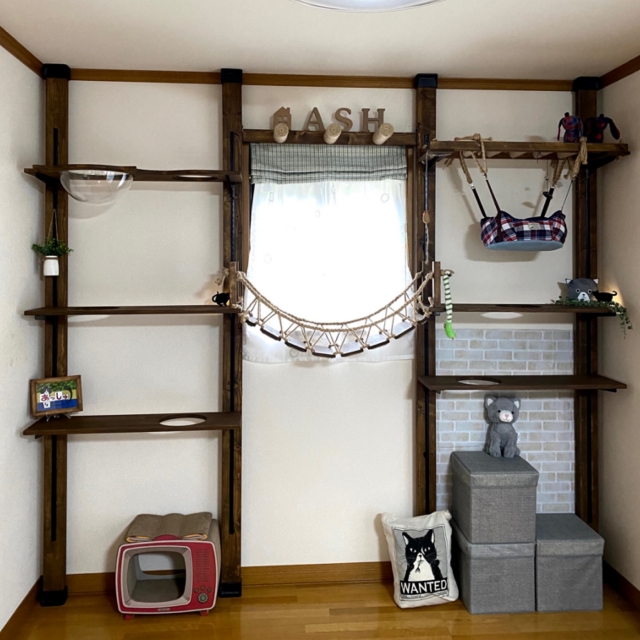
Once you have installed two vertical posts, you can attach shelf boards between them. This creates a simple shelving unit.
Mike: So, if the system does not require drilling holes in the floor or ceiling, it can be used in rental apartments, too?
Nobu: That’s one of its biggest advantages. You can attach shelves, wire mesh panels, and other accessories. You can even create attractive storage spaces that match the interior design of your room.
Kelly: Being able to create a stylish living space in a rental apartment sounds very appealing!
Precautions When Using Tension Rods
Nobu: However, there are a few things you need to be careful about when using these products.
Mike: What should we watch out for?
Nobu: Tension rods and support posts are held in place by pressure and friction. Therefore, you should avoid placing excessive weight on them.
John: So, even if I build a shelf, I need to pay attention to the weight of the things I put on it?
Nobu: Exactly. These posts extend from the floor to the ceiling. If a long post or an entire shelving unit falls over, it could cause a serious accident. You should avoid placing heavy objects on the shelves and take steps to reduce the risk of them tipping over.
Mike: I see. Keeping things lightweight is a good idea.
Nobu: Another point is that you should avoid building an excessively large structure.
Kelly: What do you mean by that?
Nobu: For example, imagine using four or five tension-supported posts to build a large storage rack. In theory, you could create something similar to a large shelving system. However, the structure relies on fittings that press against the floor and ceiling. If they come loose, the consequences could be serious.
Also, once you build a large shelf, you may be tempted to put more and more things on it.
Mike: That’s true. If I had a large shelf, I would probably want to fill it with books!
Nobu: Exactly. If a shelf loaded with lots of books were to fall over, it could cause considerable damage.
John: By the way, how well do these systems handle earthquakes?
Nobu: You should not assume that they are safe during earthquakes. Even products designed for everyday use can become unstable during strong shaking. Their safety depends on the product, installation conditions, the strength of the ceiling and floor, and the weight of the items being stored.
John: I see. So, even though these products are convenient, we should not rely on them as earthquake-proof equipment.
Nobu: That’s right. It is important to follow the manufacturer’s instructions and use them within their specified limits.
John: That makes sense. I think I can explain the idea to my colleague now.
Nobu: I’m glad to hear that!
The End
From My Personal Experience
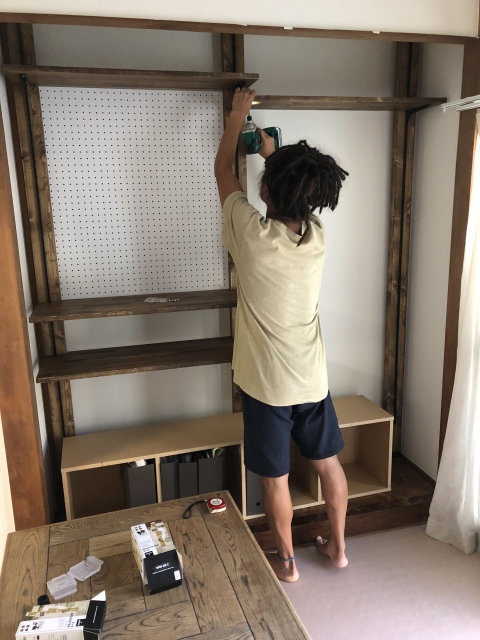
Using tension rods has become an important part of making the most of living spaces in Japan. One reason is that even people who are not particularly good at DIY can use simple tension rods without much difficulty.
Another reason is their affordability. Basic tension rods are even sold at 100-yen shops in Japan, making them easy to purchase.
I also use tension rods extensively in my own home.
For example, there is a tension rod installed across our bathroom, and it is used to hang towels for the entire family.
It was a simple installation that even a family member who is not particularly experienced with DIY could manage. It is certainly convenient!
However, I think the type that uses 2×4 lumber requires particular care.
You can buy 2×4 lumber at a home improvement store and cut it to the required length to fit your room. However, if your measurements are inaccurate, the risk of the post becoming unstable or falling over increases.
The best way to prevent this is to measure the space carefully before cutting the wood.
Another important consideration is the weight of the items you place on the structure.
Although 2×4 lumber itself is sturdy, the entire structure is supported by pressure against the floor and ceiling. Therefore, you should never assume that strong lumber automatically makes the whole structure safe.
It is also a good idea to check the fittings regularly to make sure they have not loosened over time.
Conclusion
We have introduced the convenience of tension rods and how they can be used to improve your living space.
Their structure is relatively simple, but they are surprisingly versatile.
You may also be interested in these products if you currently live in a Japanese rental apartment.
The possibilities are almost endless when you use a little imagination. You can find plenty of examples of how people use tension rods online.
If you want to make better use of your living space without making permanent changes, why not explore what these useful products can do?